

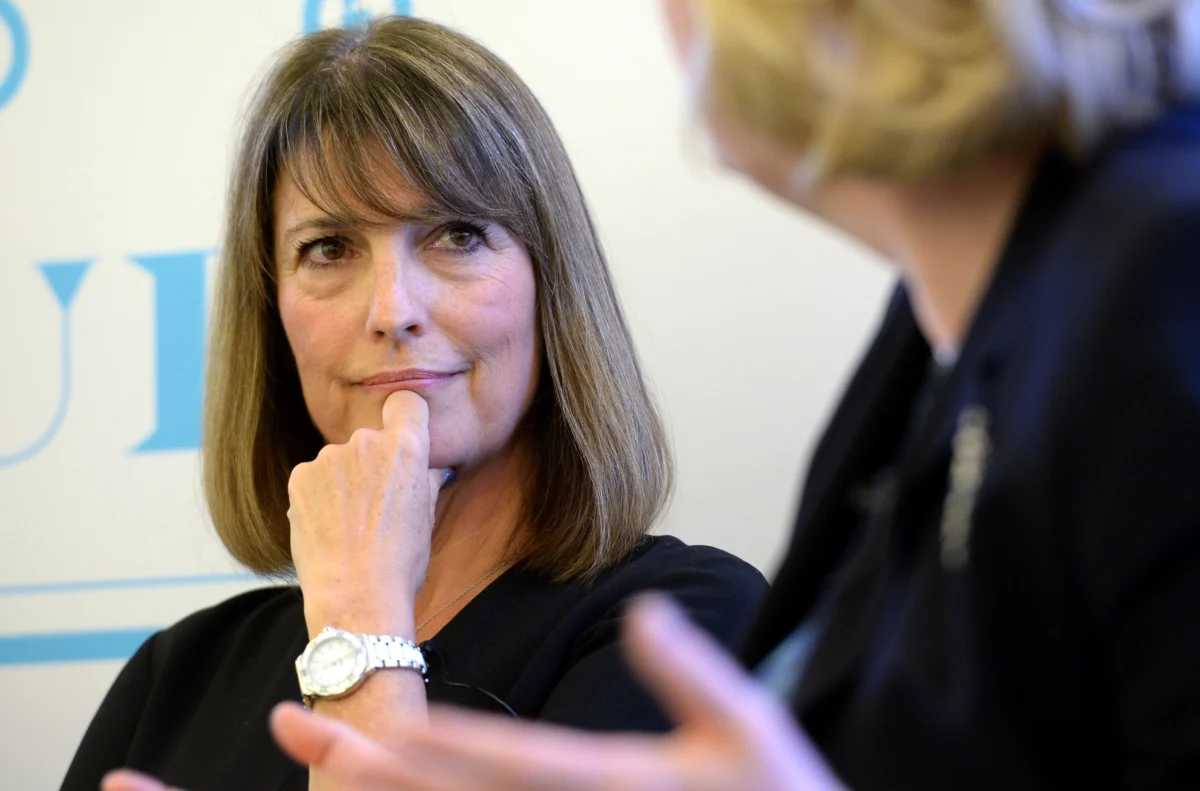
U.K. television giant ITV, under the leadership of CEO Carolyn McCall, commenced the 2026 fiscal year with a complex first-quarter trading update, revealing robust growth in its ITV Studios division contrasted with a decline in its Media & Entertainment (M&E) segment. The broadcaster also confirmed ongoing, active discussions with Sky regarding a potential sale of its M&E business, a significant strategic move first announced in November 2025 that could reshape ITV’s operational focus and financial structure. The market awaits further updates on this potential divestiture, which underscores a broader industry trend towards content creation specialization and asset optimization.
ITV Studios: A Global Content Powerhouse Driving Growth
The most positive highlight from the first-quarter report was the performance of ITV Studios, which saw its total revenue increase by a commendable 4 percent. This growth was primarily fueled by an impressive 8 percent rise in external revenue, signifying a strong demand for ITV’s produced content from international clients and global streaming platforms. The company specifically cited the strategic phasing of deliveries to major streamers as a key driver. Notable productions contributing to this surge included "Skyscraper Live" for Netflix, the highly anticipated second season of "Rivals" for Disney+, and the second season of "Love Island U.S.: Beyond the Villa" for Peacock. These examples underscore ITV Studios’ pivotal role as a global content supplier, leveraging its extensive production capabilities and popular formats to secure lucrative licensing deals.
This external revenue strength aligns with ITV’s earlier guidance for 2026, where the company had projected ITV Studios to achieve "another year of good growth in total revenue, ahead of the market, driven by external revenue." The first-quarter performance indicates that the Studios division is firmly on track to meet these ambitious targets, reinforcing its position as a cornerstone of ITV’s long-term strategy. The division’s success in securing commissions and licensing agreements with a diverse range of international partners, from established broadcasters to emerging digital platforms, demonstrates its adaptability and creative prowess in a highly competitive global content market.
However, within the Studios division, internal revenue experienced a 7 percent decline during the quarter. This was an anticipated outcome, attributed to previously announced strategic scheduling and production changes within ITV’s own broadcast channels, specifically a lower volume of soaps and daytime content. While this internal adjustment impacts a segment of Studios’ revenue, the robust external growth successfully offset this decline, demonstrating the division’s overall resilience and strategic shift towards maximizing international content sales. This strategic recalibration within the Studios division reflects a conscious effort to optimize resource allocation and focus on high-value, externally commissioned projects, aligning with the company’s broader objective of expanding its global production footprint.
Media & Entertainment Division: Navigating Headwinds and Strategic Pivots
In contrast to the buoyant performance of ITV Studios, the Media & Entertainment (M&E) division faced significant headwinds in the first quarter of 2026, reporting a 2 percent decrease in revenue. This decline was primarily driven by a 1.5 percent reduction in total advertising revenue (TAR), reflecting ongoing challenges in the linear television advertising market and broader economic uncertainties. The M&E division encompasses ITV’s traditional broadcasting channels and its digital streaming service, ITVX, which together represent the company’s direct engagement with U.K. audiences and advertisers.
The dip in Q1 advertising revenue was, however, "better than expected" by ITV. The company had initially forecast a decline of around 2 percent for the quarter. This slight outperformance, while still a decline, provides a degree of reassurance that the advertising market might not be as weak as initially feared or that ITV’s targeted sales efforts are yielding some positive results. This performance needs to be viewed in the context of seasonal advertising trends, where advertisers often hold back budgets in the early part of the year, reserving significant spend for major events in subsequent quarters.
ITV’s strategic scheduling and production changes within the M&E division, which led to a lower volume of high-cost content like soaps and daytime programming, also contributed to the overall M&E revenue decline. These changes are part of a broader effort to optimize content spend and refocus resources towards digital-first offerings and event programming that can attract larger, more engaged audiences and command premium advertising rates. The challenge for ITV is to manage this transition effectively, ensuring that while traditional linear revenues might contract, the growth in digital advertising and content consumption via ITVX accelerates sufficiently to compensate.
The Advertising Landscape and the 2026 Men’s World Cup: A Pivotal Second Half
Looking ahead, ITV’s advertising outlook for the second and third quarters of 2026 is significantly more optimistic, largely predicated on the broadcast of the expanded Men’s FIFA World Cup. The company anticipates a substantial uplift in TAR, forecasting an increase of approximately 10 percent in the second quarter, with a strong performance projected for July. This surge is directly attributed to "significant demand from advertisers" eager to capitalize on the massive viewership and heightened engagement surrounding the global football tournament.
The 2026 Men’s World Cup, co-hosted by the United States, Canada, and Mexico, represents a landmark event in sports broadcasting due to its expanded format. With the tournament featuring 48 teams for the first time, the number of matches has increased dramatically. ITV is set to broadcast 19 more matches than it did during the 2022 World Cup in Qatar, with a greater proportion of these games scheduled during peak viewing times in the U.K. This expanded inventory of high-value broadcast slots, coupled with the inherent appeal of live sporting events to advertisers, forms the basis of ITV’s confidence in a robust advertising performance for the middle of the year.
The strategy of advertisers holding back budgets in Q1 to deploy them around major events like the World Cup is a well-established pattern in the broadcast industry. ITV is strategically positioned to benefit from this, as major sporting events historically deliver high audience numbers and, crucially, reach demographics that are increasingly difficult to capture through other media channels. The live, unmissable nature of sports broadcasting creates a premium environment for advertisers, allowing for immediate reach and impact.
Despite the positive outlook for advertising, ITV acknowledged the "ongoing difficult geopolitical environment." While the company noted its focus on "what we can control," this statement serves as a reminder of the broader external factors that can influence advertiser sentiment and spending patterns. Economic instability, global conflicts, and inflationary pressures can all impact marketing budgets, even in the context of major events. However, ITV remains steadfast in its belief that the World Cup will act as a powerful counter-cyclical force for its advertising revenues.
Strategic Reorientation: The Sky M&E Discussions
Perhaps the most significant strategic development articulated in the update is the ongoing "active discussions with Sky regarding a possible sale of the M&E business." This follows an initial announcement in November 2025, signaling a potential seismic shift in ITV’s corporate structure and operational focus. While details remain scarce, the pursuit of such a sale indicates a clear strategic intent by ITV’s leadership to streamline its operations and potentially unlock significant shareholder value.
A sale of the M&E business to Sky, a major player in the U.K. and European media landscape, could have profound implications. For ITV, it would likely mean a sharpened focus on its highly successful and growing Studios division, transforming it into a more pure-play content production and distribution company. This aligns with the strategic priority of "expanding ITV Studios," as articulated by CEO Carolyn McCall. Divesting the M&E segment could also provide ITV with a substantial capital injection, which could be used to reduce debt, invest further in content production capabilities, or return capital to shareholders. In an era where traditional broadcasters face intense competition from global streamers and digital platforms, such a move could be seen as a proactive measure to adapt to a rapidly evolving media ecosystem.
For Sky, acquiring ITV’s M&E assets could significantly bolster its position in the U.K. free-to-air market, potentially consolidating advertising revenue streams and expanding its content library. Such a deal would require careful regulatory scrutiny, given the potential implications for media plurality and market competition in the U.K. The ongoing nature of the discussions suggests a complex negotiation process, touching upon valuation, asset integration, and future strategic alignment. The company’s promise to "update the market in due course" indicates that while progress is being made, a definitive agreement is yet to be reached.
Leadership Perspective and Future Outlook
Carolyn McCall, ITV’s CEO, reiterated her confidence in the company’s strategic direction, stating, "Our strategic priorities of expanding ITV Studios and supercharging our digital Media & Entertainment business continue to deliver clear and positive results." This statement, despite the mixed Q1 performance, underscores the long-term vision guiding ITV’s transformation. The "supercharging" of the digital M&E business refers to the growth of ITVX, the company’s streaming service, which is intended to offset declines in linear television consumption and advertising. While Q1 M&E revenues faced challenges, the company’s guidance for a strong advertising Q2 and July, coupled with the success of ITVX in attracting audiences, suggests that the digital strategy is beginning to yield returns.
ITV remains on track to deliver its full-year guidance for 2026, which includes expectations for "good revenue growth in ITV Studios and strong profitable digital revenue growth in M&E." This guidance hinges significantly on the performance in the second half of the year, particularly for Studios, where revenue, margins, and profits are "weighted to the second half… due to the phasing of scripted deliveries and timing of high-margin licensing deals." This confirms that the Q1 results, while providing an early snapshot, are not fully indicative of the expected annual performance, especially given the cyclical nature of content production and advertising.
Broader Market Implications and Analyst Viewpoints
The first-quarter update provides a granular view of ITV’s ongoing strategic transformation amidst a dynamic media landscape. Analysts will likely focus on several key areas moving forward: the pace and terms of the potential M&E sale to Sky, the sustained growth trajectory of ITV Studios, and the ability of the M&E division to pivot towards profitable digital growth, particularly post-World Cup. The successful execution of these strategies is critical for ITV to maintain investor confidence and demonstrate its resilience in a sector characterized by intense competition and rapid technological change.
The move towards a more content-centric model, with Studios as the primary growth engine, mirrors similar shifts seen across the global media industry, where intellectual property and premium content are increasingly valuable commodities. The challenge for ITV will be to balance this focus with the continued management of its traditional broadcast assets, or to successfully divest them in a manner that maximizes value for shareholders.
The World Cup’s role as a major revenue driver highlights the continued importance of live, mass-appeal events for traditional broadcasters. However, the long-term sustainability of the M&E division will depend on its ability to diversify revenue streams beyond cyclical events and to accelerate the growth of ITVX, which is positioned as the future of its direct-to-consumer engagement. The geopolitical environment, while acknowledged, remains a wild card, and continued vigilance will be necessary to navigate any unforeseen impacts on advertising spend.
In conclusion, ITV’s Q1 2026 report paints a picture of a company in active transition. While the M&E division faces immediate challenges, the robust performance of ITV Studios and the anticipated advertising boost from the World Cup provide a foundation for optimism. The ongoing discussions with Sky signal a potential strategic overhaul that could redefine ITV’s identity, positioning it more firmly as a global content production powerhouse in the years to come. The market will be closely watching for further developments as ITV navigates this pivotal phase of its corporate evolution.