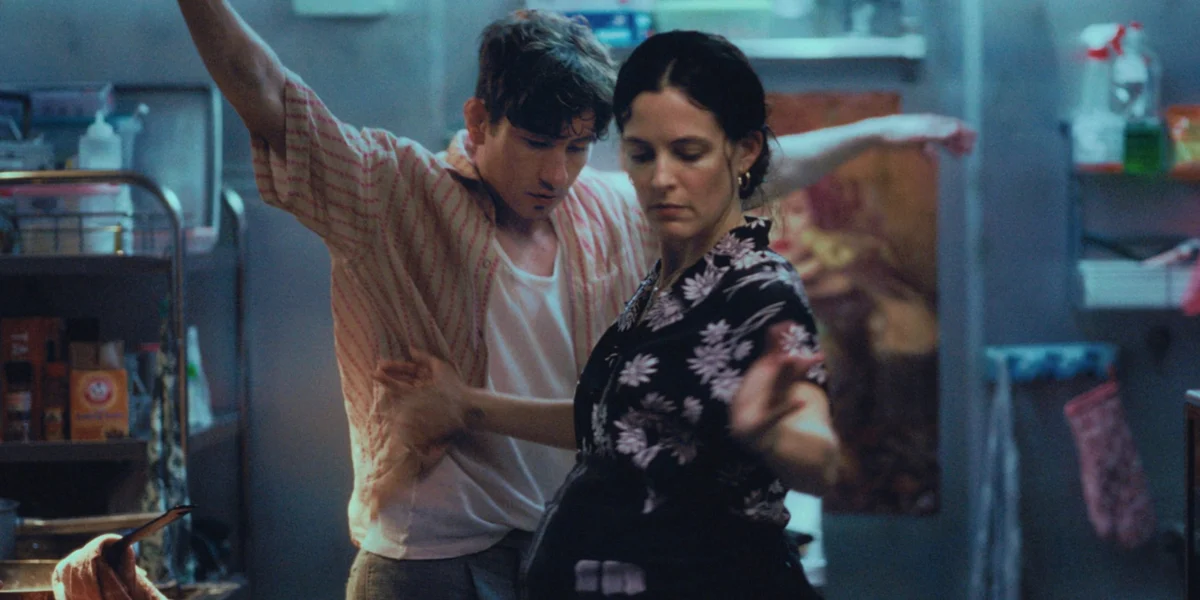
Kantemir Balagov’s highly anticipated follow-up to his critically acclaimed "Beanpole," "Butterfly Jam," premiered at the prestigious Directors’ Fortnight at the Cannes Film Festival, generating significant buzz due to its starry cast and the director’s established reputation. However, early reception suggests that while the film boasts a compelling premise and a talented ensemble, its execution leaves much to be desired, with a peculiar avian co-star emerging as a surprising highlight. The narrative centers on Pyteh, a 16-year-old whose life is a delicate balance between the discipline of the wrestling mat and the demands of his family’s struggling Circassian diner in Newark, New Jersey. This precarious equilibrium is shattered by an impulsive act of his father, igniting a complex exploration of pride, legacy, and the multifaceted nature of masculinity.
A Family’s Struggle and a Father’s Ambition
The film’s central figure, Pyteh, portrayed by acting debutant Talha Akdogan, is the son of Azik (Barry Keoghan) and nephew of Zalya (Riley Keough). Azik, a charismatic but restless immigrant from Russia, harbors grand ambitions for his son, relentlessly pushing Pyteh towards an Olympic wrestling future. This ambition is deeply intertwined with the family’s Circassian heritage and their assimilation into the vibrant, yet often challenging, community of Newark. The family’s livelihood hinges on their Circassian diner, a culinary anchor where Azik’s pride in his family’s traditional "delen" – a type of stuffed bread – serves as a symbol of their cultural identity and a source of hope.
The diner, a hub of familial activity and entrepreneurial endeavors, also features Marat (Harry Melling), a boisterous friend whose perpetually "promising" schemes often border on the absurd. The initial act of "Butterfly Jam" focuses on these intertwined lives, depicting a period of relative stability punctuated by fleeting moments of humor and aspiration. Pyteh’s dedication to wrestling is juxtaposed with Zalya’s quiet strength as she navigates her pregnancy and contributes to the diner’s operations. Meanwhile, Azik and Marat engage in a series of ill-conceived ventures, including the ill-fated acquisition of a cotton candy machine, intended to inject much-needed capital into the struggling establishment.
The Catalyst of Change and Unforeseen Consequences
The film’s narrative trajectory shifts dramatically following a sudden, violent incident, foreshadowed in the opening scenes. This pivotal event, which the film’s title hints at through Azik’s boast of being able to "make a jam out of anything," irrevocably alters the lives of the family members, both blood-related and those who have become like family. The phrase "make a jam out of anything" takes on a darker, more ominous connotation as the characters find themselves drawn into a vortex of chaos and misfortune, often by their own choices.
Director Kantemir Balagov, known for his unflinching portrayal of human struggle in "Beanpole," appears to be revisiting themes of resilience and the devastating impact of prideful masculinity. However, "Butterfly Jam" struggles to maintain a consistent tone, oscillating between moments of languid dullness and sudden bursts of aggression. This tonal inconsistency, coupled with a meandering narrative, leaves the audience disoriented rather than deeply engaged.
A Disparate Ensemble and a Standout Performance
While the presence of established stars like Barry Keoghan, Riley Keough, and Harry Melling draws significant attention, the film’s true revelation is undoubtedly Talha Akdogan as Pyteh. Akdogan delivers a performance that is both sympathetic and compelling, imbuing the young wrestler with a maturity and groundedness that belies his age. His portrayal of Pyteh as a thoughtful individual with clear aspirations offers a stark contrast to the more reckless and impulsive behavior of his father and Marat. This contrast is a central thematic element, highlighting the generational divide and differing perceptions of responsibility and success.
Barry Keoghan brings his characteristic charisma to the role of Azik, attempting to inject a degree of playfulness into a character whose actions often lead to detrimental outcomes. Riley Keough, as Zalya, is largely relegated to the role of the voice of reason, offering a sensible counterpoint to her brother’s erratic decisions. Harry Melling delivers a performance that is often described as over-the-top, drawing comparisons to the fiery intensity of Joe Pesci in "Goodfellas," though lacking the same focused precision. Melling’s portrayal of Marat, characterized by aggression and erratic behavior, underscores the film’s exploration of uncontrolled masculinity.
Visual Storytelling and Unconventional Charm
Balagov’s directorial eye for striking imagery remains evident in "Butterfly Jam." The film is punctuated by memorable visual moments, often bordering on the surreal. The most talked-about element, however, is not a human character but a pelican. This large, silent bird becomes an unexpected focal point, providing moments of genuine charm and serving as a curious oasis of calm amidst the surrounding turmoil. The inclusion of animals in filmmaking is a classic technique to imbue a narrative with warmth, and in "Butterfly Jam," the pelican’s presence offers a welcome, albeit unconventional, respite from the film’s more somber and unsettling aspects.
Another notable visual motif is the recurring use of loud, flashing car alarms. These jarring sounds are employed strategically, seemingly representing the characters’ internal turmoil and acting as sonic signifiers of escalating tension. Their use in scenes with vastly different contexts underscores their symbolic weight, offering a startling and effective element in an otherwise visually uninspired film. The film also manages a moment of unexpected levity during a funeral scene, injecting a brief, welcome dose of dark humor into the unfolding tragedy.
Analysis of Thematic Depth and Narrative Cohesion
"Butterfly Jam" grapples with profound themes of identity, familial obligation, and the pressures of societal expectations, particularly within the context of immigrant communities and the performance of masculinity. The Circassian diner itself is not merely a setting but a microcosm of the family’s struggle for survival and cultural preservation. The economic precariousness faced by many immigrant-run businesses in urban centers like Newark provides a backdrop of real-world challenges that inform the characters’ desperate attempts to improve their circumstances.
The film’s narrative structure, characterized by a languid pace and handheld camerawork, aims to immerse the viewer in the characters’ lives. However, this approach often results in an aimless quality, failing to draw the audience into the underexplored community or foster a deeper connection with the characters’ plights. The film’s exploration of pride, particularly male pride, is a central thread. Azik’s boastfulness about Pyteh’s potential, Marat’s overconfidence in his schemes, and the general demeanor of the male characters highlight a struggle to reconcile ambition with reality and to navigate the complex demands of being a provider and protector.
Broader Implications and Critical Reception
The critical reception of "Butterfly Jam" suggests a film that, while ambitious in its thematic scope and visually arresting in moments, ultimately falters in its narrative execution. The film’s tendency towards purposeless unpleasantness, as noted by some critics, raises questions about the balance between artistic vision and audience engagement. Balagov’s reputation as a fearless filmmaker is undeniable, but in "Butterfly Jam," this uncompromising approach seems to have resulted in a viewing experience that is more disagreeable than profound.
The success of "Beanpole" set a high bar for Balagov’s subsequent work. While "Butterfly Jam" showcases his directorial prowess in crafting memorable images and eliciting strong performances from his cast, particularly Akdogan, its narrative deficiencies prevent it from reaching the same heights. The film’s exploration of the immigrant experience, the complexities of family dynamics, and the societal pressures surrounding masculinity are all fertile ground for cinematic storytelling. However, the success of such narratives often hinges on a cohesive and compelling narrative arc, which appears to be a point of contention for "Butterfly Jam."
The film’s running time of 102 minutes, while standard for many feature films, feels extended by the pacing and narrative drift that has been observed. The ensemble cast, comprising Talha Akdogan, Riley Keough, Barry Keoghan, Harry Melling, and Jaliyah Richards, brings considerable talent to the project, yet their individual performances are evaluated within the context of a film that struggles to unify its disparate elements. The potential for "Butterfly Jam" to resonate deeply with audiences is present in its premise and its thematic concerns, but its realization falls short of its considerable promise. The lingering impression is that of a film that, much like its title suggests, attempts to create something palatable from disparate and potentially chaotic elements, but ultimately struggles to find a harmonious balance.