The Trump administration has officially inaugurated Moms.gov, a centralized digital portal tailored for expectant and new mothers, marking a significant escalation in the federal government’s focus on domestic birth rates and reproductive health. The website, characterized by soft pastel aesthetics and imagery evocative of traditional family structures, serves as the digital centerpiece for a broader pronatalist agenda articulated by President Donald Trump and senior health officials during a recent maternal health summit. This initiative seeks to address what the administration describes as a looming demographic and economic crisis driven by declining fertility rates, though the methods and rhetoric employed have sparked intense debate among public health experts, economists, and advocacy groups.
The Strategic Launch of Moms.gov and the Maternal Health Summit
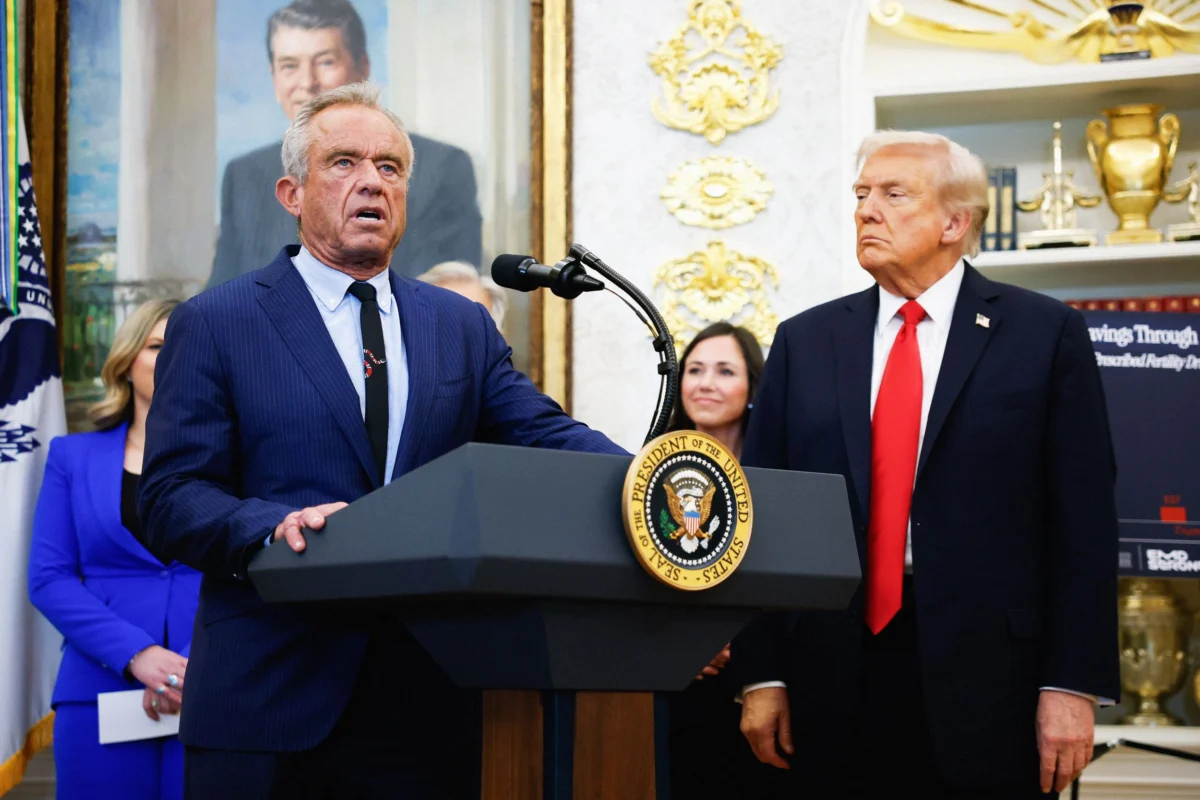
The rollout of Moms.gov coincides with a high-profile maternal health event held on Monday, where President Trump, alongside Department of Health and Human Services (HHS) Secretary Robert F. Kennedy Jr. and Mehmet Oz, the administrator for the Centers for Medicare and Medicaid Services (CMS), outlined a multifaceted strategy to encourage family expansion. The website itself offers a curated selection of resources, including links to "pregnancy centers"—facilities often associated with anti-abortion advocacy—and information regarding workplace hazards for pregnant women.
Critically, observers have noted that while the site provides links to Centers for Disease Control and Prevention (CDC) data on reproductive health risks, it notably omits detailed information regarding the legal protections afforded to pregnant workers under federal law, such as the Pregnant Workers Fairness Act. This omission has led critics to argue that the platform prioritizes a specific ideological vision of motherhood over a comprehensive guide to reproductive rights and workplace equity.
During the summit, President Trump positioned himself as a champion of reproductive technology, proposing a new health care coverage option for in-vitro fertilization (IVF) and other fertility treatments. While the proposal does not mandate that employers provide such coverage, it encourages the inclusion of these often-prohibitive costs in standard insurance packages. In a statement that drew significant media attention, the President declared his dedication to the issue, asserting he had become an expert on female reproductive health and referring to himself as the "father of fertility."
Chronology of the Administration’s Pronatalist Shift
The current emphasis on fertility and birth rates represents the culmination of a policy shift that began during the transition period, heavily influenced by the "Make America Healthy Again" (MAHA) movement. This movement, spearheaded by Robert F. Kennedy Jr., blends traditional conservative values with a focus on environmental toxins and chronic health issues.
- Early Policy Drafting: Throughout the campaign and early administration, advisors drew heavily from "Project 2025," a policy blueprint developed by the Heritage Foundation. This document explicitly called for a "pro-life" and "pro-family" overhaul of the HHS.
- The Integration of MAHA: The appointment of Kennedy to a senior health role signaled a pivot toward addressing fertility through the lens of environmental health and masculinity.
- The Moms.gov Development: Throughout the previous quarter, the administration worked to consolidate reproductive resources under a single federal domain, culminating in the current launch.
- The Legislative Push: The announcement of "Trump Accounts"—investment funds for children—and the IVF proposal mark the administration’s move from rhetoric to tangible, if controversial, policy frameworks.
Scientific Disputes and the "Existential" Sperm Count Crisis
A central pillar of the administration’s rhetoric involves the assertion that the United States is facing a biological "existential crisis." Secretary Kennedy cited a dramatic decline in male fertility as a primary driver of national insecurity. He claimed that men in 1970 possessed twice the sperm count of contemporary teenagers, attributing this decline to a "toxic soup" of endocrine-disrupting chemicals, pesticides, and environmental pollutants.
However, these claims have met with significant pushback from the scientific community. Ashley Wiltshire, a fertility specialist at the Columbia University Fertility Center, noted that the research frequently cited by the administration has been largely superseded by more contemporary, rigorous studies. A comprehensive meta-analysis published in 2023 in the Journal of Fertility and Sterility examined data from 1970 to 2023 and concluded that sperm counts have remained relatively stable over the last five decades.
While Wiltshire acknowledged that male infertility is a growing global concern, she emphasized that the causes are multifaceted and not yet fully understood. The administration’s focus on a "sperm crisis" among teenagers is seen by some experts as an oversimplification that ignores broader lifestyle and socioeconomic factors. Despite this, the administration remains firm. White House spokesperson Kush Desai told reporters that "systemic change" is required to reverse birth rate trends, stating that the administration is "leaving no stone unturned," from researching chronic health issues to addressing childcare and housing affordability.
The Demographic Reality: "Underbabied" America
Adding to the administration’s narrative, Mehmet Oz introduced the term "underbabied" to describe the current state of the American populace. According to Oz, approximately one in three Americans either has no children or fewer children than they desire. He argued that this trend threatens the "replacement rate" necessary for long-term economic stability.
Data from the Johns Hopkins Bloomberg School of Public Health supports the fact that the U.S. birth rate reached a record low in 2024, with women having an average of 1.6 children. This is below the "replacement level" of 2.1 required to keep a population stable without immigration. However, demographic experts point out that the U.S. situation is less dire than that of nations like Japan or South Korea, as the U.S. birth rate still outpaces the death rate, and immigration continues to bolster the workforce.
The administration’s focus on biological and environmental factors as the primary drivers of this decline stands in contrast to sociological research. According to a 2024 Pew Research Center study, the primary reasons adults cite for not having children—or having fewer than they intended—are financial. The skyrocketing costs of housing, the lack of affordable childcare, and the absence of a federal paid family leave mandate are consistently ranked as higher barriers than concerns over environmental toxins.
Official Responses and Ideological Implications
The launch of Moms.gov and the accompanying policy proposals have drawn sharp criticism from women’s rights organizations. Uma Iyer, Chief External Affairs Officer for the National Women’s Law Center, characterized the initiative as an attempt to exert control over women’s autonomy. "Moms.gov is part of a broader effort to undermine women’s power," Iyer stated, suggesting that the administration’s focus is less on public health and more on a fundamentalist social agenda.
The administration’s "Trump Accounts" proposal—which would provide an initial $1,000 investment for every child, accessible at age 18—echoes the "baby bonuses" suggested in Project 2025. Proponents argue these incentives provide a necessary financial floor for new families. Critics, however, argue that a one-time bonus or a long-term investment account does little to solve the immediate, month-to-month costs of raising a child in the current economy.
Furthermore, the administration’s fixation on masculinity and testosterone—frequently highlighted in HHS communications—has been interpreted by some as a cultural project. By linking national security and economic health to male virility and traditional motherhood, the administration is attempting to reshape the American social contract around "pronatalism."
Broader Impact and Future Outlook
The implications of the Trump administration’s pronatalist agenda extend beyond reproductive health into the realms of labor policy, environmental regulation, and civil rights. By framing declining birth rates as a national security threat, the administration may be laying the groundwork for more interventionist policies.
- Economic Strategy: If the "underbabied" narrative takes hold, it could be used to justify significant changes to the tax code, potentially shifting the tax burden away from large families and toward childless adults.
- Regulatory Shifts: Kennedy’s focus on "toxic soups" could lead to a re-evaluation of EPA standards, though critics worry this focus on chemicals may be a distraction from the more pressing need for healthcare reform.
- Healthcare Access: While the IVF proposal is a step toward expanded access, its status as a non-mandatory option means that lower-income workers are unlikely to see the benefits, potentially widening the "fertility gap" between socioeconomic classes.
As Moms.gov becomes the face of federal maternal resources, the tension between the administration’s traditionalist vision and the modern economic realities facing young Americans remains unresolved. While the government moves to "incentivize" pregnancy through pastel graphics and investment accounts, the debate over whether these measures address the root causes of the "fertility crisis" continues to intensify. For now, the administration appears committed to a path that emphasizes biological intervention and traditional family structures as the primary solution to America’s demographic future.