



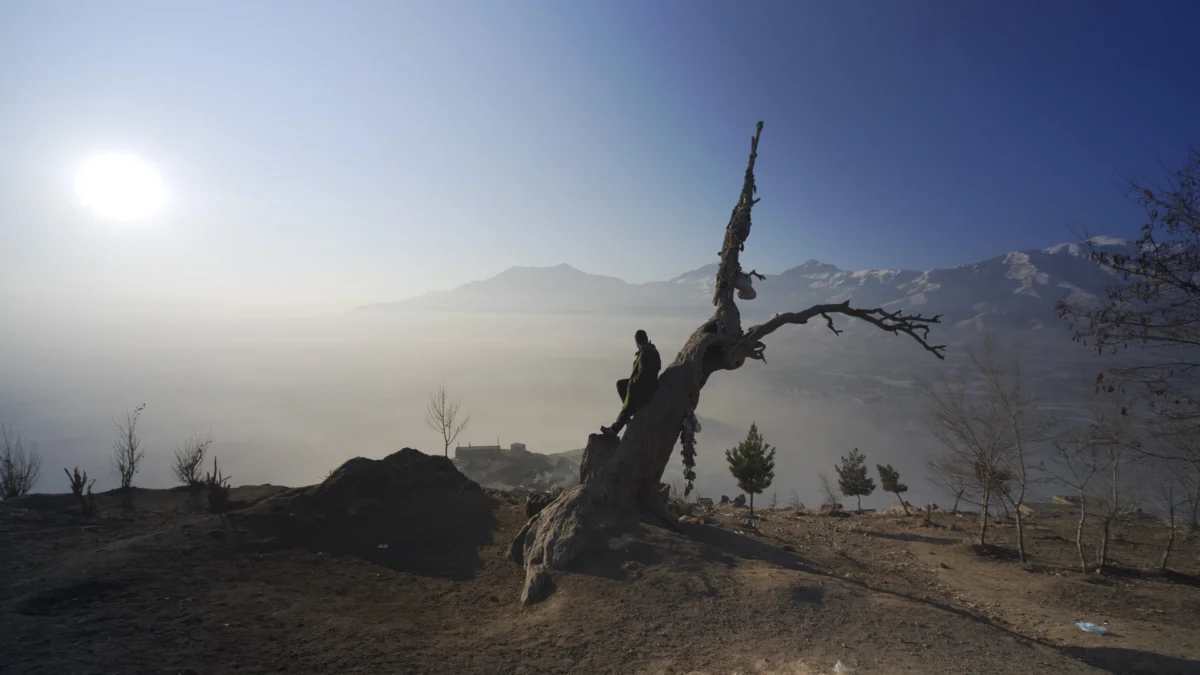
The film "Paikar," a deeply personal exploration of familial estrangement and the enduring impact of political upheaval, navigates a sprawling tapestry of interconnected lives scattered across continents. At its core lies the arduous journey of Dawood Hilmandi, a filmmaker residing in the Netherlands, as he attempts to bridge the chasm that has grown between himself and his family, most notably his emotionally distant father. This ambitious undertaking, framed by a "nomadic structure," transforms the narrative into an unintentional travelogue, charting a course through a constellation of relatives whose lives are inextricably intertwined with significant political and historical events. The sheer breadth of this dispersed family unit—some in Iraq, others migrating to Afghanistan, and many finding roots in the West—presents a formidable challenge, not only for the viewer but for Hilmandi himself in his quest for understanding and reunion.
The genesis of "Paikar" lies in Hilmandi’s profound desire to reconnect with his kin, a journey that is immediately complicated by the fractured relationships and the lingering shadows of past traumas. The film opens with the director-protagonist embarking on this quest, his primary focus being his father, Baba. This endeavor, however, is repeatedly punctuated by the jarring realities of military conflicts and, more recently, a global pandemic, events that conspire to prevent Dawood from achieving a fully satisfying emotional resolution. The narrative is built upon a classic "son reconnects with father" trajectory, delving into the enigmatic psyche of Baba, whose life has been indelibly marked by the Soviet-Afghan War.
The Scars of Conflict: Baba’s Afghan War Trauma
The profound displacement that defines Dawood’s existence is deeply rooted in the conflict with his father. Baba, a former mujahideen colonel, bore witness to and participated in the Soviet invasion of Afghanistan between 1979 and 1989. This decade-long conflict, a pivotal moment in modern Afghan history, left an indelible psychological scar on him, a trauma that has persisted for decades. The paradox of Dawood’s life is stark: having himself been forced to flee authoritarian regimes in Afghanistan and Iran, the most formidable dictator he encountered in his youth was not a political figure, but his own father. This personal history of oppression, experienced both as a victim of political systems and as a subject of paternal authority, shapes the core of Dawood’s narrative.
The film meticulously charts Dawood’s efforts to bridge this generational and emotional divide. Baba, seemingly driven by a need for spiritual solace or perhaps a yearning for reconciliation with his past, challenges Dawood to undertake a pilgrimage to Karbala, a significant religious site for Shia Muslims. Following this, their paths converge again as they travel to Afghanistan, to the very home where the filmmaker was born. This return to his roots is fraught with emotional complexity, offering glimpses into the lingering fear and apprehension that still grip his father. In one of the most poignant and telling scenes, Baba is depicted instinctively covering himself, a clear indication of his fear of being recognized, even decades after the cessation of active conflict. This visceral reaction underscores the deep-seated psychological impact of war and its ability to imprint itself upon an individual’s very being, long after the physical battles have ended.
Navigating Diverse Cinematic Styles: A Stylistic Tension
"Paikar" exhibits a distinct tension in its cinematic approach, oscillating between a more "direct cinema" or "run-and-gun" aesthetic and sequences that are overtly stylized, aiming to convey a more subjective and internal point of view. Director Dawood Hilmandi employs both of these devices, seamlessly dipping in and out of each approach to serve the narrative’s evolving emotional landscape.
One of the earliest sequences exemplifies this stylistic dichotomy. When Dawood embarks on a journey to Athens in an attempt to locate his brother, who is struggling with drug addiction, the film leans into a more expressionist mode. This particular segment, when viewed in isolation, evokes a striking resemblance to the raw, gritty aesthetic of films like "Trainspotting," creating a somewhat jarring effect within the broader context of "Paikar." The jarring nature stems from the stark contrast it presents to the more understated and observational style that follows.
In contrast, the more bare-bones, observational approach adopted in subsequent parts of the film feels more intrinsically aligned with the story’s core themes and its intended emotional tone. This shift towards a less overtly cinematic, more vérité style allows the raw emotion and the quiet desperation of the family’s circumstances to resonate more profoundly with the audience. The disciplined use of these contrasting styles highlights Hilmandi’s directorial choices, aiming to immerse the viewer in both the objective reality of his family’s fragmented existence and the subjective turmoil that defines it.
A Grand Narrative in a Minimalist Frame
While Dawood’s family saga possesses the inherent scope of a grand narrative, sprawling across numerous countries and diverse socio-political contexts, the documentary "Paikar" adopts a strikingly contrasting mode of storytelling. The plot is characterized by its intimacy and minimalism. Hilmandi consciously avoids any inclination towards broader political or social commentary, instead choosing to focus resolutely on the micro-level of familial relationships. This disciplined approach, eschewing the temptation of sweeping pronouncements, allows for a more tightly focused and emotionally resonant narrative.

The film’s strength lies in its unwavering commitment to this intimate perspective. The profound impact of family deaths occurring during the production of the film, for instance, are handled with a delicate restraint. These significant events are consistently depicted as happening off-screen, underscoring Dawood’s perpetual state of being a beat or two behind, a step removed from the most crucial moments in his family’s life. The sheer scale and dispersal of his family—so vast and spread out—render it an almost insurmountable task to keep pace with even the most significant events or crises.
Ultimately, "Paikar" succeeds in capturing a journey that remains as fragmented and dispersed as the very family it so intimately portrays. The film does not offer neat resolutions or grand pronouncements; instead, it provides a raw, unflinching look at the complexities of connection, the enduring legacy of trauma, and the persistent, often elusive, search for belonging in a world irrevocably shaped by conflict.
Supporting Data and Context: The Afghan Conflict’s Long Shadow
The experiences depicted in "Paikar" are deeply rooted in the historical context of Afghanistan and its protracted periods of conflict. The Soviet invasion of Afghanistan in 1979, which lasted until 1989, was a devastating war that led to the deaths of an estimated one to two million Afghans and displaced millions more. This period saw the rise of various mujahideen factions, many of whom received support from foreign powers, including the United States, Pakistan, and Saudi Arabia, in their fight against the Soviet Union and the Afghan government. The war had profound and lasting consequences on Afghan society, contributing to political instability, the rise of extremist ideologies, and a generation deeply affected by trauma and displacement.
Following the Soviet withdrawal, Afghanistan plunged into a brutal civil war in the 1990s, which further destabilized the country and paved the way for the rise of the Taliban regime in 1996. The Taliban’s rule, characterized by its harsh interpretation of Islamic law and suppression of dissent, led to further human rights abuses and international isolation. The U.S.-led invasion in 2001, in response to the September 11th attacks, ushered in another protracted period of conflict and nation-building efforts, which ultimately proved unsustainable, culminating in the Taliban’s return to power in 2021.
The experiences of Dawood’s father, Baba, as an ex-mujahideen colonel, place him squarely within this turbulent historical narrative. His participation in the anti-Soviet jihad, while potentially seen by some as a patriotic struggle, also involved engagement in violent conflict that undoubtedly left psychological scars. The subsequent years of civil war and Taliban rule would have further compounded any existing trauma, shaping his worldview and his interactions with his family. The fear of recognition that he exhibits in the film is a testament to the pervasive sense of danger and persecution that has characterized life in Afghanistan for so many.
The "Submit Your Film" Initiative: A Platform for Diverse Voices
The inclusion of "Paikar review is part of the Submit Your Film Initiative" highlights the film’s emergence through a platform dedicated to showcasing emerging filmmakers and diverse cinematic perspectives. Initiatives like these are crucial for providing exposure to documentaries and narrative films that might otherwise struggle to find distribution. They often serve as a vital conduit for personal stories, cultural explorations, and critical examinations of social and political issues that might be overlooked by mainstream media. The "Submit Your Film" initiative, therefore, plays a significant role in fostering a more inclusive and representative film landscape, allowing filmmakers like Dawood Hilmandi to share their unique visions with a wider audience.
The success of such initiatives is often measured by the breadth of stories they amplify and the impact they have on the careers of the filmmakers they support. By providing a platform for films like "Paikar," these initiatives contribute to a richer public discourse, offering insights into the lived experiences of individuals navigating complex global realities.
Chronology of Key Events (Inferred from the article):
- 1979-1989: Soviet-Afghan War. Dawood’s father, Baba, serves as an ex-mujahideen colonel. This period deeply traumatizes Baba.
- Post-Soviet Withdrawal: Period of civil war and instability in Afghanistan, contributing to further displacement and hardship.
- Dawood’s Youth: Dawood experiences authoritarian regimes in Afghanistan and Iran, leading to his family’s displacement.
- Dawood’s Present: Dawood resides in the Netherlands and embarks on a journey to reconnect with his family, particularly his father.
- Film Production Period:
- Dawood travels to Athens to find his drug-addicted brother.
- Baba challenges Dawood to a pilgrimage to Karbala.
- Dawood and Baba travel to Afghanistan to visit his birthplace.
- Family deaths occur during the production of the film, often off-screen from Dawood’s perspective.
- A pandemic (likely COVID-19) occurs, impacting travel and family connections.
Broader Impact and Implications: The Universal Search for Belonging
"Paikar" delves into themes that resonate universally: the complexities of parent-child relationships, the enduring impact of trauma, and the universal human need for connection and belonging. The film’s fragmented narrative mirrors the fragmented lives of many individuals and families affected by war, political instability, and mass migration. The story of Dawood Hilmandi and his family serves as a microcosm of the experiences of countless individuals who have been displaced, separated, and forced to grapple with the long-term consequences of historical events.
The film’s intimate and minimalist approach, while challenging for some viewers, ultimately offers a powerful and authentic portrayal of these struggles. By focusing on the personal rather than the political, "Paikar" underscores the profound human cost of conflict and the resilience of the human spirit in its persistent quest for understanding and reconciliation. The documentary’s disciplined storytelling, devoid of easy answers, invites viewers to contemplate the nature of family, memory, and the arduous, often incomplete, journey towards healing and connection in a fractured world. The implications of such personal narratives extend beyond the screen, fostering empathy and a deeper understanding of the human experiences that lie beneath the headlines of global conflicts and political upheavals.