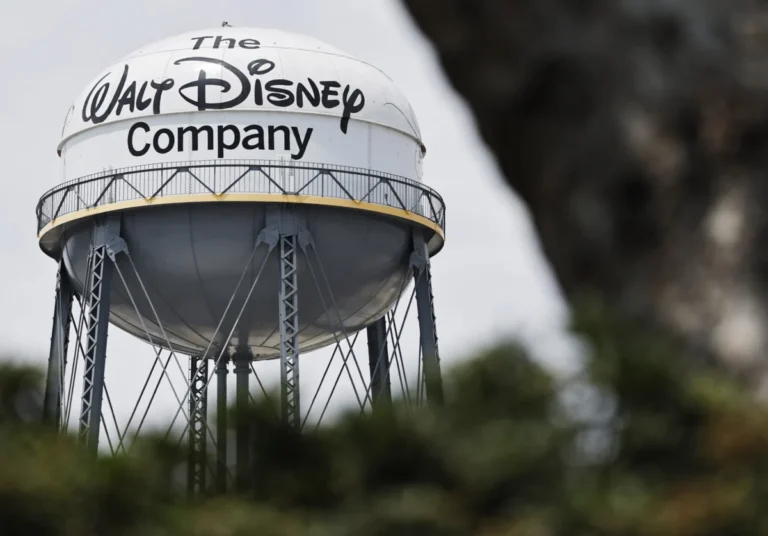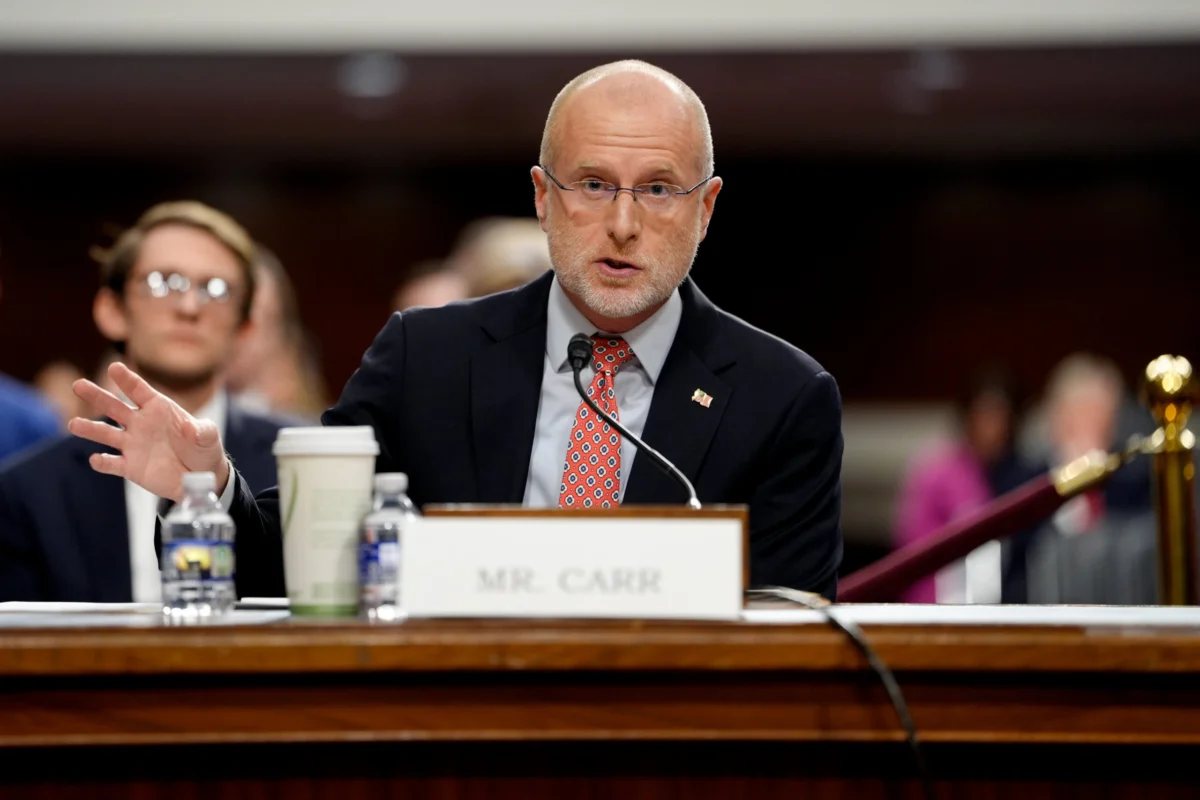
The Federal Communications Commission (FCC) has formally requested an accelerated review of broadcast station licenses held by The Walt Disney Company, citing ongoing concerns regarding the corporation’s diversity, equity, and inclusion (DEI) initiatives. In a letter released Tuesday by FCC Chairman Brendan Carr, the regulatory body ordered Disney to file for early renewal of its ABC-owned television stations, effectively moving up a process that was not scheduled to begin for several years. This directive marks a significant escalation in the agency’s oversight of major media conglomerates and highlights a growing intersection between federal regulatory power, corporate social policy, and First Amendment protections.
The order specifically targets eight television stations owned and operated by Disney across major American markets, including three in California and others in Illinois, New York, Texas, North Carolina, and Pennsylvania. Under standard operating procedures, these licenses were not slated for renewal until a window spanning 2028 through 2031. By demanding an immediate filing—with a deadline set for May 28—the FCC is utilizing a rare procedural mechanism to scrutinize Disney’s compliance with the Communications Act of 1934 and current agency rules.
The Origins of the DEI Investigation
The FCC’s move is the latest development in an investigation that originated in March 2024. At that time, the commission began looking into whether Disney’s internal DEI policies and hiring practices potentially violated federal prohibitions against unlawful discrimination. While broadcast licenses are traditionally evaluated based on a station’s service to the "public interest, convenience, and necessity," the current FCC leadership has signaled that corporate-wide social mandates may fall under the umbrella of regulatory scrutiny if they influence the operational character of the licensee.
According to the FCC’s Tuesday letter, Disney has provided responses to two previous inquiries since the investigation began. However, Chairman Carr noted that the agency has determined further action is necessary to ensure the company remains a qualified licensee. The investigation focuses on whether Disney’s ABC subsidiary has adhered to the FCC’s rules regarding equal employment opportunities and whether its DEI frameworks have inadvertently or intentionally created discriminatory environments that conflict with the Communications Act.
Disney, for its part, has maintained that its broadcast operations remain in full compliance with all federal regulations. In a statement released Tuesday, the company defended its record, stating, "ABC and its stations have a long record of operating in full compliance with FCC rules and serving their local communities with trusted news, emergency information, and public-interest programming." The company expressed confidence that its performance demonstrates its continued qualifications as a licensee and indicated readiness to defend its position through established legal channels.
Political Context and the Role of Jimmy Kimmel
The timing of the FCC’s order has drawn significant attention, as it coincides with renewed friction between the executive branch and ABC’s programming content. President Donald Trump has recently intensified his criticism of the network following comments made by late-night host Jimmy Kimmel. During a monologue on "Jimmy Kimmel Live!", the comedian referred to First Lady Melania Trump as an "expectant widow," a comment made just days prior to a reported security incident at the White House.
The President has since called for ABC to remove Kimmel from the airwaves, reviving a long-standing grievance with the host. This is not the first instance where Kimmel’s rhetoric has intersected with FCC regulatory threats. In September 2025, Kimmel was briefly suspended following controversial remarks regarding the death of conservative activist Charlie Kirk. At that time, Chairman Carr suggested that such incidents could potentially jeopardize a broadcaster’s standing during the license renewal process.
While the FCC’s formal letter focuses on DEI policies and the Communications Act, critics of the move argue that the accelerated review is being used as a tool for political retribution. They point to the overlap between the President’s public grievances and the agency’s regulatory actions as evidence of a "weaponized" FCC.
A Growing Pattern of Media Oversight
Disney is not the only media giant facing such scrutiny under Chairman Carr’s leadership. Since his appointment by President Trump, Carr has overseen a broader initiative to investigate the DEI practices of several major telecommunications and media firms. In February 2025, the FCC launched a similar inquiry into Comcast, the parent company of NBCUniversal, and has also targeted Paramount Global.
These investigations reflect a shift in the FCC’s interpretation of its mandate. Historically, the agency has focused on technical compliance, signal interference, and content decency standards. However, the current administration has expanded this scope to include the internal corporate governance of licensees, particularly when those governance structures involve social or political ideologies that the administration deems problematic or discriminatory.
The early renewal order does not extend to Disney’s affiliate stations, which are owned and operated by independent groups such as Nexstar Media Group. This distinction highlights the FCC’s specific focus on "Owned and Operated" (O&O) stations, where the parent corporation has direct control over both the business operations and the local broadcast licenses.
Internal Dissent and Legal Challenges
The FCC’s decision has not been unanimous. Commissioner Anna Gomez, a Democrat on the five-member panel, issued a sharp rebuke of the order, labeling the move "unprecedented, unlawful, and going nowhere." In a post on the social media platform X, Gomez characterized the action as a "political stunt" and encouraged affected companies to challenge the FCC’s authority in court, asserting that the First Amendment provides a robust defense against such regulatory maneuvers.
Legal experts and First Amendment advocates have echoed these concerns. Jameel Jaffer, executive director of the Knight First Amendment Institute at Columbia University, warned that using license renewals as a lever to influence media content or corporate policy sets a dangerous precedent. "The FCC has no authority to cancel broadcasters’ licenses because of their perceived political views," Jaffer stated. He argued that attempts to consolidate control over what Americans see and hear on television are "corrosive to democracy."
The legal battle likely to follow will center on the "public interest" standard. Disney and its supporters will likely argue that the FCC is overstepping its bounds by conflating corporate HR policies with broadcast performance. Conversely, the FCC is expected to argue that the character of a licensee is a holistic determination, and that any patterns of discrimination—even those framed as DEI efforts—are relevant to whether a company should be entrusted with the public airwaves.
Impact on the Broadcast Landscape
The implications of this accelerated review extend beyond Disney. If the FCC successfully uses DEI investigations to delay or deny license renewals, it could fundamentally change how media companies approach social initiatives. Industry analysts suggest that other broadcasters may begin to roll back or modify their diversity programs to avoid similar regulatory entanglements.
Furthermore, the uncertainty surrounding license renewals could have financial repercussions. For Disney, the eight stations involved—including WABC-TV in New York and KABC-TV in Los Angeles—are critical hubs for local news and advertising revenue. Any threat to their operating licenses introduces volatility that could affect stock performance and long-term strategic planning.
The 30-day window for Disney to file its renewal applications—ending May 28—will be a critical period for the industry. The filing will require Disney to provide extensive documentation regarding its employment practices, community service records, and compliance history. The FCC will then have the opportunity to review these filings and decide whether to grant the renewals, set them for a hearing, or issue further inquiries.
Chronology of Key Events
- March 2024: The FCC initiates an investigation into Disney’s DEI efforts and their alignment with the Communications Act.
- February 2025: Similar investigations are launched against Comcast and Paramount Global.
- September 2025: Jimmy Kimmel is suspended following comments about Charlie Kirk; Chairman Carr hints at license repercussions.
- April 2026: Kimmel makes controversial remarks regarding the First Lady; President Trump calls for his removal.
- April 29, 2026: The FCC issues a letter ordering Disney to file for early renewal of eight broadcast licenses by May 28, 2026.
Conclusion and Future Outlook
The FCC’s demand for an early review of Disney’s licenses represents a landmark moment in the history of American media regulation. It tests the boundaries of the agency’s power to oversee the internal policies of private corporations and raises fundamental questions about the role of the government in policing the "character" of broadcasters. As the May 28 deadline approaches, the media industry will be watching closely to see if Disney’s defensive strategy relies on administrative compliance or a high-stakes First Amendment challenge.
Regardless of the immediate outcome for the eight ABC stations, the precedent has been set: under the current commission, corporate social policies are no longer insulated from the federal licensing process. This shift suggests a new era of "active oversight" where the administrative state plays a more direct role in the ideological and operational frameworks of the nation’s largest media entities. For Disney, the coming months will be a test of its ability to navigate a complex landscape where entertainment, politics, and federal law are increasingly inseparable.