


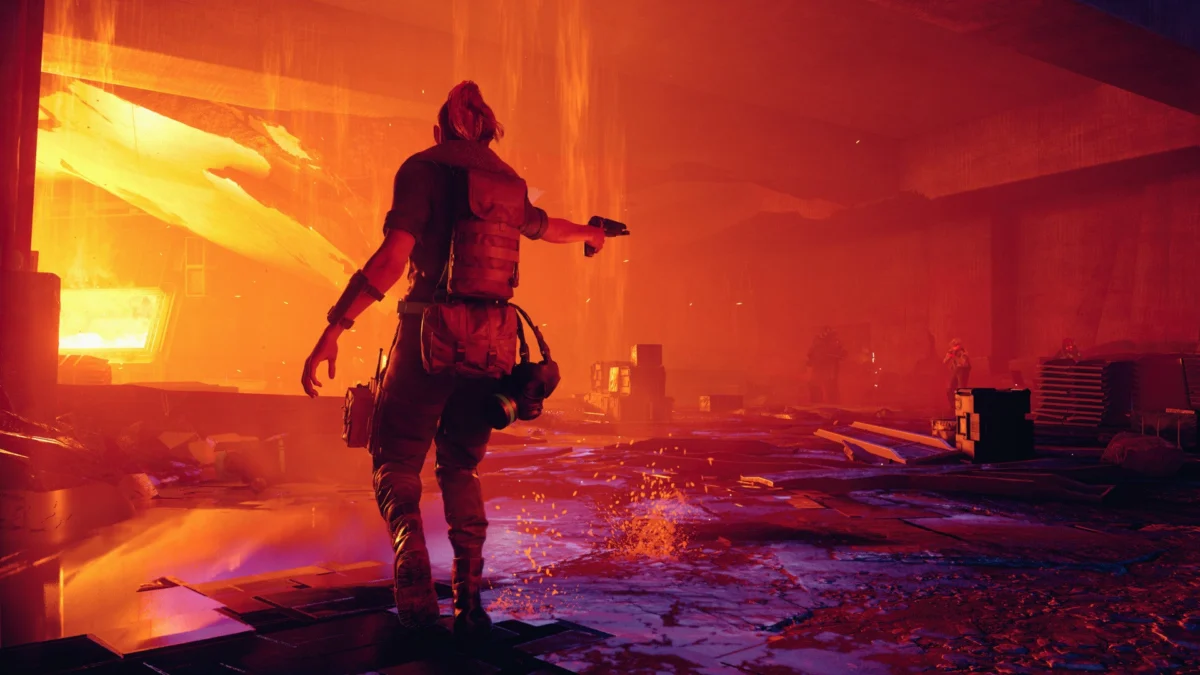
The Finnish video game developer Remedy Entertainment has released its business review for the first quarter of 2026, offering a comprehensive look at a company in transition. Covering the period from January to March 2026, the report illustrates a studio recalibrating its long-term strategy following a turbulent 2025. While the developer faced significant headwinds last year with the commercial failure of its multiplayer endeavor, FBC: Firebreak, the latest financial data suggests a return to stability driven by the enduring popularity of its core single-player intellectual properties. The report confirms that the highly anticipated sequel, Control Resonant, remains on track for a 2026 release, while the studio’s financial health is being bolstered by the steady performance of its back catalog, specifically the Control and Alan Wake franchises.
Financial Overview and Market Performance
According to the Q1 2026 report, Remedy’s revenue for the quarter reached EUR 13.1 million, representing a slight decrease of 1.9% compared to the EUR 13.4 million recorded in the same period the previous year. Despite this marginal dip in top-line revenue, the company maintained profitability, posting an operating profit (EBIT) of EUR 1.0 million, compared to EUR 1.3 million in Q1 2025. The operating profit margin for the quarter stood at 7.8%, a decrease from the 9.7% seen in the prior year’s comparison period.
Chief Executive Officer Jean-Charles Gaudechon, who assumed the leadership role in February 2026, noted that the revenue from game sales and royalties actually saw an upward trend. This growth was primarily attributed to the continued commercial success of Alan Wake 2 and a significant resurgence in sales for the original Control. The discrepancy between rising sales royalties and the slight total revenue decrease is largely attributed to the phasing out of development fees from external partners as projects transition into full internal production or reach completion.
The standout performer of the quarter was undoubtedly the 2019 hit Control. The report highlights that the title retained "solid sales momentum," even outperforming its sales figures from the same period in 2025. This longevity is credited to strategic promotional campaigns and the increased brand visibility generated by the marketing rollout for the upcoming Control Resonant. Furthermore, the recent expansion of Control to mobile platforms, including a high-profile port for iPhone and iPad, has opened new revenue streams. As of the end of March 2026, Control has surpassed 6 million units sold globally, a significant jump from the 5 million milestone reported just months earlier.
The Aftermath of FBC: Firebreak and Structural Changes
The Q1 report also serves as a post-mortem for FBC: Firebreak, Remedy’s first major foray into the live-service co-op shooter genre. The year 2025 was characterized by the developer as a period of significant challenge, largely due to the underwhelming market reception and poor player retention of the title. The failure of FBC: Firebreak led to a major leadership shuffle, resulting in the departure of long-time CEO Tero Virtala, who stepped down after nine years at the helm.
In March 2026, Remedy officially ceased content updates for FBC: Firebreak. However, the Q1 report confirms that the studio will continue to provide necessary infrastructure support to keep the servers operational for the existing player base. While the game did not meet commercial expectations, it continues to contribute a small but steady stream of revenue through residual sales and in-game transactions, which Gaudechon noted as a factor in the quarter’s royalty growth.
The pivot away from live-service development marks a return to Remedy’s "specialty"—narrative-driven, single-player experiences. The leadership transition to Jean-Charles Gaudechon, an Electronic Arts veteran, was intended to bring a balance of blockbuster production experience and a commitment to preserving the unique creative identity that Remedy has cultivated over three decades. Gaudechon’s primary mandate has been to streamline the development pipeline and ensure that the studio’s ambitious "Remedy Connected Universe" (RCU) remains commercially viable.
Strategic Focus: The Remedy Connected Universe
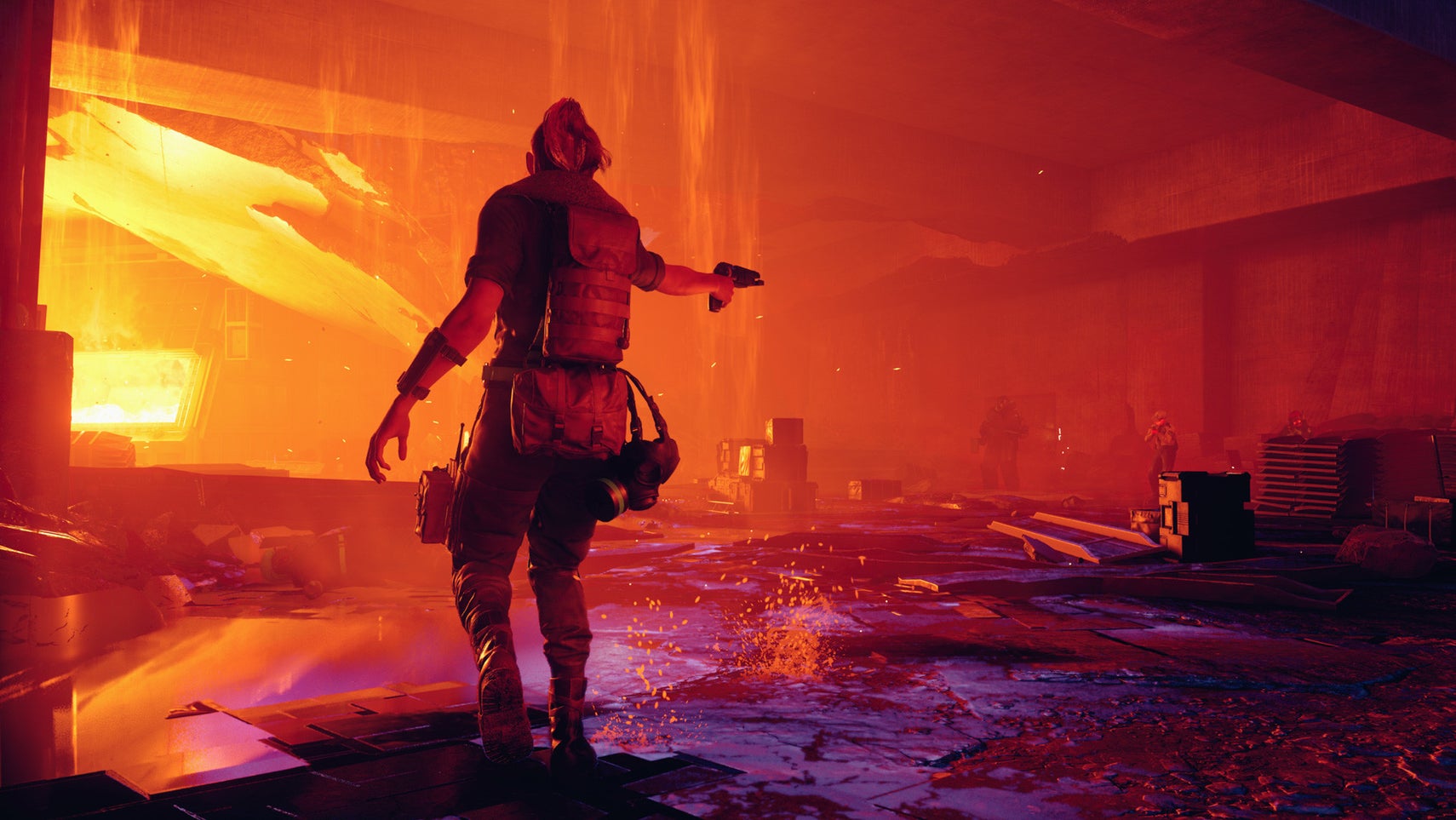
A significant portion of the business review was dedicated to the progress of upcoming projects. Control Resonant, the direct sequel to the 2019 original, is currently the studio’s top priority. The report confirms that the game is in the final stages of development and is meeting all internal milestones for a launch later in 2026. Control Resonant is expected to be a major catalyst for the company’s financial performance in the second half of the year and into 2027.
Remedy’s strategy of building a shared narrative universe—linking the worlds of Control and Alan Wake—appears to be paying off in terms of long-tail sales. The company noted that Alan Wake 2, which initially struggled to recoup its heavy development and marketing costs, has benefited from this interconnectedness. By placing the Alan Wake titles on subscription and streaming services, such as Amazon Luna, Remedy has managed to generate consistent royalty income outside of traditional storefront sales. This approach has allowed the studio to maximize the value of its intellectual property long after the initial launch window.

Development Pipeline and Future Outlook
Beyond the immediate horizon of Control Resonant, Remedy provided updates on its collaborative projects with Rockstar Games. The remakes of Max Payne 1 & 2 have officially entered the full production stage. This project is highly anticipated by both fans and investors, as it revisits the franchise that first put Remedy on the global map. Under the agreement with Rockstar, Remedy is developing the games as a single package for PC, PlayStation 5, and Xbox Series X/S, with Rockstar financing the development and handling publishing duties.
Additionally, the report revealed that a third, currently unannounced project has moved into the proof-of-concept phase. While details remain scarce, this project is believed to be part of the studio’s broader effort to diversify its portfolio while remaining within the bounds of its core competencies in action-adventure storytelling.
The studio’s reliance on its proprietary Northlight Engine continues to be a cornerstone of its development strategy. By maintaining its own technology stack, Remedy argues it can achieve a level of visual fidelity and physics-based gameplay that distinguishes its titles from competitors using third-party engines. However, the report also acknowledges the high costs associated with maintaining such technology, emphasizing the need for high-volume sales to justify the investment.
Industry Analysis and Implications
Industry analysts view Remedy’s Q1 2026 results as a sign of a "successful course correction." The decision to move away from the volatile live-service market to double down on high-quality single-player experiences aligns with a broader industry trend where mid-sized "AAA" developers are finding success by focusing on niche, high-fidelity narrative games rather than trying to compete with the giants of the multiplayer space.
The success of the Control mobile port and the steady sales of Alan Wake 2 suggest that there is a significant appetite for "prestige" gaming experiences on various platforms. For Remedy, the challenge remains the high cost of production in the current economic climate. The slight dip in operating profit margin suggests that while the studio is profitable, the margins for error are slim. The upcoming launch of Control Resonant will be the true litmus test for Gaudechon’s leadership and the studio’s refined business model.

If Control Resonant mirrors the critical and commercial trajectory of its predecessor, Remedy will be well-positioned to fund its ambitious roadmap through the end of the decade. The studio’s ability to leverage its back catalog while simultaneously pushing the boundaries of interactive storytelling remains its greatest strength. As the company moves toward the second half of 2026, the focus will remain squarely on execution and the successful delivery of what is expected to be one of the year’s most significant releases.
In conclusion, Remedy Entertainment’s Q1 2026 performance indicates a company that has weathered a period of strategic uncertainty and emerged with a clearer vision. By leaning into the strengths of the Control and Alan Wake franchises and maintaining a disciplined approach to production under new leadership, the studio is attempting to prove that narrative-driven excellence remains a sustainable business model in the modern gaming landscape. Investors and fans alike will be watching closely as the studio prepares for the launch of Control Resonant and the continued revival of the Max Payne legacy.