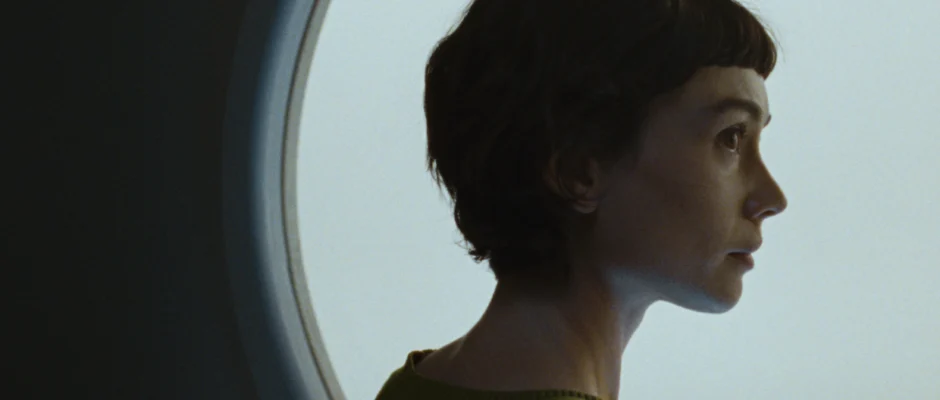
The premiere of Anima at the South by Southwest (SXSW) Film & TV Festival on March 12 marked a significant entry into the contemporary "lo-fi" science fiction subgenre, blending high-concept existentialism with a grounded, road-trip narrative. Directed by Brian Tetsuro Ivie and starring Sydney Chandler and Takehiro Hira, the film explores the ethical and spiritual ramifications of consciousness uploading, a theme that has gained increasing relevance as Silicon Valley continues to pursue various forms of digital immortality. Unlike traditional big-budget sci-fi that prioritizes spectacle, Anima utilizes a 16mm film aesthetic and an intimate character-driven plot to question whether the essence of humanity can truly survive the transition from biological matter to silicon.
Narrative Overview and the Premise of Transference
Anima follows the journey of Beck, played by Sydney Chandler, a young woman starting a new position that requires her to facilitate the final transition of Paul, portrayed by Takehiro Hira. Paul has opted for a procedure that involves uploading his consciousness into a cloud-based system, effectively ending his physical life to achieve a digitized form of immortality. This procedure is marketed as a way for loved ones to continue interacting with a version of the deceased, yet the film focuses on the friction between the clinical nature of the technology and the messy reality of human regret.
As the two travel toward the facility, the journey deviates from its professional parameters. Paul utilizes his final hours to seek out individuals he has wronged in the past, attempting to achieve a state of moral absolution before his consciousness is archived. This "existential winding road" serves as the core of the film, highlighting the contrast between Beck’s transactional view of life—shaped by personal loss and financial necessity—and Paul’s desperate attempt to curate his legacy.
Philosophical and Theological Foundations
The narrative of Anima is deeply rooted in the Parable of the Rich Fool from the Gospel of Luke (12:13-21). In the biblical text, a man builds larger barns to store an abundance of crops, believing his future is secure, only for his life to be demanded of him that very night. Director Brian Tetsuro Ivie, who transitioned to narrative filmmaking from a background in documentaries, utilized this parable to critique the modern drive to "transcend death without spiritual consideration."
Ivie’s approach to the material is informed by his Catholic upbringing and a desire to explore the divine through the arts without adhering to the didactic tropes often associated with religious cinema. He posits that the current cultural trajectory views humans as material beings—"time and chance acting on matter"—which facilitates the belief that the soul is merely data that can be uploaded. By framing the film as a dialogue between the material and the immaterial, Ivie challenges the notion that a digital afterlife can replicate the "ensouled" experience of a living human.
The Technical Artistry: 16mm and the Lo-Fi Aesthetic
A defining characteristic of Anima is the decision to shoot on 16mm film rather than digital high-definition. This choice serves as a thematic counterpoint to the film’s focus on digital consciousness. While digital cinematography offers a clean, often sterile perfection, 16mm film is characterized by its grain structure, chemical imperfections, and susceptibility to light leaks. Ivie described the process of shooting on film as an "act of prayer," requiring a slower, more deliberate pace that forces the production to remain rooted in the physical world.
The aesthetic direction was further refined by costume designer Emily Costantino, who avoided derivative sci-fi tropes. Instead of the sleek, monochromatic uniforms often seen in futuristic cinema, Costantino drew inspiration from 1960s and 70s Japanese fashion magazines and classical paintings. The resulting wardrobe—a mix of Chandler’s "scroungy" utilitarian outfits and Hira’s more structured, Matrix-adjacent attire—creates a visual language that feels both timeless and futuristic. This "broken reflection" of life is intended to ground the high-concept technology in a felt, lived-in reality.
Character Development and the Human Element
Sydney Chandler’s portrayal of Beck is an exploration of "quiet rage" and emotional stuntedness. Chandler noted that the character’s backstory involving the loss of her father informs her initial coldness and her view of the world as a series of transactions. The filming process allowed for organic character development; Chandler recounted a specific moment during the "pill scene"—where Paul undergoes the final stage of the procedure—in which her genuine emotional connection to Takehiro Hira led to an unscripted breakdown. This moment of human vulnerability, she argued, is what distinguishes human art from algorithmic output.

Takehiro Hira’s performance as Paul provides the necessary warmth to balance Beck’s cynicism. The chemistry between the two actors drives the film’s central argument: that human connection is found in the presence of the "other," even when that presence is temporary. The film suggests that in the effort to preserve life indefinitely, individuals may fail to be present in the time they currently possess.
Production Ethics: The Crew Careline and Indie Leadership
In an industry often criticized for grueling working conditions, particularly in independent cinema, Ivie implemented a unique budgetary item known as the "Crew Careline." Drawing from his documentary background where "taking care of people" is paramount, Ivie used personal funds to ensure the crew had access to better food, transportation, and lodging.
This approach reflects a broader movement within indie production to prioritize the well-being of the workforce over the singular ambition of the director. By fostering a supportive environment, the production aimed to mirror the film’s themes of human dignity and connection. Ivie’s company, Kebrado, was founded with the mission of helping filmmakers maintain their humanity through the arts, emphasizing that the process of creation should be as ethical as the story being told.
Broader Context: Sci-Fi as a Response to Modern Crisis
The themes explored in Anima align with historical trends in the science fiction genre. Sydney Chandler, whose college thesis examined genre work emerging from crises like World War I and II, noted that sci-fi often serves as an intimate study of humanity under pressure. In the current era, the "crisis" is the rapid advancement of artificial intelligence and the potential commodification of the human soul.
Anima joins a growing canon of films that react to the AI movement by asserting the importance of human mistakes and the natural cycle of life and death. The film argues that death provides life with its "color and meaning," and that circumventing this mystery may result in a loss of the very qualities that make human existence valuable. This perspective is reflected in recent industry data showing a resurgence of interest in "analog" storytelling and practical effects, as audiences seek out textures and narratives that feel authentically human.
Impact and Implications for the Future of Art
As artificial intelligence continues to permeate the film industry—from scriptwriting to de-aging technology—Anima stands as a testament to the "chemical miracle" of traditional filmmaking. The film’s SXSW premiere highlighted a significant appetite for stories that prioritize philosophical inquiry over technical wizardry.
The implications of Anima extend beyond the screen, touching on the ongoing debate regarding the ethics of digital immortality. Real-world companies are already experimenting with "grief tech," using AI to create avatars of the deceased. Ivie’s film serves as a cautionary tale and a spiritual reflection on these developments, suggesting that while art may outlive the artist, the artist’s soul cannot be replicated by a cloud system.
By combining the grain of 16mm film with the narrative weight of a biblical parable, Anima offers a unique contribution to the sci-fi genre. It reaffirms that the value of life is found in its finitude and that the most profound human experiences are often the ones that cannot be digitized, archived, or uploaded. The film’s success at SXSW underscores a critical cultural moment where the preservation of the "ensouled" human experience has become a primary concern for both artists and audiences alike.