


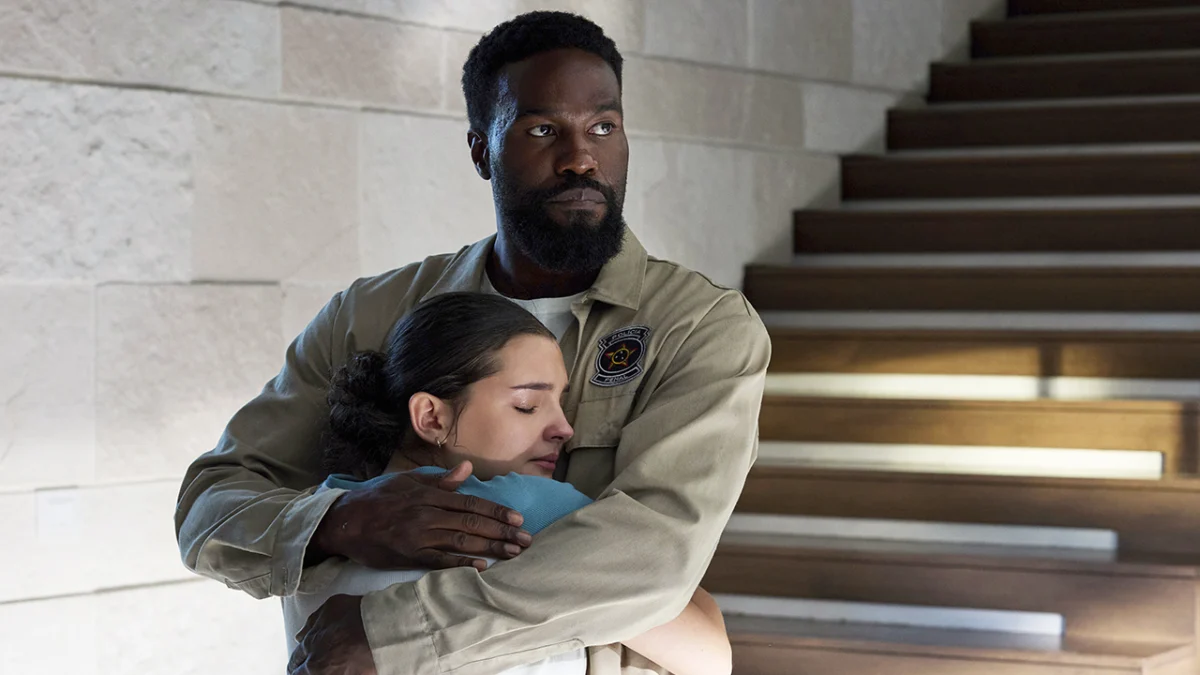
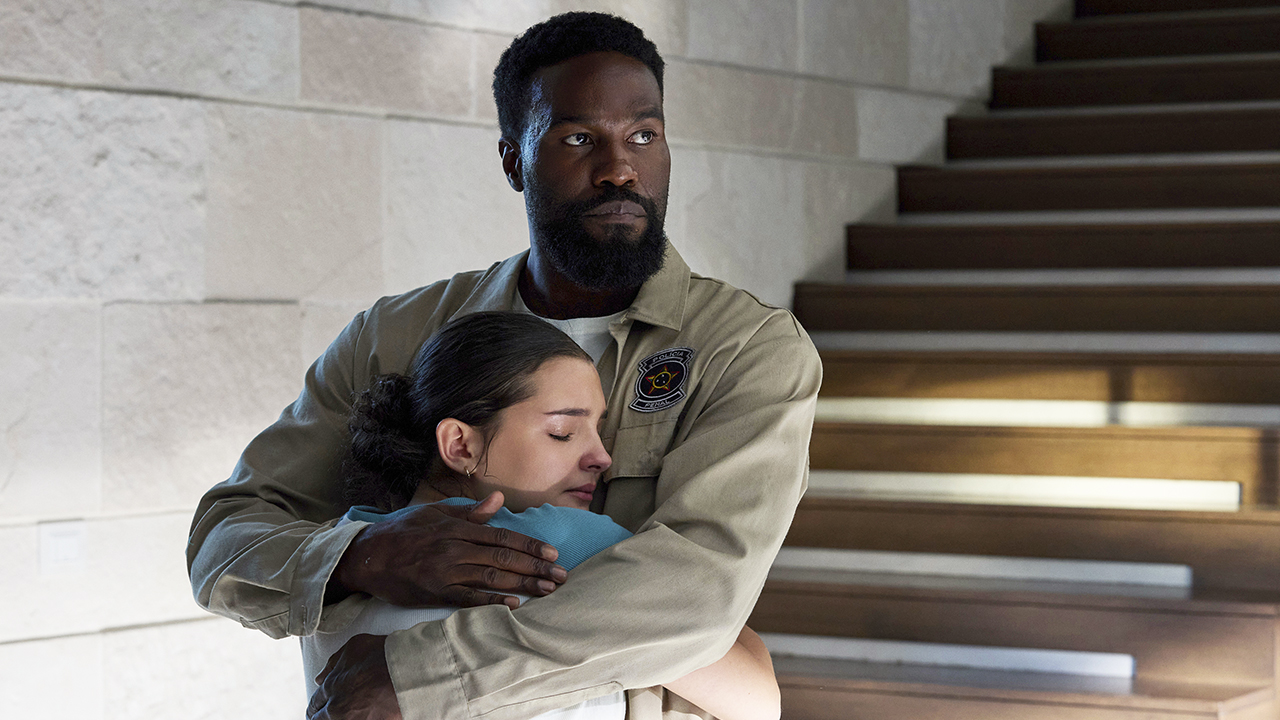
Netflix’s recent adaptation of A.J. Quinnell’s acclaimed novel, Man on Fire, premiered globally on April 30th, 2024, closing out a month of diverse original programming with a high-stakes action thriller. The series, which marks the third screen iteration of Quinnell’s narrative following the 1987 and 2004 feature films, casts Yahya Abdul-Mateen II as John Creasy, a former soldier grappling with severe PTSD and alcoholism. This iteration reimagines Creasy as a CIA contractor, a departure from the French Foreign Legion background in the original novels, but maintains the core premise of his character arc: becoming the protector of a vulnerable young girl. In the Netflix series, this role is filled by Poe, the teenage daughter of Creasy’s former military comrade, Paul Rayburn. The show’s debut has generated significant interest, leading to widespread speculation regarding its future and the potential for a second season.
The Narrative Unfolds: Season One’s Gripping Plot
The first season of Man on Fire establishes a harrowing journey for John Creasy. Following a mission gone awry that leaves him deeply scarred, Creasy finds himself drawn into a new protective role. The series plunges into its central conflict after a devastating bombing claims the lives of Paul Rayburn and the rest of his family, leaving Poe as the sole survivor and a crucial witness. This tragedy ignites Creasy’s dormant protective instincts, transforming his personal struggle into a relentless quest for vengeance. He takes on a singular mission to unmask the mysterious perpetrators, all while safeguarding Poe, whose life remains in peril due to her eyewitness status.
The narrative propels Creasy and Poe through a labyrinthine conspiracy, starting from the gritty criminal underworlds of Rio de Janeiro and escalating to the upper echelons of the CIA and the Brazilian government. This intricate web of intrigue culminates in a shocking revelation: Creasy’s former CIA colleague, Henry Tappan (portrayed by Scoot McNairy), is unveiled as the architect of the betrayal. The season finale sees the immediate conflict resolved, but not without leaving significant threads untied. Creasy receives an offer from his former CIA boss, presented as a form of restitution for Tappan’s perfidy. This offer is not merely a gesture of compensation but an invitation to pursue further retribution against the operatives in Mexico City responsible for the devastating loss of Creasy’s team, an event that triggered his initial trauma and descent into alcoholism. This concluding setup provides a clear directional impetus for a potential second season, directly addressing Creasy’s unresolved personal demons.
Official Status and Initial Performance Indicators
As of the current reporting, Netflix has not yet issued an official statement regarding the renewal of Man on Fire for a second season. The series’ status remains officially "Pending." However, early viewership data offers a compelling preliminary assessment of its performance on the global streaming platform.
According to initial metrics provided by FlixPatrol, a service that tracks streaming data, Man on Fire has made an exceptionally strong debut. Within its first weekend of release, the series rapidly ascended to the #1 position in nearly 50 countries worldwide. This includes significant international markets such as France, Germany, Italy, Spain, and South Africa. Notably, the show also secured the top spot in Brazil and Mexico, geographies that hold particular narrative significance as the primary setting of the first season and the site of Creasy’s traumatic past, respectively. In major English-speaking territories, including the United States, the United Kingdom, Canada, and Australia, the gritty thriller has maintained a robust presence, consistently holding the #2 spot. This widespread immediate success suggests a strong initial engagement from a global audience.
It is important to note that a more comprehensive understanding of the show’s overall global performance will emerge when Netflix releases its official, full first-weekend viewership numbers. These detailed reports, which typically include total hours viewed and reach, are anticipated to be made public around May 5th. Such official data will be crucial for Netflix’s internal decision-making process regarding renewals, as they provide a deeper insight into audience retention and completion rates, which are key factors alongside initial popularity.
Historical Context: The Enduring Legacy of A.J. Quinnell’s "Man on Fire"
The enduring appeal of Man on Fire across different media stems from its compelling source material: A.J. Quinnell’s novel series. "A.J. Quinnell" was the pseudonym for Philip Nicholson, a British author who introduced John Creasy to the world in 1980. Nicholson, under his pen name, crafted a character that resonated deeply with themes of vengeance, protection, and moral ambiguity. The first novel, Man on Fire, set the template for Creasy as a hardened, disillusioned operative finding a renewed purpose in safeguarding an innocent.
The literary success led to two prominent film adaptations before Netflix’s series. The first, released in 1987, starred Scott Glenn as Creasy and was directed by Elie Chouraqui. While it garnered some attention, it was the 2004 adaptation by the late Tony Scott, starring Denzel Washington, that truly cemented Man on Fire‘s place in popular culture. Scott’s film was lauded for its visceral action, Washington’s intense performance, and its emotionally charged narrative. It achieved both critical and commercial success, becoming a benchmark for action thrillers with a strong dramatic core.
The Netflix series, while maintaining the spirit of the original, takes creative liberties to update the story for a contemporary audience and a serialized format. Shifting Creasy’s background from the French Foreign Legion to the CIA and relocating the initial events from Italy (in the books and 2004 film) to Brazil offers a fresh geopolitical backdrop and allows for exploration of new cultural and criminal landscapes. This continuous reinterpretation across decades underscores the timeless nature of Quinnell’s original creation and the universal appeal of a damaged hero seeking redemption through fierce protection.
Anticipating Season Two: Plot Trajectories and Character Evolution
The ending of Man on Fire‘s first season deliberately leaves the door open for continued storytelling, a sentiment echoed by the cast and crew. Yahya Abdul-Mateen II, in an interview with Decider, coyly acknowledged the potential for future narratives, stating, "Without giving away everything about the about the show, I think it’s always nice to be able to potentially peer forward into the future." This deliberate narrative design, coupled with the character’s unresolved personal arc, strongly suggests a framework for a second season.
A Return to Mexico City: Confronting Past Trauma
The most direct and compelling trajectory for a potential second season points towards Mexico City. While Creasy successfully concluded his mission to protect Poe and dismantled the Brazilian conspiracy, his deeply rooted personal turmoil stemming from the loss of his team remains unaddressed. The invitation from his former CIA boss to pursue vengeance against those responsible in Mexico City is not merely an external plot device but a critical step in Creasy’s journey towards healing.
A second season would likely delve into the intricacies of this past trauma, allowing for a deeper exploration of the conspiracy and corruption within Mexico that led to his team’s demise. This geographical shift from Rio de Janeiro to Mexico City would offer new settings, new antagonists, and a renewed focus on Creasy’s internal struggle with his past. Audiences could anticipate a more personal and perhaps even darker chapter, as Creasy confronts the ghosts that have haunted him for years.
"Flashes of the Old Creasy": A Deeper Dive into the Character
The creative team has already begun to articulate how John Creasy might evolve in a hypothetical second season. Yahya Abdul-Mateen II, in an interview breaking down the Season 1 finale, expressed a desire to explore Creasy’s pre-trauma persona. "I would like to see some flashes of the old Creasy before the incident," the actor remarked. "I would like to see him more in his element in a charming type of way, because he’s definitely got that to him, but he also has this dangerous quality that I think is important for Creasy to keep." This suggests a desire to peel back the layers of the broken man viewers met in Season 1, offering glimpses of the skilled, perhaps even charismatic, operative he once was. Such flashbacks could provide crucial context for his current state and highlight the profound impact of his past losses.
Showrunner Kyle Killen further elaborated on Creasy’s psychological transformation. He noted that Creasy’s initial tendency to view people as "puzzles" served as a coping mechanism, excusing his inability to form genuine connections. However, witnessing the villainous Henry Tappan operate with a similar detached, geopolitical sociopathy forces Creasy to confront the toxicity of such a mindset. Killen posits that Creasy realizes this detachment is "toxic for your soul." Therefore, a second season would likely present a Creasy who is actively working towards emotional reintegration, no longer running from connection, even as he navigates a violent world. This internal journey would add significant depth to the character beyond his role as an action hero.
The Role of Poe and the Ensemble

Season 1 concludes with Poe safely resettled with her grandmother, having found a measure of peace and a way to process her own traumatic experiences. While Creasy’s immediate mission points him towards Mexico City, his newfound role as a surrogate father figure to Poe has been crucial for his redemption. Abdul-Mateen emphasized that this bond gave Creasy "a reason to live." Killen also highlighted the symbiotic nature of their relationship, noting that Poe is "turning into him," exhibiting a similar flavor of PTSD.
Given this profound connection, it is highly probable that Poe would remain an anchor for Creasy, even if she is not directly embroiled in the immediate dangers of a Mexico City storyline. Her presence, perhaps through phone calls or brief visits, could serve as a constant reminder of his purpose and the humanity he is striving to reclaim. While the primary supporting cast from Rio, including the cab driver Melo (Alice Braga) and her allies from the favelas, achieved a heroic resolution to their local conflict, their direct involvement in a Mexico-centric plot seems less likely. Melo’s decision to stay in Rio suggests a new chapter for her character. Therefore, a potential second season would likely introduce a new ensemble of allies and adversaries for Creasy in Mexico City, maintaining the dynamic of new connections and challenges.
Drawing from the Literary Universe: Beyond the First Novel
The Netflix series takes inspiration not only from the first Man on Fire novel but also partially adapts its sequel, The Perfect Kill. This strategic approach suggests a willingness to draw from A.J. Quinnell’s broader literary universe, which comprises five novels featuring John Creasy. Beyond the initial two, there is a wealth of untapped material.
- The Blue Ring (1993): Set in the Mediterranean, this novel sees Creasy confronting another criminal cartel, reportedly involving elements of Satanism. This could offer a dramatically different backdrop and thematic exploration.
- Black Horn (1994): This installment takes Creasy through Zambia and Zimbabwe, with a criminal connection extending to Hong Kong, hinting at a truly international scope.
- Message From Hell (1996): The final novel in the series sends Creasy to Vietnam and Cambodia, where he finds himself the target of someone else’s revenge mission, reversing his usual role.
While the Netflix series has demonstrated a penchant for creative adaptation, freely moving plot points and characters to new settings and contexts, the existence of these additional novels provides a rich wellspring of inspiration. It is improbable that any future season would be a direct, 1:1 adaptation, as the original books often reflect different geopolitical realities and a distinct narrative style. However, the core elements – Creasy’s unwavering sense of justice, his complex moral compass, and his propensity for violent retribution – can be seamlessly integrated into new serialized narratives, offering myriad possibilities for future seasons. This expansive literary foundation ensures that the franchise is not limited to a single storyline and can evolve significantly in terms of plot and geographical scope.
Broader Implications and Netflix’s Strategy
The potential renewal of Man on Fire also speaks to broader trends in Netflix’s content strategy. The platform has increasingly invested in high-octane action thrillers, often with international settings and diverse casts, seeking to replicate the global success of titles like Extraction or The Old Guard. Man on Fire fits squarely into this category, leveraging a well-known IP while offering a fresh take with a compelling lead actor in Yahya Abdul-Mateen II.
The strong international performance indicated by FlixPatrol data is particularly significant for Netflix, which prioritizes global reach and local relevance. The show’s success in countries like Brazil and Mexico, where portions of the story are set, validates Netflix’s investment in content that resonates with specific regional audiences while also achieving broad appeal. A renewal would reinforce Netflix’s commitment to building out franchises from established properties, capitalizing on brand recognition to attract and retain subscribers in a highly competitive streaming landscape.
Conclusion: Awaiting the Green Light
As the streaming world awaits Netflix’s official verdict on Man on Fire Season 2, the initial indicators are overwhelmingly positive. A powerful performance in global viewership charts, coupled with a narrative that expertly sets the stage for continuation, positions the series as a strong contender for renewal. The creative team’s vision for John Creasy’s continued evolution, his confrontation with past traumas in Mexico City, and the vast potential offered by A.J. Quinnell’s remaining novels, all contribute to a compelling case for another season.
Fans and industry observers alike will be closely watching for Netflix’s official viewership data release on May 5th, which will provide a more definitive picture of the show’s overall success. Should Man on Fire receive the coveted green light, viewers can anticipate a deeper, more personal journey for John Creasy, as he grapples with his demons and seeks true redemption in a world still rife with corruption and danger.