

A compelling cinematic exploration into the labyrinthine corridors of Russian power, Olivier Assayas’s English-language feature film The Wizard of the Kremlin, is set to captivate UK audiences with its release on April 17th, 2026. This eagerly anticipated drama, starring Paul Dano as a pivotal advisor to Vladimir Putin, offers a meticulously crafted, inside look at the formation of modern Russia’s political landscape, marked by intricate power plays, pervasive corruption, and sophisticated manipulation. Having garnered significant critical attention during its premiere at the 2025 Venice Film Festival and subsequent showings at prestigious international events including Toronto, San Sebastian, Busan, and Zurich, the film arrives with a strong pedigree and an urgent contemporary relevance.
The Genesis of Power: A Narrative Unveiled
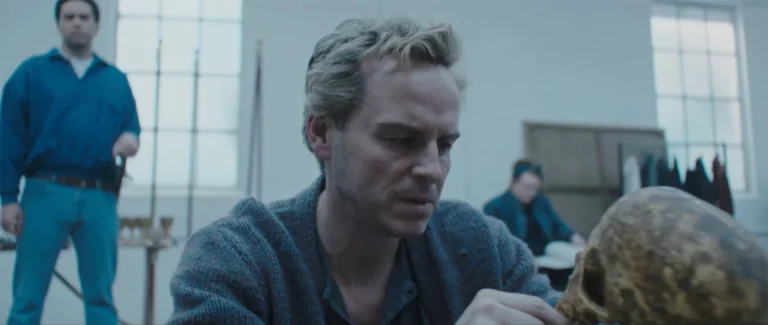
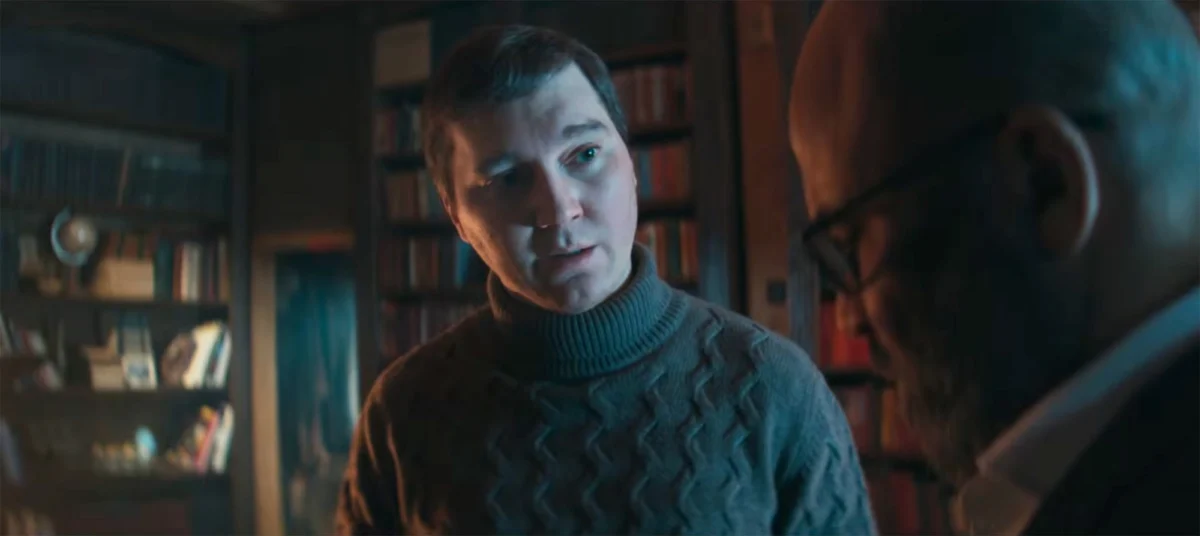
At its heart, The Wizard of the Kremlin delves into the extraordinary ascent of Vadim Baranov, a character portrayed with a nuanced blend of calm and calculated intensity by Paul Dano. The narrative charts Baranov’s transformation from a promising young Russian artist in the tumultuous post-Soviet era of the early 1990s into an indispensable propagandist and top advisor to Vladimir Putin, who rises to the Russian presidency in 2000. The film meticulously illustrates how Baranov, a sharp and perceptive individual, becomes instrumental in shaping the new Russia, expertly blurring the lines between objective truth and carefully constructed lies, between genuine belief and calculated manipulation. His journey is presented as a chilling testament to the seductive nature of power and the moral compromises inherent in its pursuit.
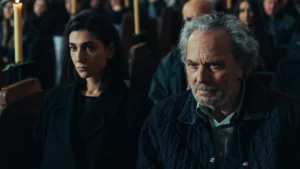
The story is not merely a chronicle of political events but a psychological study of the individuals caught within its vortex. Baranov’s character, widely understood to be inspired by Vladislav Surkov, a long-serving and influential aide to Putin, serves as the audience’s guide into this opaque world. Through his eyes, viewers witness the brutal realities of a system where loyalty is conditional, ambition is paramount, and the consequences of dissent are severe. The film’s dialogue, as hinted by the stark trailer quote, "They’re vicious animals. They come from the void," underscores the ruthless and existential nature of the political game being played. It positions the early 2000s in Russia not just as a period of political consolidation, but as a crucible where new forms of authoritarian control were forged, fundamentally altering the trajectory of a nation still reeling from its Soviet past.
From Acclaimed Novel to Cinematic Masterpiece
The film draws its narrative strength from Giuliano Da Empoli’s internationally acclaimed 2022 novel of the same name, Le mage du Kremlin. The book, which won the prestigious Grand Prix du roman de l’Académie française, captivated readers with its fictionalized yet eerily plausible account of a man at the epicenter of Russian power. Da Empoli, an Italian political essayist and advisor, crafted a "roman à clef" that offered a speculative but deeply researched insider’s perspective, making it a natural fit for cinematic adaptation. The novel’s blend of historical fact and imaginative speculation provided a fertile ground for director Olivier Assayas and co-screenwriter Emmanuel Carrère to develop a rich, complex screenplay.

Olivier Assayas, known for his incisive portraits of contemporary society and intricate character studies, brings his distinctive directorial vision to this politically charged material. His filmography, which includes critically lauded works such as Clouds of Sils Maria, Personal Shopper, and Irma Vep, demonstrates a consistent ability to navigate complex emotional landscapes and explore the ambiguities of human experience. Assayas’s choice to tackle The Wizard of the Kremlin aligns with his thematic interests in the interplay of identity, power, and media in the modern world. His approach to the adaptation emphasizes the psychological depth of the characters and the insidious mechanisms of propaganda, rather than merely presenting a historical recount. This ensures the film resonates not just as a historical drama, but as a commentary on contemporary political dynamics across the globe. The collaboration with Emmanuel Carrère, himself a celebrated French author and filmmaker known for his journalistic rigor and narrative flair, further strengthens the screenplay, promising a text that is both intellectually stimulating and dramatically compelling.
A Stellar Ensemble Cast Illuminates Complex Roles
The casting of The Wizard of the Kremlin is a testament to its ambition, bringing together a formidable ensemble of international talent. Leading the cast is Paul Dano as Vadim Baranov, a role that demands a performance of profound subtlety and psychological depth. Dano, celebrated for his intense and often enigmatic portrayals in films such as There Will Be Blood, Prisoners, and Love & Mercy, is perfectly suited to convey Baranov’s intellectual brilliance, his moral wrestling, and his eventual disillusionment. His meticulous approach to character development is expected to render Baranov as a figure of chilling precision, a man who understands the levers of power and how to pull them, even as he grapples with the ethical costs.
The formidable task of portraying Vladimir Putin falls to Jude Law, an actor renowned for his versatility and ability to embody complex historical and fictional figures. Law’s performance is anticipated to be a nuanced exploration of a figure who transitioned from a relatively obscure KGB agent to one of the world’s most influential and controversial leaders. Rather than a simplistic caricature, the film aims to present a multi-dimensional portrait, exploring the strategic mind and calculating charisma that enabled Putin’s consolidation of power. This portrayal is crucial for the film’s credibility, demanding a delicate balance between historical accuracy and dramatic interpretation, avoiding mere imitation in favor of an insightful character study.
Alicia Vikander takes on the role of Ksenia, a character described as a magnetic presence beyond Baranov’s control, offering a potential moral counterpoint or a source of personal conflict. Vikander, an Academy Award winner known for her strong performances in The Danish Girl and Ex Machina, brings an international stature and emotional range that will undoubtedly enrich this crucial supporting role. Her presence adds another layer of complexity to Baranov’s journey, exploring the personal sacrifices and emotional toll exacted by his political immersion.
The ensemble is further bolstered by the talents of Jeffrey Wright, Tom Sturridge, and Will Keen, among others. Wright, with his commanding presence and extensive experience in both dramatic and political thrillers, is poised to contribute significant gravitas. Sturridge and Keen, known for their powerful stage and screen performances, are expected to fill out the intricate web of advisors, oligarchs, and political operatives that populate Putin’s inner circle, adding authenticity and depth to the film’s depiction of the Russian establishment.
A Global Tour: Building Momentum on the Festival Circuit

The Wizard of the Kremlin embarked on a significant journey through the international film festival circuit, commencing with its highly anticipated premiere at the 2025 Venice Film Festival. Premiering at such a prestigious "A-list" festival is a strong indicator of a film’s artistic merit and commercial potential. Venice, known for its discerning selection of politically resonant and artistically challenging works, provided an ideal platform for the film to debut and begin generating buzz. Initial reactions from critics and industry insiders often shape the narrative around a film, and The Wizard of the Kremlin appears to have capitalized on this opportunity.
Following its Venice premiere, the film continued its global tour, featuring prominently at the Toronto International Film Festival (TIFF), the San Sebastian International Film Festival, the Busan International Film Festival, and the Zurich Film Festival. This extensive festival run is strategically vital for several reasons. Firstly, it allows the film to reach diverse international audiences and critical bodies, garnering varied perspectives and building a global reputation. Secondly, it serves as a crucial platform for securing international distribution deals, as festival screenings often attract buyers from around the world. The consistent presence at these esteemed festivals indicates a strong reception and confidence in the film’s ability to resonate across different cultures. The buzz generated from these screenings, often characterized by discussions around its timely subject matter and the powerful performances, has undoubtedly heightened anticipation for its wider theatrical release.
Production and Distribution: Navigating the International Landscape
The production of The Wizard of the Kremlin is a collaborative effort involving prominent European film entities, including Signature Entertainment, Gaumont, and Curiosa Films. Gaumont, one of the oldest and most respected film studios in the world, brings a legacy of cinematic excellence and robust production capabilities. Curiosa Films, a notable French production company, adds to the film’s European roots, while Signature Entertainment plays a crucial role in its distribution, particularly in the UK market. This multinational collaboration underscores the global appeal and ambition of the project.
The film’s release strategy reflects the complexities of international film distribution, particularly for a work with sensitive geopolitical themes. It first opened in France in January 2026, leveraging its French directorial and production ties. The UK release is set for April 17th, 2026, through Signature Entertainment, indicating a targeted approach to key European markets. However, a notable aspect of its release schedule is the absence of a confirmed US release date. This situation, while not uncommon for European arthouse films, suggests that securing distribution in the highly competitive American market may involve additional challenges, perhaps due to the film’s political content or the perceived niche audience. Nevertheless, the strong festival circuit performance and critical reception are powerful assets that distributors can leverage to secure wider reach, potentially through streaming platforms or specialized arthouse cinemas in regions where theatrical releases might be more difficult. The film’s English-language dialogue, despite its French origins, is a significant advantage in expanding its global audience.
Broader Implications: Film as Political Commentary and Historical Insight
The Wizard of the Kremlin transcends its identity as a mere historical drama; it functions as a potent piece of political commentary, offering timely and relevant insights into the mechanisms of power in contemporary authoritarian regimes. The film’s exploration of propaganda, manipulation, and the erosion of truth speaks directly to global concerns about disinformation and the integrity of democratic processes. By dramatizing the rise of a "spin doctor" who crafts narratives for a powerful leader, the film invites audiences to reflect on the nature of political influence and the psychological tactics employed to maintain control.

The narrative’s focus on the post-Soviet transition period in Russia provides crucial historical context for understanding the current geopolitical landscape. It sheds light on how a nation emerged from chaos only to consolidate power under a new, albeit different, form of centralized control. This historical backdrop makes the film particularly resonant, offering an artistic lens through which to analyze the origins of current international tensions. The metaphor of the "wizard" in the title is particularly apt, suggesting a figure operating behind the scenes, conjuring illusions and shaping realities through strategic foresight and psychological warfare. Baranov’s character thus becomes a symbolic representation of the architects of modern authoritarianism, individuals who master the art of perception management to serve their political masters.
Beyond its political dimensions, the film also implicitly raises ethical questions about individual agency within oppressive systems. Baranov’s journey from artist to enabler prompts viewers to consider the choices individuals make when confronted with the allure of power and the demands of a ruthless regime. This moral ambiguity is a hallmark of compelling drama and ensures the film stimulates profound discussions long after the credits roll.
Looking Ahead: Anticipation for the UK Release and Beyond
As The Wizard of the Kremlin prepares for its UK premiere on April 17th, 2026, anticipation among cinephiles and those interested in geopolitical themes is palpable. The film offers a rare cinematic window into a subject that remains intensely relevant and often shrouded in mystery. Its strong festival reviews, coupled with the exceptional talent of its director and cast, position it as a significant cultural event. For UK audiences, it represents an opportunity to engage with a sophisticated and thought-provoking narrative that blends historical inquiry with incisive political analysis.
The continued absence of a US release date keeps North American audiences awaiting news, but the film’s strong international reception suggests that it is only a matter of time before it finds its way to a wider global viewership, whether through theatrical distribution or streaming platforms. The Wizard of the Kremlin promises to be more than just a film; it is a meticulously crafted historical drama, a psychological thriller, and a profound piece of political commentary, poised to leave a lasting impact on all who witness its chilling depiction of power’s allure and its cost.