
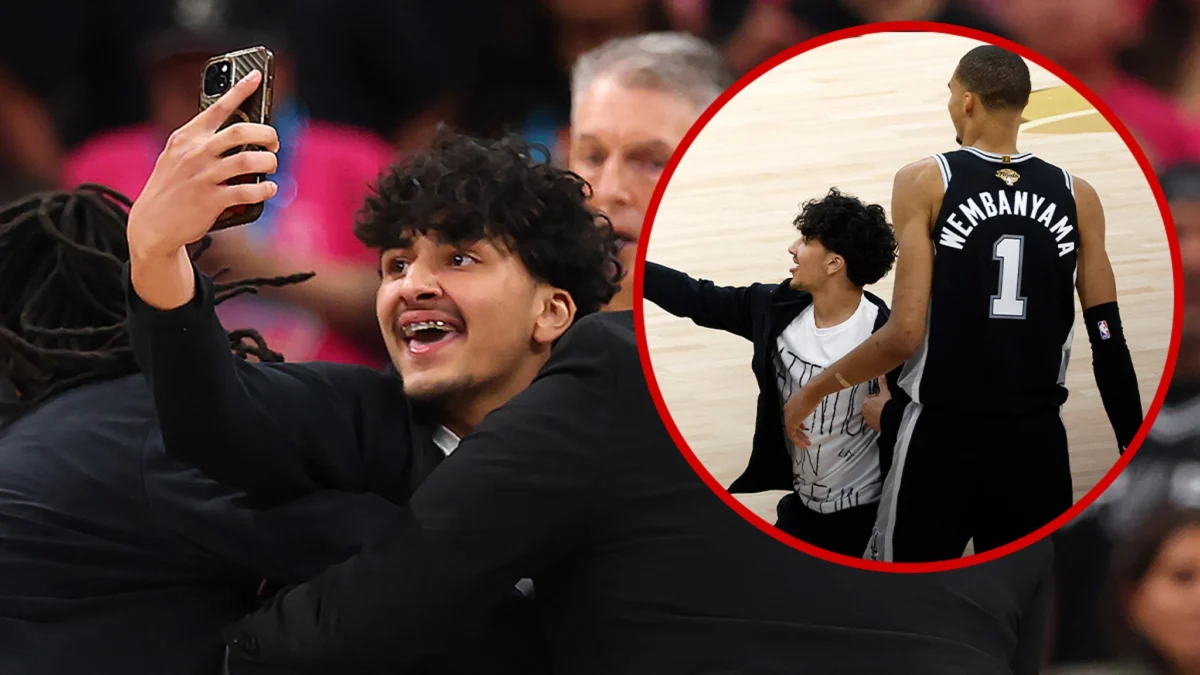
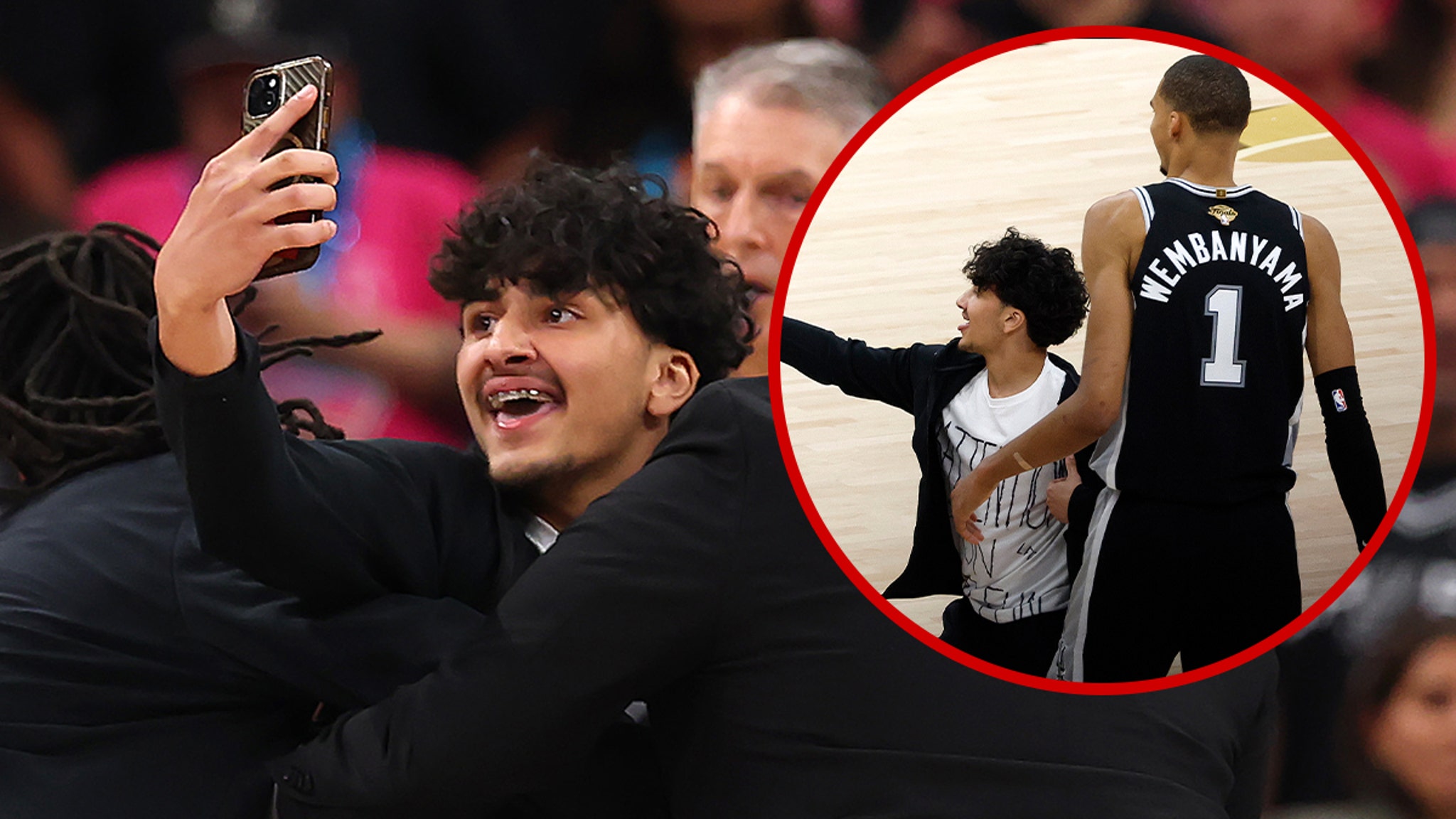
A juvenile Spurs fan who dramatically rushed the court during Game 1 of the NBA Finals at the Frost Bank Center on Wednesday night, June 4, 2026, to attempt a selfie with San Antonio Spurs phenom Victor Wembanyama is now facing serious criminal charges, escalating what was initially perceived as a mere disruption into a significant legal matter. The incident, which caused a noticeable delay in the high-stakes contest, underscores the stringent security protocols in professional sports and the severe consequences awaiting those who breach them. This individual is not only persona non grata in the eyes of the National Basketball Association but is also grappling with the legal system following a swift response from local authorities.
The Breach at Frost Bank Center: A Detailed Chronology
The incident unfolded during a critical juncture of Game 1 of the NBA Finals, a moment of heightened anticipation and global viewership. The Frost Bank Center in San Antonio was buzzing with energy as the Spurs, led by their towering rookie sensation Victor Wembanyama, battled for supremacy. The game was reportedly a closely contested affair, adding to the tension and significance of every moment. Suddenly, the festive atmosphere was pierced by an unauthorized intrusion onto the playing surface.
In what appeared to be a premeditated act, a young fan, whose identity remains undisclosed due to his juvenile status, bypassed multiple layers of security personnel. Eyewitness accounts and broadcast replays indicate a rapid and determined dash from the stands onto the polished hardwood court. His singular objective, as quickly became apparent, was to reach Victor Wembanyama. The fan reportedly brandished a mobile phone, clearly intending to capture a photographic memento with the 7-foot-4 French star. The attempted selfie, however, was quickly thwarted. Wembanyama, known for his calm demeanor and focus, appeared momentarily surprised but maintained his composure as security converged. The fan’s attempt to fit the exceptionally tall Wembanyama into his camera frame proved challenging, resulting in a comically awkward and ultimately unsuccessful photographic endeavor, even as the broadcast cameras vividly captured the entire ill-fated stunt.
Within seconds, arena security personnel, trained for such contingencies, moved in with practiced efficiency, apprehending the individual and escorting him off the court. The game was immediately brought to a halt, prompting referees and league officials to huddle at mid-court. This pause, though brief, disrupted the flow of a crucial Finals game, forcing players to cool down and spectators to wait while the situation was assessed and order restored. The swiftness of the intervention highlights the robust, albeit occasionally permeable, security apparatus deployed at major sporting events.
Legal Repercussions: Charges and Implications
The immediate aftermath of the court invasion quickly moved beyond a simple ejection from the arena. The Bexar County Sheriff’s Office confirmed to TMZ Sports that the juvenile was arrested and is now facing two distinct criminal charges directly related to his actions. These charges are a stark reminder that breaching security at a professional sports event carries significant legal weight, far beyond a mere ban from future games.
The first charge levied against the fan is "Disrupting Meeting or Procession." According to the Sheriff’s Office statement, this charge was committed by "intentionally disrupting a lawful gathering, namely, the Spurs basketball game, through physical interference." In the state of Texas, where the incident occurred, a charge of disrupting a meeting or procession can fall under various statutes, often classified as a Class B misdemeanor. This offense typically involves knowingly or intentionally preventing or disrupting a lawful meeting, procession, or gathering by physical action or verbal utterance. The fan’s physical intrusion onto the court, thereby halting the game and diverting attention, directly aligns with the legal definition of this offense. Penalties for a Class B misdemeanor in Texas can include a fine of up to $2,000, confinement in county jail for up to 180 days, or both. For a juvenile, the legal process would typically involve the juvenile justice system, which prioritizes rehabilitation but can still impose significant restrictions and consequences.
The second charge is "Criminal Trespass." Officials stated this was committed by "entering property, specifically the basketball court, without the effective consent of the owner, despite having notice that entry onto the court was prohibited." The statement further clarified that "The entry was made by the intrusion of his entire body into the restricted area." Criminal trespass, also commonly a misdemeanor offense, occurs when an individual enters or remains on property without the owner’s consent, having been given notice that entry was forbidden. Such notice can be explicit (signs, verbal warnings) or implicit (fences, security personnel, the obvious nature of a restricted area). In a professional sports arena, the court is unequivocally a restricted area, with clear visual and physical barriers, and the presence of security personnel serving as constant notice. Similar to the first charge, criminal trespass can result in fines and potential jail time, with the specific severity often depending on the nature of the property and any prior offenses. For a juvenile, the court might consider community service, probation, or other structured interventions. The combination of these two charges underscores the serious view law enforcement takes on unauthorized entry and disruption at public events, particularly those with high attendance and security concerns.
The Broader Context: A History of Court Invasions and NBA Security
The incident involving the Spurs fan is not an isolated event but rather a recurring challenge for sports leagues worldwide. Court and field invasions have a long and sometimes dangerous history, ranging from harmless exuberance to violent confrontations. The NBA, in particular, has consistently emphasized fan safety and the integrity of the game environment.
Throughout the decades, incidents of fans rushing the court have prompted leagues to continually review and enhance security measures. Memorable instances include everything from streakers making political statements to fans attempting to interact with star players. While some invasions are met with cheers, the potential for harm to players, officials, and even the invading fan themselves is always present. Players, particularly high-profile athletes like Wembanyama, are valuable assets, and their safety is paramount. An unexpected physical interaction could lead to injury, which could have multi-million dollar implications for teams and careers.
In response to these persistent threats, the NBA maintains a comprehensive set of security protocols. These include:
- Layered Security: Multiple tiers of security personnel, from uniformed officers to plainclothes guards, are strategically positioned throughout arenas.
- Physical Barriers: Courtside seating areas are often designed with small barriers or ropes, and ushers are tasked with preventing unauthorized access.
- Surveillance Technology: High-definition cameras and monitoring systems cover every inch of the arena, allowing for rapid identification and response.
- Ejection and Banning Policies: Individuals who breach security are typically ejected immediately and often face lifetime bans from the venue or even all league events.
- Legal Action: As seen in this case, leagues and venues are increasingly willing to pursue criminal charges to deter future incidents.
The economic implications for teams and the league can also be significant. While not directly applicable to this specific incident of a fan rushing the court for a selfie, teams can face fines from the league if security is deemed insufficient or if an incident significantly impacts game operations. The optics of such disruptions can also detract from the professional image of the sport.
Reactions and Official Statements
The incident drew swift condemnation and reinforced the league’s commitment to maintaining a safe environment.
The Bexar County Sheriff’s Office, through its spokesperson, reiterated the seriousness of the charges, emphasizing that such actions are not merely pranks but criminal offenses. Their statement served as a clear warning to others who might consider similar stunts, highlighting the legal consequences that extend beyond a simple ejection. The decision to pursue criminal charges, particularly against a juvenile, signals a hardening stance by law enforcement to deter future intrusions.
The National Basketball Association, while not issuing a specific statement on this particular juvenile, has a long-standing public position on fan conduct and security. The league consistently stresses a zero-tolerance policy for any unauthorized entry onto the playing surface. NBA Commissioner Adam Silver and various team owners have frequently emphasized the paramount importance of player and fan safety. Such incidents often trigger internal reviews of existing security measures, even if those measures ultimately prove effective in containing the situation. The implicit message from the league is clear: unauthorized court access will result in severe penalties, both civil and criminal.
The San Antonio Spurs organization also likely views the incident with serious concern. While they pride themselves on a passionate fan base, they also bear the responsibility of ensuring a safe and enjoyable environment for all attendees, as well as their players and staff. While no specific team statement was released immediately after the incident regarding the fan, it is standard practice for teams to cooperate fully with law enforcement and league security in such matters. The incident, occurring during a Finals game, undoubtedly caused embarrassment and highlighted vulnerabilities, prompting internal discussions on how to prevent recurrence.
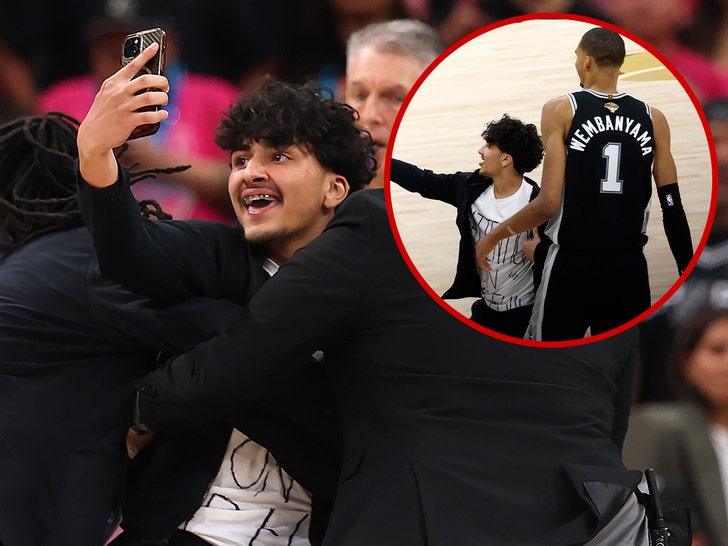
From a player’s perspective, while Victor Wembanyama’s immediate reaction was one of professional focus, incidents like these are a constant reminder of the physical boundaries that must be maintained. Players are often trained to handle fan interactions, but unexpected physical contact carries the risk of injury. The intrusion, even if not malicious, creates a momentary sense of unease and disrupts the intense concentration required during a championship game.
Implications for Fan Behavior and Venue Security
The arrest and criminal charges against the juvenile fan for his attempted selfie with Victor Wembanyama carry significant implications for both future fan behavior and security protocols at sports venues. This incident serves as a potent deterrent, signaling that the consequences for breaching security extend far beyond a mere slap on the wrist.
For fans, the message is unequivocal: unauthorized entry onto the playing surface is a criminal act with serious legal ramifications, not just a temporary inconvenience. The pursuit of criminal charges, rather than just an arena ban, raises the stakes considerably. This could lead to a decline in impulsive court invasions, as the risk of fines, jail time, and a criminal record outweighs the fleeting thrill of a viral moment. The fact that the fan didn’t even achieve his desired selfie, and instead garnered a criminal record, further underscores the futility and danger of such actions.
For venue security and sports leagues, this incident prompts a continuous re-evaluation of existing measures. While the fan was quickly apprehended, the breach itself still occurred. Questions may arise regarding the effectiveness of initial barriers, the positioning of personnel, and the speed of response. Future enhancements could include:
- Increased Personnel: Deploying more security staff, particularly in high-risk areas or during high-profile events like the Finals.
- Technology Integration: Utilizing advanced facial recognition software or AI-powered surveillance to identify potential threats or individuals behaving suspiciously before they act.
- Enhanced Physical Barriers: Exploring more robust, yet aesthetically pleasing, barriers to further delineate restricted areas without obstructing views.
- Public Awareness Campaigns: Educating fans about the severe consequences of court intrusions through pre-game announcements, signage, and online messaging.
The role of social media in encouraging such stunts cannot be overstated. In an era where viral fame is often pursued at any cost, the allure of a moment captured and shared across platforms can be a powerful motivator. The attempted selfie, despite its failure, was undeniably driven by the desire for social media attention. This phenomenon presents an ongoing challenge for leagues, as they must balance the interactive nature of modern sports with the imperative of maintaining safety and order. Leagues and teams might need to consider more proactive messaging that highlights the negative consequences of such actions, rather than inadvertently amplifying them.
Conclusion: A Serious Precedent
The incident at the Frost Bank Center during Game 1 of the NBA Finals, culminating in criminal charges against a juvenile fan, sets a serious precedent. What might have been perceived by some as a harmless, if misguided, act of fandom has been unequivocally framed as a criminal offense by law enforcement. The charges of "Disrupting Meeting or Procession" and "Criminal Trespass" underscore the gravity with which authorities and sports organizations view breaches of security.
This event serves as a stark reminder that the boundaries between spectators and the playing field are sacrosanct for a reason. They exist to protect the integrity of the game, the safety of the athletes, and the overall experience of the vast majority of law-abiding fans. As professional sports continue to be major public spectacles, the commitment to robust security and the consistent enforcement of rules against unauthorized intrusions will remain a critical priority, ensuring that the focus stays on the athletic spectacle rather than the disruptive actions of a few. The legal journey for this young fan will undoubtedly serve as a cautionary tale, reinforcing the understanding that unauthorized access to the playing court carries consequences that far outweigh the fleeting thrill of a selfie.