


The intersection of artificial intelligence, high-budget Hollywood filmmaking, and modern cultural politics has produced one of the more unusual media spectacles of the digital age. Months after director Christopher Nolan’s blockbuster adaptation of Homer’s ancient Greek epic, The Odyssey, shattered global box office expectations and silenced a vocal online contingent of right-wing critics, tech entrepreneur Elon Musk has attempted a counter-narrative. Musk unveiled a seven-minute, AI-generated video project ostensibly designed to correct what he and his followers perceived as historical inaccuracies in Nolan’s cinematic vision. However, the resulting production—realized through xAI’s video and image generation model, Grok Imagine—has not only drawn widespread ridicule for its low production quality, but has even been diagnosed by its own underlying artificial intelligence as an impossibility built on a fundamental misunderstanding of history and literature.
The Box Office Phenomenon and the Backlash
In July, Christopher Nolan’s adaptation of The Odyssey debuted in theaters worldwide to massive commercial success. Despite fierce preemptive campaigns waged by self-appointed defenders of traditional Western culture on social media—who took issue with diverse casting choices, modern colloquialisms, and structural deviations from the ancient epic—the film resonated profoundly with global audiences. By the end of its theatrical run, the blockbuster had grossed nearly $1.8 billion worldwide, effectively neutralizing the online discourse that predicted financial ruin due to its contemporary creative liberties.
Among the loudest critics of Nolan’s film was Elon Musk, the world’s richest man and the owner of the social media platform X. Musk expressed deep dissatisfaction with what he characterized as a desecration of classical mythology. Four days after the film’s theatrical release, Musk took to X to voice his frustration and issue a bold, public challenge to the Hollywood establishment. In a widely shared post, he vowed to produce a superior, "historically accurate" version of the narrative. Musk wrote that "Grok Imagine will make a full-length movie of The Odyssey that is historically accurate and true to the art of Homer" before the end of the year.
The Chronology of the Project
The timeline from Musk’s ambitious declaration to the eventual release of the footage spans a little more than three months, a period during which public attention had largely shifted away from the initial box office controversy.
- Early July: Christopher Nolan’s The Odyssey premieres in theaters, grossing nearly $1.8 billion globally.
- Four Days Post-Release: Elon Musk posts on X, declaring that xAI’s Grok Imagine will produce a "full-length," historically accurate movie version of the epic by the end of the year.
- Late October: After months of relative quiet regarding the project, a preliminary glimpse of the work emerges. Rather than a full-length feature film, the output is released as a seven-minute "episode" of an ongoing series.
- Late October (Release Date): Musk shares the clip on X, attributing its production to the AI entertainment company Wonder Studios X. The post receives muted engagement compared to his contemporaneous political commentary.
- Post-Release: Users across X—including prominent accounts—criticize the technical flaws, pacing, and execution of the AI-generated video.
Technical Shortcomings and Critical Reception
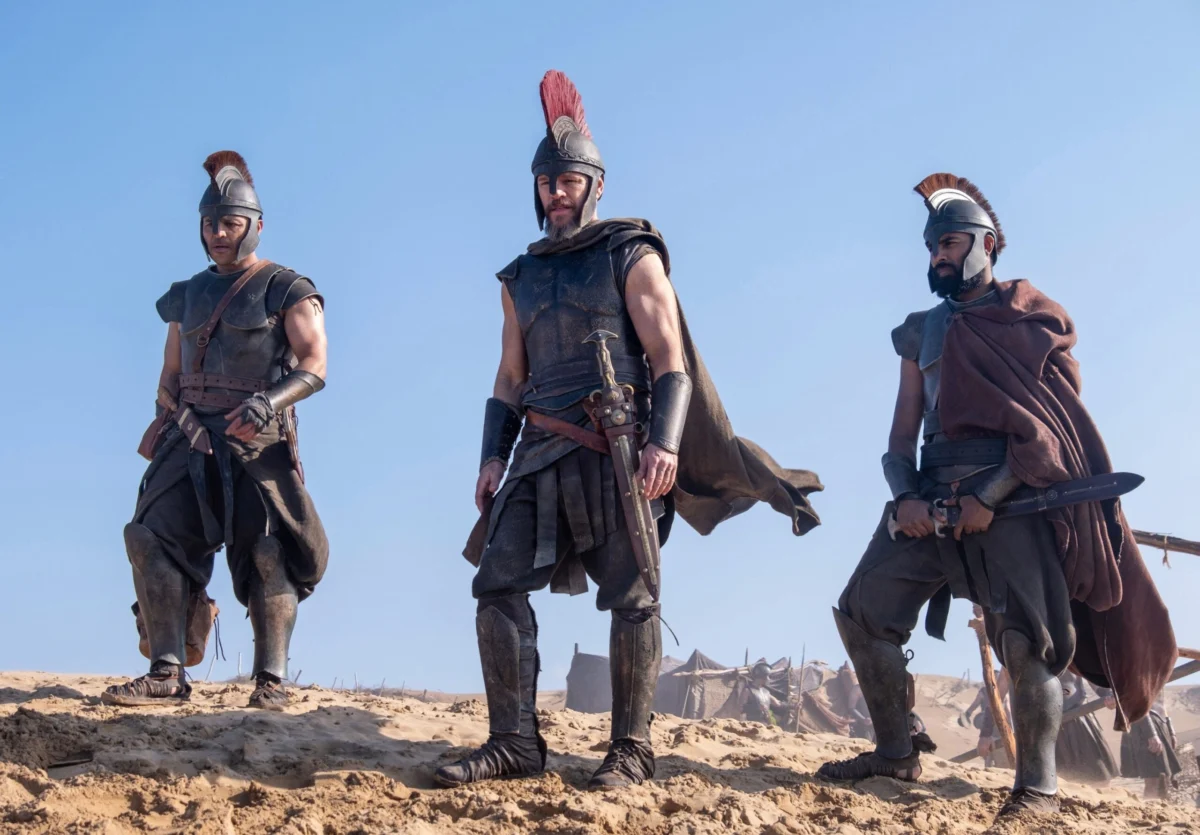
When the final product finally surfaced in late October, it became immediately apparent that the production fell short of Musk’s promise of a "full-length movie." Instead, the release was a seven-minute episode produced in collaboration with AI entertainment company Wonder Studios X. The narrative focuses on Odysseus, King of Ithaca, resisting the initial call to war against Troy before ultimately yielding to an oath of loyalty.
Upon its release, the clip—dubbed by observers as the "Grodyssey"—was met with immediate technical critique. Viewers noted numerous hallmark traits of early-stage generative AI video, commonly referred to as "AI slop." Facial movements frequently failed to sync with the dialogue, and the voice acting suffered from stilted, unnatural delivery. Narrative pacing proved similarly erratic; in one notable sequence, the Ithacan army arrives on the shores of Troy almost instantaneously after departing their homeland. Furthermore, characters other than Odysseus were introduced without proper context or name identification.
Even among verified users on X, who typically form a supportive audience for Musk-led initiatives, the reception was largely unforgiving. Commenters pointed out the jarring anomalies in the animation and storytelling, with one prominent user publicly questioning the quality control of the project by remarking that someone had reviewed the footage and still chosen to publish it.
The Irony of "Historical Accuracy"
Musk’s core motivation for launching the project was not merely aesthetic rivalry, but a stated commitment to historical and archaeological fidelity. Critics of Nolan’s film had argued that the inclusion of diverse actors, contemporary vernacular, and stylized armor constituted an unacceptable departure from historical reality. Musk’s promise rested on the premise that artificial intelligence could synthesize a pure, unadulterated version of the ancient world.
However, when Grok Imagine itself is asked to evaluate the historical accuracy of its own generated episode, the chatbot offers a starkly contradictory assessment. When queried directly by users, the AI model explicitly states that the production is an adaptation of a work of fiction and mythology, rather than a factual reconstruction of real historical events.
Grok’s self-evaluation highlights several fundamental barriers to achieving historical accuracy in an adaptation of Homer:
- Mythological Foundation: The Odyssey is fundamentally a work of epic poetry driven by gods, monsters, and divine intervention, not a chronicle of verified historical occurrences.
- Anachronistic Society: Homeric society itself represents a literary conflation of distinct eras, blending real Bronze Age elements—such as palace-centered kingdoms and specific warrior practices—with later Iron Age characteristics and purely fictional flourishes.
- Linguistic Divergence: The characters in the AI-generated episode speak modern English with British accents, rather than reconstructed Bronze Age languages or Homeric Greek.
- Visual Tropes: The aesthetic of the generated battle scenes relies on modern cinematic conventions and general AI training data rather than primary archaeological evidence, with Grok noting specific anachronisms such as the appearance of cavalry in battle scenes where standard archaeological reconstructions would dictate otherwise.
Broader Implications and Industry Analysis
The episode surrounding the "Grodyssey" offers a revealing case study in the current limitations of generative artificial intelligence in professional narrative filmmaking. While tech executives and AI developers continue to push the boundaries of text-to-video technology, the results frequently collide with the complex realities of artistic direction, narrative coherence, and historical nuance.
Furthermore, the project underscores a recurring pattern in large-scale technological announcements: the friction between rapid, ambitious public pronouncements and the technical constraints of emerging tools. While generative AI tools like Grok Imagine have dramatically accelerated the ability to synthesize visual media, they currently lack the capacity to resolve complex historical debates or autonomously generate cohesive, long-form cinematic art without human editorial oversight and deep structural direction.
Ultimately, the attempt to use artificial intelligence as a corrective tool for cultural grievances highlights the misunderstandings surrounding both ancient literature and the nature of generative technology. As both classicists and film critics have long understood, The Odyssey has always been a fluid, malleable myth shaped by the era in which it is told—a reality that neither human critics nor artificial intelligence can rewrite into rigid historical fact.