


Narrative Premise and Character Dynamics
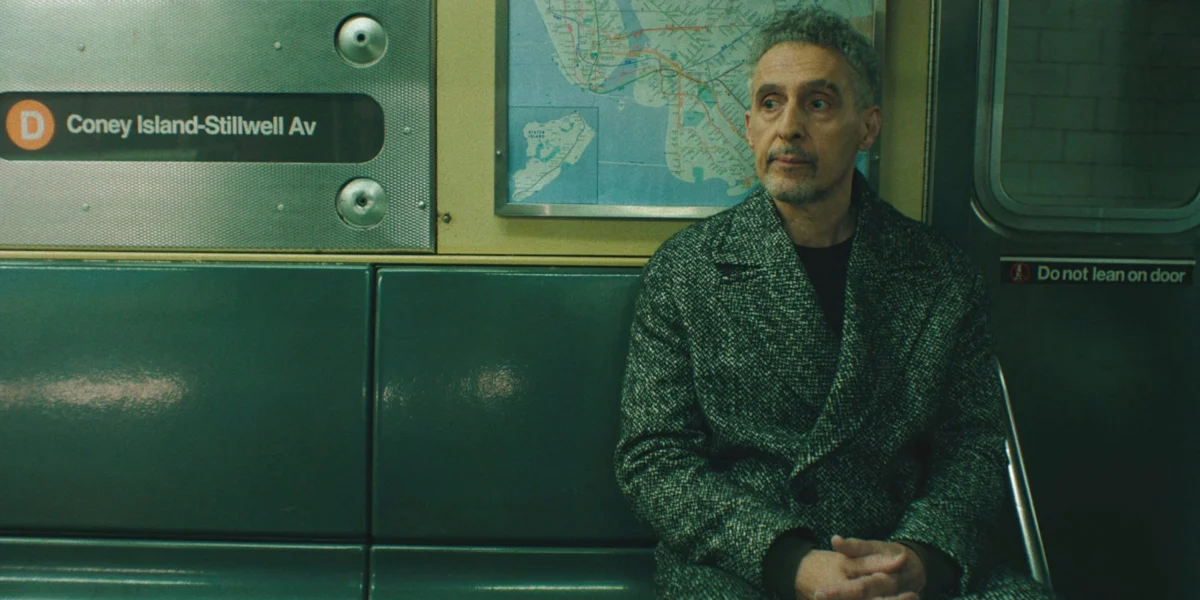
At the heart of the film is a protagonist whose profession is rendered nearly redundant by the rise of digital wallets, contactless payments, and the pervasive nature of biometric security. John Turturro’s character is portrayed not merely as a criminal, but as an artisan of a dying craft. The narrative tension escalates when this "old-school" operator commits a high-stakes error, forcing him to engage with a criminal underworld that is as modernized and ruthless as the city’s economy.
The supporting cast provides a multi-layered look at the various facets of this transition. Giancarlo Esposito and Steve Buscemi deliver performances that ground the film’s higher-concept stakes in gritty realism, while Tatiana Maslany and Will Price serve as conduits for the younger, more tech-savvy elements of the city’s criminal strata. By juxtaposing Turturro’s tactile, sleight-of-hand methodology against the cold, digital efficiency of his adversaries, Segan creates a cinematic metaphor for the broader displacement of labor in the 21st century.
A Chronology of the Film’s Reception
The trajectory of the film from a festival debut to a commercial release has been marked by consistent momentum. The project’s timeline is defined by a strategic rollout that maximized its exposure among both cinephiles and industry professionals:
- January 2026: The film held its world premiere at the Sundance Film Festival, where early reviews highlighted the precision of the script and the nuanced lead performance.
- February 2026: It received an international premiere at the 76th Berlin International Film Festival, appearing out of competition. This served to establish the film’s artistic credibility on the global stage.
- Spring/Summer 2026: The film embarked on a prestigious festival circuit run, with notable screenings at Telluride, Toronto, and the New York Film Festival. These appearances solidified its status as a critical darling before its wide release.
- Late 2026: Sony Pictures Classics initiated the theatrical rollout, capitalizing on the sustained critical conversation generated throughout the festival season.
Analysis of the "Cashless City" Motif
The thematic core of the film—the "cashless city"—reflects actual socioeconomic trends in major urban centers. According to recent economic data, the decline of physical currency usage in New York City has accelerated by nearly 40% over the last five years, driven by the integration of mobile payment systems in public transit, retail, and hospitality.
Noah Segan’s direction utilizes this data to raise the stakes of the protagonist’s predicament. If the tools of one’s trade—specifically cash—are no longer in circulation, the professional thief is forced to adapt or face extinction. From a film studies perspective, this creates a compelling conflict: the audience is positioned to empathize with an antagonist whose struggle is essentially a macroeconomic casualty. The technical execution of these sequences—often shot in tight, claustrophobic frames—emphasizes the protagonist’s increasing isolation in a city that no longer speaks his language.
Production and Creative Intent
In discussions regarding the production, Noah Segan has frequently addressed the challenge of balancing the film’s thriller mechanics with its character-driven narrative. The collaborative process with John Turturro was, by all accounts, central to the film’s tone. Industry insiders have noted that Turturro’s involvement was a catalyst for securing the high-caliber supporting cast, as the project’s script was viewed as a rare opportunity to explore character depth within a genre framework.
The cinematography, which leans heavily into the neon-drenched, high-contrast aesthetic of modern New York, serves as an additional character in the film. The production design team was tasked with creating an environment that feels simultaneously familiar and alien, using the city’s architecture to mirror the protagonist’s internal struggle.

The Evolution of the Crime Thriller Genre
The success of The Only Living Pickpocket In New York signals a notable pivot in contemporary crime thrillers. Where previous decades focused on the "heist" as a technical puzzle—often involving blueprints and vaults—the modern thriller is increasingly concerned with data security, surveillance, and the psychological toll of anonymity.
Film analysts suggest that the project’s critical success is due to its refusal to rely on the "techno-babble" often associated with modern crime stories. Instead, it maintains a focus on the human element. By grounding the story in the performance of a veteran actor like Turturro, the film transcends the limitations of its premise. It is not just about the act of pickpocketing; it is about the loss of identity in an era where every transaction leaves a digital footprint.
Market Implications and Distribution Strategy
The choice of Sony Pictures Classics as the distributor highlights the film’s positioning as a "prestige" project. By focusing on a festival-first strategy, the film bypassed the traditional blockbuster marketing cycle, opting instead for a word-of-mouth campaign that relied on critical consensus.
The financial implications of this strategy are significant. By targeting a sophisticated audience that appreciates character-driven storytelling, the film has achieved a level of cultural penetration that might have been impossible with a wider, generic release. Furthermore, the inclusion of podcast and digital media outreach—such as the interview conducted by the Next Best Picture team—demonstrates an awareness of how modern film criticism functions in an era of decentralized media.
Broader Impact on Independent Cinema
The film’s journey serves as a case study for contemporary independent filmmaking. Securing a cast of this caliber—including Giancarlo Esposito and Steve Buscemi—for a director-driven project is a testament to the strength of the screenplay. It illustrates that there remains a robust appetite for films that challenge the audience intellectually while maintaining the suspenseful pacing of traditional genre cinema.
As the industry continues to grapple with the dominance of large-scale franchises, The Only Living Pickpocket In New York provides a blueprint for how independent films can secure both critical acclaim and a dedicated theatrical audience. The film’s reliance on strong writing and authentic performances, rather than excessive CGI or world-building, reinforces the importance of the director’s vision in an increasingly homogenized film market.
Conclusion
The legacy of the film is already beginning to take shape as it moves through its theatrical run and into the discourse of year-end award considerations. It is a work that captures a specific moment in time—a snapshot of a society shedding its analog skin—and presents it through the lens of a classic crime drama. For audiences, the film offers a rare blend of intellectual inquiry and visceral tension, anchored by one of the most compelling lead performances of the year. Whether viewed as a character study or a genre thriller, the work of Noah Segan and his cast stands as a significant contribution to the current cinematic landscape, marking a high point for independent storytelling in the mid-2020s.