

Versant Media Group, the media conglomerate formed earlier this year following its high-profile spinoff from Comcast’s NBCUniversal, signaled newfound operational confidence on Thursday by raising its full-year 2026 financial guidance. The company’s upward revision is underpinned by the robust performance of its digital portfolio, including ticketing giant Fandango and the golf management platform GolfNow, alongside a disciplined approach to managing its legacy linear television assets.
Investors responded favorably to the updated outlook, sending Versant shares up more than 6% by the close of Thursday’s trading session. The company now anticipates total revenue for fiscal year 2026 to fall between $6.2 billion and $6.45 billion, with adjusted earnings before interest, taxes, depreciation, and amortization (EBITDA) projected to range from $1.9 billion to $2.05 billion.
A New Chapter: The Comcast Spinoff Context
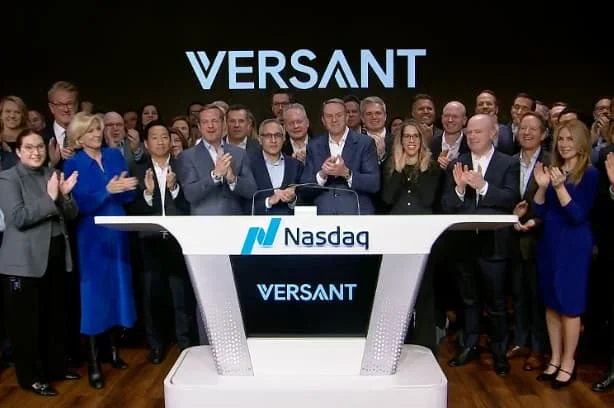
The current fiscal performance serves as a critical progress report for Versant, marking its third earnings release as an independent, publicly traded entity. The company began its life on the Nasdaq in January 2026, a strategic move by Comcast to streamline its own portfolio while carving out a collection of cable networks—including CNBC, MS NOW, and The Golf Channel—into a standalone powerhouse.
This transition has been fraught with the industry-wide challenges of "cord-cutting," as consumers increasingly abandon traditional pay-TV bundles in favor of direct-to-consumer streaming services. Versant’s financial results highlight a paradox inherent in modern media: while its core linear TV segment continues to face structural headwinds, its marquee properties—specifically live news and sports—remain essential pillars that continue to command premium advertising dollars and viewer engagement.
Second Quarter Financial Performance and Market Reaction
For the second quarter ended June 30, Versant reported revenue of $1.64 billion, a 3.8% decline compared to the same period last year. Net income attributable to the company fell 30% to $211 million, or $1.49 per share, down from $302 million, or $2.09 per share, in the prior-year period. Management cited several non-recurring factors for this decline, including the costs associated with establishing the company as an independent entity, interest expenses related to the separation from Comcast, and increased tax liabilities stemming from the divestiture of the SportsEngine platform.
Despite the top-line contraction, the company’s "stand-alone" adjusted EBITDA—a metric designed to filter out the noise of the spinoff—rose 3% year-over-year to $624 million. This gain was largely driven by lower programming expenses and aggressive cost-containment measures that successfully buffered the impact of shrinking linear revenue.
Strategic Diversification: Moving Beyond the Bundle
Currently, linear pay-TV accounts for more than 80% of Versant’s total revenue. CEO Mark Lazarus and his executive team have articulated a clear long-term objective: to diversify the revenue mix so that digital, platform-based, subscription, and transactional businesses account for 50% of the company’s earnings.
The strategy to achieve this transition relies on two primary pillars: internal innovation and inorganic growth through acquisitions.
The company’s platform segment, which includes Fandango and GolfNow, serves as the primary engine for this transition. During the second quarter, platform revenue rose 0.8% to $225 million, though when excluding the impact of the SportsEngine divestiture, the segment saw a healthy growth rate of 9.3%. Fandango, in particular, benefited from a resurgence in theater attendance and transactional volume, while GolfNow demonstrated resilience through increased subscription sign-ups and digitized tee-time bookings.
To further bolster this segment, Versant recently launched a free, ad-supported streaming service under the Fandango brand, aimed at capturing the growing audience of "cord-nevers" who rely on FAST (Free Ad-supported Streaming TV) channels.
Aggressive M&A Activity and Asset Integration
Versant’s leadership is aggressively scouting nontraditional media acquisitions to accelerate its growth. This week, the company finalized its acquisition of Full Swing, a golf simulation technology firm, which complements its existing GolfPass and GolfNow ecosystem. This acquisition is part of a broader trend of integrating physical-world activities with digital media platforms.
Earlier this year, the company acquired StockStory, an artificial intelligence-driven platform that provides automated financial analysis and market insights. This integration is designed to enhance CNBC’s digital product offerings, providing a more interactive and data-rich experience for its viewers and readers. By embedding these tools, Versant aims to deepen user engagement and increase the lifetime value of its subscribers.
Linear TV: Stabilizing the Foundation
While the long-term goal is a digital-first future, Versant remains tethered to its linear assets. Revenue for the linear TV segment—which encompasses USA Network, Syfy, Oxygen, and E!—declined 6.3% to $954 million during the quarter, primarily driven by subscriber attrition.
However, advertising revenue showed signs of stabilization, falling only 0.6% to $423 million—a marked improvement from the sharper declines observed in previous quarters. This stabilization is credited to the strength of live programming, particularly news and sports, which continue to attract the live audiences that advertisers prioritize.
CEO Mark Lazarus noted that the company successfully negotiated new carriage agreements with two major distribution partners, one in the United States and one in Canada. These agreements are vital, as many of the company’s previous distribution contracts were negotiated while it was still under the umbrella of NBCUniversal, and the move to independent negotiations provides the company with greater leverage to align distribution fees with current market realities.
Sports Rights and Future Content Strategy
A significant development for the company’s sports portfolio is the new multi-year media rights deal with the German soccer league, the Bundesliga. Beginning in August, live matches will be broadcast across the USA Network and the Fandango platform. This move underscores the company’s "omnichannel" approach to sports media: using the reach of linear cable to drive mass-market awareness while leveraging streaming platforms to capture targeted, interactive audiences.
Analysts observe that the Bundesliga deal is indicative of Versant’s broader strategy: investing in "must-have" live content that remains resistant to the churn seen in general entertainment and scripted programming. By securing exclusive rights, Versant creates a competitive moat, forcing distributors to maintain these channels in their packages despite the broader industry decline.
Capital Allocation and Shareholder Returns
Versant’s management has signaled a commitment to returning capital to shareholders, maintaining a quarterly cash dividend of 37.5 cents per share for the third consecutive quarter. The dividend is scheduled for payment on October 22 to shareholders of record as of October 1.
Furthermore, the company is actively managing its equity through an accelerated share repurchase program. Having already completed a $100 million repurchase of roughly 2.4 million shares of Class A common stock, Versant announced plans to initiate a new $100 million repurchase agreement on August 7. With approximately $800 million remaining in its current repurchase authorization, the company is signaling to the market that it views its own stock as undervalued relative to its long-term growth prospects.
Looking Ahead: The Challenges of Transformation
The road ahead for Versant is defined by the tension between managing a legacy business in decline and building a new one from scratch. While the raise in guidance offers a vote of confidence in management’s ability to navigate this transition, the company remains highly susceptible to shifts in the macroeconomic environment, particularly regarding ad spend, which is often the first budget item cut during periods of uncertainty.
Furthermore, the integration of technology companies like StockStory and Full Swing into a traditional media conglomerate requires a cultural shift and a distinct set of operational competencies. Success will ultimately depend on whether Versant can successfully leverage its massive distribution footprint to drive adoption of its new digital products, or if it will continue to be dragged down by the inevitable erosion of the traditional cable bundle.
For now, the market appears satisfied with the company’s "hybrid" approach: using the steady, if declining, cash flows from its pay-TV networks to fund the acquisitions and technological pivots necessary to remain relevant in a digital-dominated media landscape. As Versant approaches its first anniversary as an independent company, the coming quarters will be pivotal in determining whether this strategic diversification can materialize into a sustainable growth engine for shareholders.