




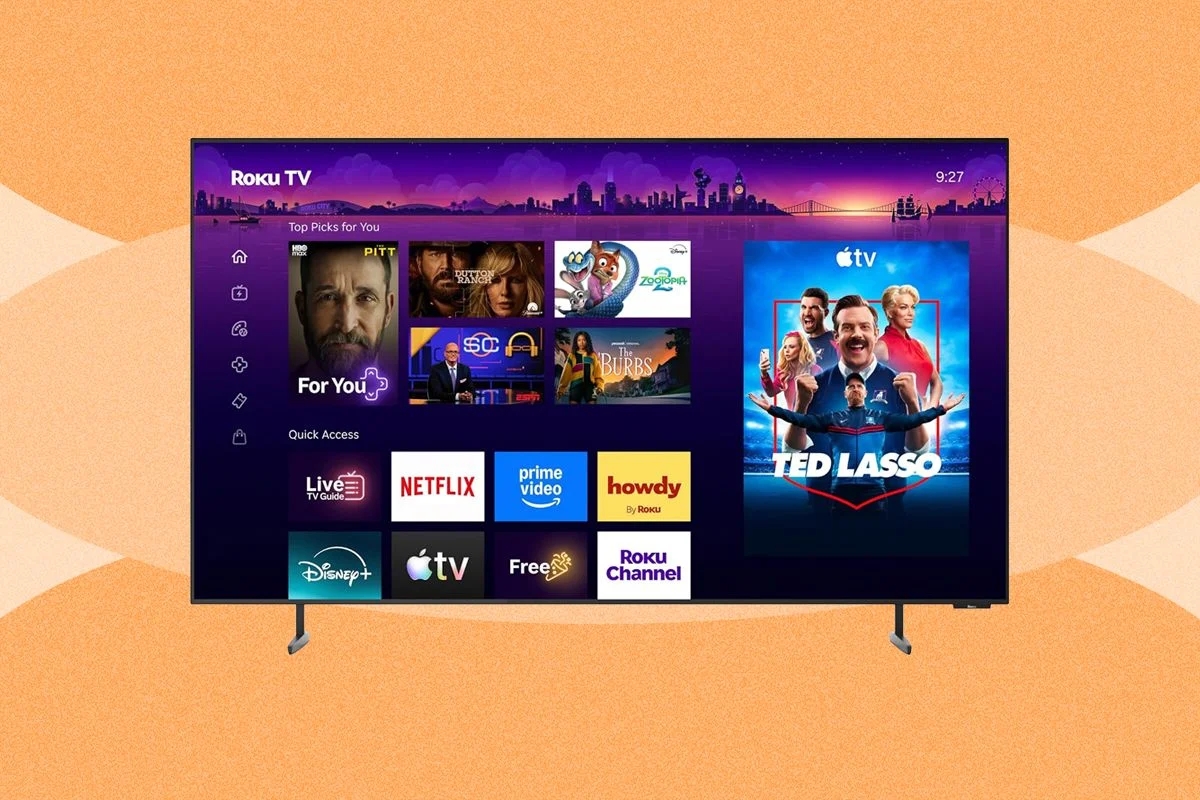
The modern home entertainment landscape has long been defined by a stark economic and performance divide. On one side sit the ultra-premium, high-end television sets manufactured by industry titans like Sony, LG, and Samsung, which boast staggering brightness levels, flawless color reproduction, and cutting-edge processing engines—often carrying price tags that reach well into the thousands of dollars. On the other side exist budget-friendly alternatives that democratize access to large screens and smart platforms, but typically rely on inferior liquid-crystal display (LCD) panels plagued by washed-out blacks, noticeable motion blur, and subpar viewing angles. For years, consumers seeking the infinite contrast ratios and rich, emissive colors of Organic Light-Emitting Diode (OLED) technology have been forced to accept a steep financial premium. However, the introduction of Roku’s latest Pro Series television challenges this paradigm, offering a budget-conscious entry point into OLED viewing. As manufacturers race to capture market share among cost-sensitive consumers who refuse to compromise entirely on picture quality, the release of this competitively priced model marks a significant milestone in the commoditization of advanced display technologies.
Evaluating Motion Handling and Gaming Performance
When assessing the performance capabilities of the Roku Pro Series, testing naturally begins with high-motion content, which serves as a rigorous stress test for any modern display panel. Operating natively at a rapid 120-Hz refresh rate, the television handles fast-moving athletic broadcasts with remarkable fluidity. During evaluations utilizing live sports content streamed via the Apple TV app and DirecTV—ranging from fast-paced Major League Baseball broadcasts to National Football League matchups—the action remains consistently sharp and smooth. The high refresh rate successfully eliminates the jitter and stutter often associated with lower-tier panels, ensuring that camera pans across complex playing fields remain crisp.
This robust motion handling translates seamlessly into the realm of interactive entertainment. Upon connecting an Xbox console, the television automatically initiates its low-latency game mode, bypassing unnecessary image-processing pipelines to ensure instantaneous input response times. Whether navigating the distinct 1930s-inspired visual palette of the cartoon-style platformer Cuphead or experiencing the high-speed, vibrant environments of the arcade racer Burnout: Paradise, the display delivers exceptional clarity. Fast-moving graphical elements exhibit zero noticeable motion blur, providing a competitive advantage and an immersive visual experience for console gamers. By pairing a 120-Hz refresh rate with automated low-latency protocols, Roku ensures that the Pro Series meets the rigorous demands of contemporary interactive media without requiring users to manually toggle complex settings menus.
Color Fidelity, Contrast, and the Brightness Debate
Color accuracy and dynamic range represent critical pillars of modern display evaluation. To thoroughly examine the chromatic capabilities of the Roku Pro Series, testers subjected the panel to a diverse array of cinematic and documentary content. This included streaming HBO Max’s visually stunning nature documentary series Planet Earth II, Pixar’s color-saturated animated feature film Coco, various ultra-high-definition nature showcases on YouTube, and a 4K Ultra HD Blu-ray playback of Quentin Tarantino’s Inglourious Basterds via Xbox. Across this varied content library, the television consistently produced vibrant, richly detailed imagery, showcasing the deep black levels and infinite contrast native to OLED architecture.
Nevertheless, comparative analysis reveals a notable distinction between Roku’s offering and top-tier OLED displays manufactured by brands like LG and Sony. The Roku Pro Series exhibits a more restrained color presentation, lacking the striking visual "pop" and extraordinary luminance peaks characteristic of flagship models. This variance is primarily attributable to the panel’s limited peak brightness capabilities. Industry analysts and AV enthusiasts often debate the implications of such limitations. While some critics argue that lower peak brightness diminishes the dramatic impact of high dynamic range (HDR) content, others contend that ultra-bright, high-end OLEDs frequently oversaturate images, introducing a level of artificial vividness that can distract viewers from the director’s original intent. Consequently, while the Roku display may not satisfy enthusiasts seeking bleeding-edge luminance, its more conservative tuning offers a visually balanced experience that avoids the fatigue sometimes induced by over-bright panels.
Smart Picture Max and Automated Content Detection
One of the most innovative software inclusions in the Roku Pro Series is Smart Picture Max, a proprietary feature designed to automatically detect the specific genre of content currently being displayed and dynamically adjust various calibration settings in real time. While the precise algorithmic impact on intricate color grading and brightness curves can be difficult to quantify subjectively, the feature delivers a profoundly practical, quantifiable benefit in the realm of motion processing. Specifically, Smart Picture Max intelligently disables motion-smoothing algorithms for the vast majority of standard television series and cinematic films.
This automation effectively prevents the occurrence of the widely maligned "soap opera effect," a processing artifact that strips high-end cinematic content of its natural motion blur and lends it the artificial appearance of a home video shot on cheap video cameras. For consumers, this automation represents a major quality-of-life enhancement. Most competing OLED televisions require users to manually navigate deep menu structures to disable motion smoothing for movies, and subsequently re-enable it when switching to fast-paced sports or gaming environments where smoothing can occasionally mitigate judder. By automating this workflow, the Roku Pro Series eliminates a persistent consumer frustration.
The solitary exception to this automated management occurs when the television encounters Dolby Vision HDR content. In these instances, Dolby Vision metadata overrides Smart Picture Max, causing motion-smoothing to remain active by default. Fortunately, Roku addresses this minor hurdle with an intuitive user interface design. By pressing the dedicated star button on the remote control, users can immediately access and modify picture settings. Any adjustments made via this menu apply instantly to the active video feed, allowing viewers to observe the effects of their changes in real time without needing to exit the settings interface or disrupt their viewing experience.
Audio Performance and Limitations
While visual fidelity and smart software integrations represent significant strengths of the Roku Pro Series, the audio department reveals notable compromises. Despite supporting advanced spatial audio formats such as Dolby Atmos, the television’s built-in downward-facing speakers struggle to deliver a balanced or pleasing acoustic experience. While the internal amplification is capable of generating substantial volume output, the audio profile degrades rapidly as the volume level increases, becoming harsh, thin, and uncomfortably shrill.
During testing, the opening orchestral measures of Nick Perito’s arrangement of "The Green Leaves of Summer" from Inglourious Basterds sounded deeply unpleasant, characterized by abrasive high frequencies even when maintained at a modest listening volume. This performance comes as a mild disappointment, given that previous iterations of Roku’s Pro Series televisions delivered superior overall internal acoustic quality. Ultimately, the built-in speakers of this model are strictly adequate for casual, low-volume listening within a compact room. For cinematic viewing, gaming, or musical enjoyment, prospective buyers will find that supplementing the television with an external soundbar or a dedicated multi-channel audio system is virtually mandatory.
Market Positioning and Economic Implications
Evaluating the Roku Pro Series within the broader context of the consumer electronics market requires acknowledging its fundamental identity as a budget-oriented television. It is not engineered to dethrone flagship OLED models or capture the loyalty of uncompromising home theater purists. Instead, its market positioning closely parallels historical value offerings, such as LG’s early, highly accessible B-series OLED models. It delivers the core advantages inherent to emissive display technology—including pitch-black dark scenes, infinite native contrast, and precise pixel-level illumination control—at a fraction of the cost typically associated with large-format OLED panels.
When combined with Roku’s universally praised, user-friendly operating system, intuitive remote control, and thoughtful automation features like Smart Picture Max, the Pro Series delivers a remarkably polished user experience. As major retailers look toward upcoming promotional periods, such as Black Friday and the end-of-year holiday shopping rush, aggressive discounting is anticipated. Consumers who secure this television during a promotional sale will likely experience the distinct satisfaction of acquiring advanced display technology at a remarkably accessible price point, effectively bridging the gap between luxury home entertainment and economic pragmatism.