The Cost of Innovation and the Burden of High Commitments
The primary source of friction between OpenAI and its advertising partners stems from the unusually high financial requirements for participation in the initial "alpha" testing phase. Typically, experimental ad formats in the tech industry allow for modest pilot programs, often starting with five-figure investments to gauge effectiveness. In contrast, OpenAI reportedly required brands to commit between $200,000 and $250,000 to join the pilot. This figure represents nearly double the standard commitment for early-stage digital ad experiments.
For many brands, these funds were sourced from "innovation budgets"—capital specifically set aside for high-risk, high-reward emerging technologies. However, other advertisers were forced to reallocate money from established, high-performing channels such as Google Search or Meta’s social platforms. The frustration is compounded by the slow pace of the rollout. With the pilot program scheduled to run through the end of March, several sources close to the matter have expressed concern that OpenAI’s gradual deployment means their full budgets will not be spent by the deadline.
While OpenAI has assured partners that any unspent funds will be returned, the opportunity cost remains a significant point of contention. Money tied up in a slow-moving AI experiment is money that cannot be deployed into active campaigns during a critical financial quarter. Furthermore, the slow delivery of ads means that agencies are not receiving the volume of data and insights they need to justify the investment to their clients. Without a robust set of performance metrics, it remains difficult for media buyers to determine the true ROI of conversational AI advertising compared to traditional search.
A Timeline of OpenAI’s Advertising Ambitions
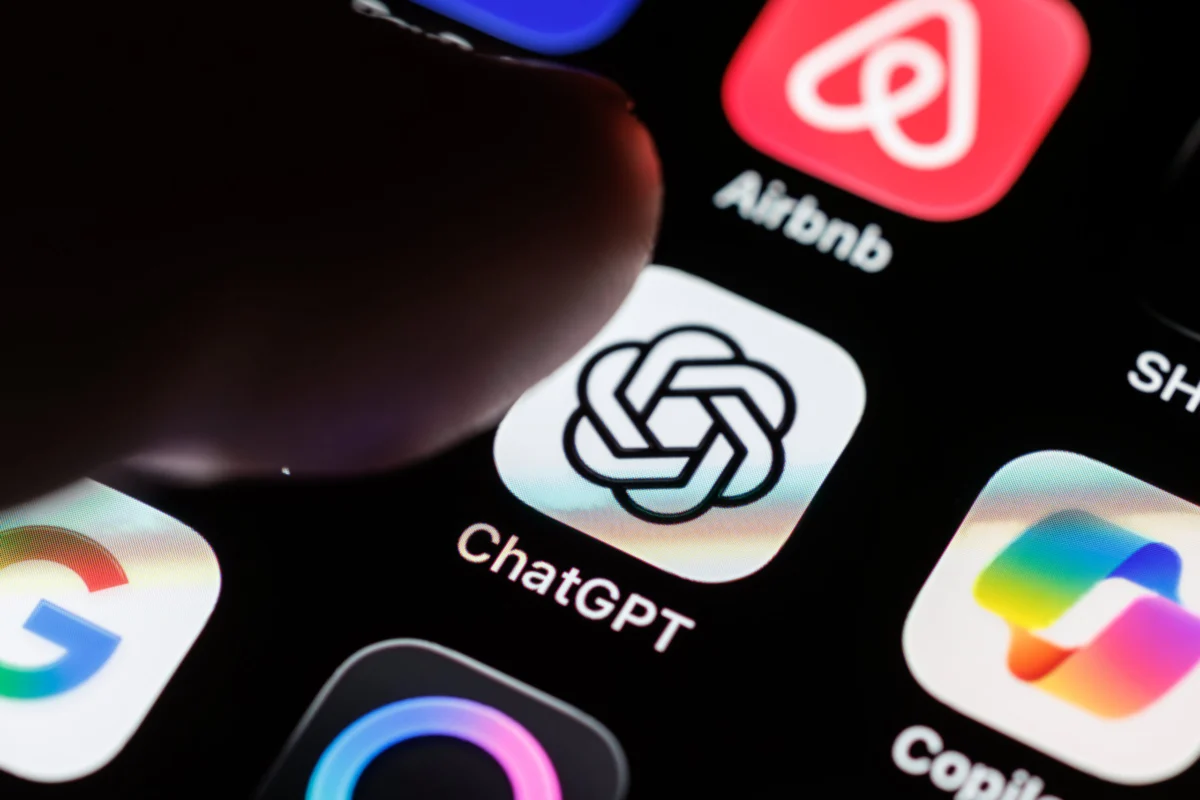
The journey toward monetizing ChatGPT through advertising has been a rapid departure from OpenAI’s original non-profit roots. The chronology of this rollout highlights the tension between the company’s need for massive revenue to fund its compute costs and its desire to remain a "user-first" platform.
- January 2026: OpenAI officially announces its intention to introduce ads within the ChatGPT interface for U.S. users. The announcement is met with immediate interest from global holding companies looking for the "next big thing" after the saturation of social media and retail media networks.
- February 2026: The company begins onboarding a select group of agencies, including WPP, Omnicom, and Dentsu. These agencies act as intermediaries for major global brands in sectors ranging from retail to consumer packaged goods.
- Early March 2026: The pilot program begins, but ad delivery is restricted to a tiny fraction of the user base. Sensor Tower data indicates that on March 1, only about 1% of ChatGPT mobile users were seeing ads.
- Mid-March 2026: OpenAI begins to ramp up the frequency of ads. By the middle of the month, the number of ads served increased by approximately 600% compared to the start of the month, reaching roughly 5% of the mobile user base.
- Late March 2026: Despite the increase in volume, agencies report that the spend is still lagging behind the committed budgets, leading to the current state of frustration across Madison Avenue.
Technical Hurdles and the Philosophy of "Conversational Discovery"
The slow rollout is not merely a matter of administrative caution; it reflects the technical complexity of integrating ads into a Large Language Model (LLM). Unlike traditional search engines, where ads are clearly delineated at the top of a list of links, ChatGPT must find ways to weave brand messages into a fluid conversation without breaking the "persona" of the AI or annoying the user.

OpenAI has stated that its goal is to "learn and refine the experience for consumers before expanding it more broadly." This philosophy centers on "conversational discovery"—the idea that an ad should only appear when it is highly relevant to a specific, high-intent query. For example, if a user asks for a recipe for a dinner party, an ad for a specific grocery delivery service or a premium cookware brand might be contextually appropriate.
Meredith Spitz, EVP and Head of Paid Search at Dentsu, noted that the most significant value in these ads comes from specific, niche queries. "Overall, we’re seeing the continued importance of aligning ad relevance with user intent," Spitz said. She emphasized that when a user’s intent is precise, brands with tailored messaging are best positioned to provide value. This precision, however, limits the overall "inventory" available for ads. If OpenAI only shows ads when they are a perfect match, it cannot achieve the massive scale that platforms like Google or Facebook offer, where ads are served more liberally.
Competitive Landscape: The AI Ad Wars Heat Up
OpenAI’s entry into advertising has forced its competitors to take distinct, and often opposing, stances. The industry is currently divided between those who see ads as an inevitable necessity for funding AI development and those who view an ad-free experience as a core product differentiator.
Anthropic: One of OpenAI’s primary rivals, Anthropic, has taken a combative approach. During the 2026 Super Bowl, Anthropic aired a commercial that indirectly criticized OpenAI’s move into the advertising space. Anthropic has pledged that its Claude platform will remain ad-free, positioning itself as a "clean" alternative for users who want to avoid commercial influence in their AI interactions.
Perplexity: The AI search startup Perplexity initially experimented with ads in 2024 but recently made the surprising move to remove them. This suggests that even for smaller, more nimble players, finding the right balance between monetization and user satisfaction is a delicate challenge.
Google: The undisputed king of search advertising, Google, remains the "elephant in the room." While Google has not yet integrated ads directly into the conversational flow of its Gemini AI in a formal capacity, it has a massive advantage: the AI Overview. Google already serves ads alongside its AI-generated search summaries, leveraging its existing $252 billion search ad infrastructure. The question for the industry is whether OpenAI’s slow and careful rollout will allow Google to solidify its dominance in AI-assisted search before ChatGPT can become a viable competitor.

Data and Projections: The $30 Billion Opportunity
Despite the current frustrations, analysts believe the long-term potential for LLM-powered advertising is staggering. A recent note from Truist analysts labeled 2026 as an "inflection year" for the industry. They predict that within the next few years, conversational AI will become one of the "most important pillars of the digital ad industry," standing alongside search, social media, and retail media.
The financial projections support this optimism. Truist estimates that while OpenAI will likely generate less than $1 billion in ad revenue in 2026, that figure is projected to skyrocket to over $30 billion by 2030. This growth trajectory is based on the assumption that as users shift their behavior from "searching" (clicking links) to "asking" (getting direct answers), the ad dollars will inevitably follow the eyeballs.
However, reaching that $30 billion mark requires OpenAI to solve the "delivery problem" that is currently plaguing its agency partners. If the company cannot provide the scale and the data-rich environment that modern marketers demand, it risks losing those innovation budgets to other emerging platforms or seeing them return to the safe harbor of Google Search.
Implications for the Future of Marketing
The friction surrounding the ChatGPT ad rollout serves as a case study for the broader challenges of the "Agentic" era of technology. As AI moves from being a simple chatbot to an "agent" that can shop, plan travel, and make decisions for users, the nature of advertising must evolve.
If ChatGPT becomes an "agent" that buys groceries for a user via integrations with companies like Shopify, Etsy, or Amazon, the "ad" may no longer be a banner or a text snippet. Instead, the ad might be the AI’s recommendation of one brand over another during the transaction process. This creates a new set of ethical and practical questions for the ad industry:
- Transparency: How will users know if a recommendation is organic or paid?
- Attribution: How will agencies prove that a conversation with an AI led to a sale if the journey is non-linear?
- Brand Safety: How can brands ensure that their ads don’t appear alongside hallucinated or controversial AI content?
The current frustrations expressed by WPP, Omnicom, and Dentsu are likely the growing pains of a fundamental shift in how humans interact with information. While the slow pace of the rollout is a headache for media buyers today, it may ultimately lead to a more stable and effective advertising medium in the future. For now, the ad industry remains in a state of "hurry up and wait," watching closely as OpenAI attempts to turn the world’s most famous AI into the world’s most sophisticated ad platform. The coming months will determine if OpenAI can scale its operations to match the massive hype—and the massive budgets—of Madison Avenue.