


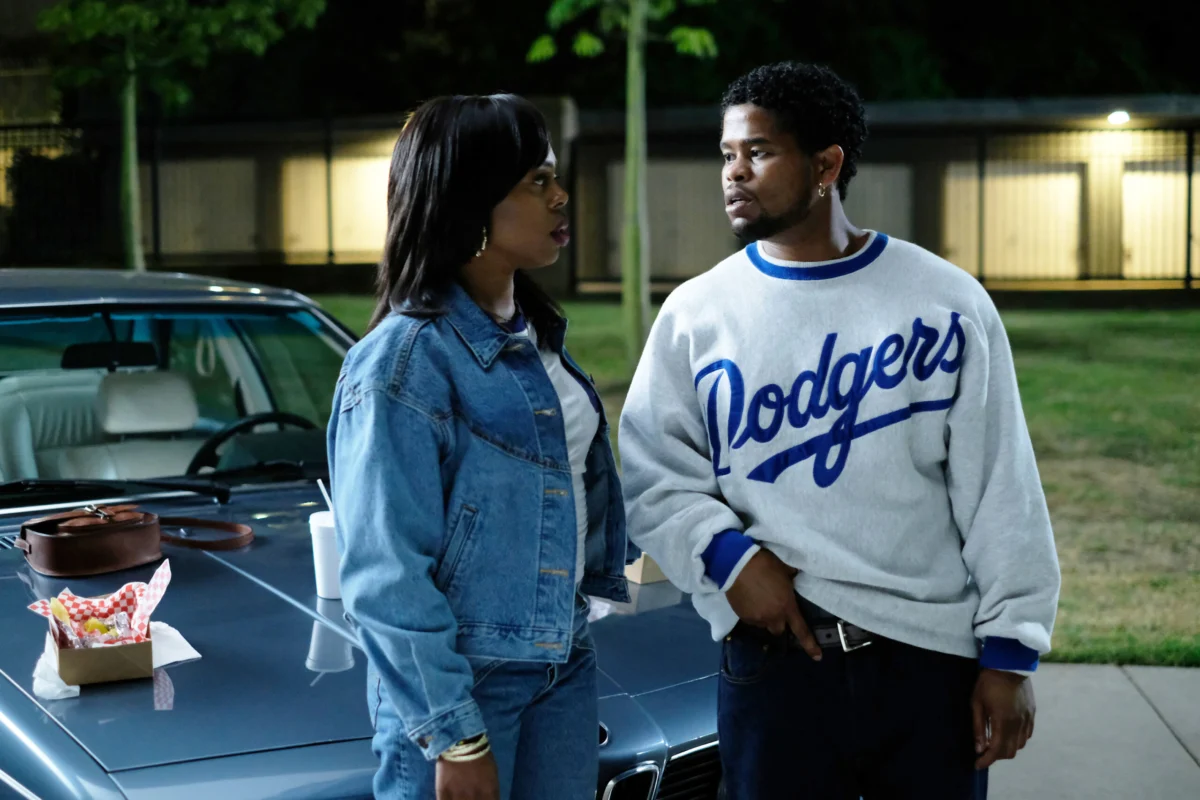
The premiere of The Drop: A Snowfall Saga has reignited intense interest in the cultural legacy of the crack cocaine epidemic and its profound influence on the development of West Coast hip-hop. As the series moves through its inaugural eight-episode season on FX and Hulu, showrunner Malcolm Spellman is tasked with the difficult balancing act of honoring the narrative foundation laid by the late John Singleton while forging a distinct creative path for this new iteration. Centered on the post-Snowfall lives of Wanda, portrayed by Gail Bean, and Leon, played by Isaiah John, the series shifts the focus from the rise of a drug kingpin to the creative and social dynamics of the 1990s music scene in Los Angeles.
The central question lingering for many fans—whether Franklin Saint, the protagonist of the original series, will appear—has been addressed with finality. Damson Idris, who garnered critical acclaim for his portrayal of Franklin, is not slated to return. This creative decision serves as a pivotal marker in the show’s identity, signaling that The Drop is not a continuation of the Saint empire, but rather an exploration of the world left in its wake.
A New Narrative Direction
The original Snowfall series ran for six seasons, concluding in April 2023. It provided a meticulous, if harrowing, account of the introduction of crack cocaine into Los Angeles during the 1980s. The narrative impact of that era is statistically significant; according to various sociological reports on the period, the crack epidemic catalyzed a shift in urban policy, policing, and community demographics that fundamentally altered the trajectory of Black American life in major cities.
The Drop: A Snowfall Saga positions itself as the "news report" to the original series’ "phenomenon." Where the original show focused on the destabilization caused by the drug trade, The Drop examines the cultural response. Set against the burgeoning West Coast hip-hop scene, the series explores how the trauma of the 1980s evolved into the artistic expression of the 1990s. For Spellman, the creative breakthrough came only after he stopped attempting to replicate the specific tone of the predecessor and allowed the new series to find its own voice.
Chronology and Character Development
The transition from the late 1980s—the era of the original Snowfall—to the early 1990s marks a shift in the show’s thematic focus. Following the series finale of the original show, which depicted the total erosion of the Saint empire, The Drop picks up in a landscape where the surviving characters are attempting to navigate the wreckage.
The narrative structure of the first five episodes has been deliberate, focusing on building a world that feels both familiar and distinct. While the appearance of Quincy Chad’s character, Deon, provided a nod to the show’s roots, Spellman has emphasized that he is not pursuing cameos for the sake of nostalgia. Instead, the production utilizes an organic approach: characters from the previous series only reappear if the story necessitates their presence.
Episode five, titled "Homecoming," represents a departure from the primary plot, choosing to delve into the backstory of the character Lamar, played by Asante Blackk. This episode serves as an essential pivot, providing context for Lamar’s complicated relationship with his religious grandparents and his aspirations within the music industry. By dedicating a full installment to these familial tensions, the show highlights the often-neglected reality of the "religious community" in urban centers—a demographic that remains a cornerstone of African American life but is frequently marginalized in media portrayals of crime and street culture.
Industry Context and Cultural Authenticity
The production of The Drop is supported by an extensive network of consultants and creative staff who possess personal, first-hand experience with the communities depicted on screen. This focus on authenticity is a direct response to the criticism often leveled at portrayals of the 1990s rap industry. Spellman’s background, including his work on the documentary series Hip Hop Uncovered, provided him with the necessary credibility to navigate the complex history of the West Coast music scene.
In terms of production metrics, the shift to a "lighter" tone has been a calculated strategy. While the final seasons of the original Snowfall were characterized by extreme violence and bleak outcomes, The Drop incorporates elements of humor, Black joy, and creative ambition. This tonal shift reflects the reality that the crack epidemic and the rise of hip-hop were not mutually exclusive; rather, they existed as different facets of the same era. The show seeks to depict this duality without fetishizing the violence or the substance abuse that defined the predecessor.
The Role of the Church and Social Dynamics
One of the most notable features of the series is its exploration of the intersection between faith and the streets. The conflict surrounding Lamar and his family’s opposition to his pursuit of a career in the music industry—driven by the tragic history of his mother—provides a grounded conflict that resonates with many viewers. The show addresses topics such as the usage of the N-word and the public discourse surrounding it, treating these as standard, albeit sensitive, components of daily life in the community rather than sensationalist plot points.
This approach is intended to provide a more nuanced look at the 1990s, moving beyond the caricatures often found in period dramas. By integrating the perspectives of individuals who were actually present during that time—writers, consultants, and the showrunner himself—the production aims to bridge the gap between historical accuracy and narrative entertainment.
Broader Implications and Market Impact
As a spinoff of a highly successful franchise, The Drop faces the pressure of sustaining a pre-established audience while attracting new viewers. The initial feedback from fan communities, particularly those active on reaction channels and social media, has been positive. Industry analysts suggest that the success of the show hinges on its ability to satisfy the original fanbase—who are, according to the production, the "foundation" of the project—while establishing its own stakes.
The decision to air on both FX and Hulu allows the series to reach a broad demographic, leveraging the prestige television model that made the original series a standout in the FX portfolio. The streaming numbers for the first few episodes are being closely watched as a gauge for the long-term viability of the Snowfall franchise. If the current momentum continues, The Drop may prove that established dramatic universes can successfully pivot to new tones and subject matter without losing their core audience.
Looking Ahead
With three episodes remaining in the first season, the stakes for the characters are reaching a critical point. The tension between Lamar’s creative ambitions and his family’s expectations remains the primary narrative engine, while the broader societal context of the 1990s provides a rich backdrop.
The success of The Drop will likely be measured by its ability to maintain this balance. By moving away from the "kingpin" narrative of the original and into the more complex, varied world of the music industry and community activism, the show is attempting to redefine the parameters of what a crime drama spinoff can achieve. Whether this approach results in long-term critical acclaim remains to be seen, but early indicators suggest that the "bolt of lightning" that inspired the project has translated into a compelling, grounded, and culturally relevant addition to the current television landscape. As the season approaches its conclusion, the focus will remain on the growth of the surviving characters and their efforts to build something lasting in the aftermath of a transformative, and often devastating, period in American history.