

The Origin and Evolution of a Silicon Valley Epic
The narrative trajectory of Artificial tracks the transformation of AI from a niche academic pursuit to a global, trillion-dollar industry. The story begins in 2003 at the University of Toronto, focusing on the mentorship between Geoffrey Hinton—often cited as the godfather of modern AI—and his protégé, Ilya Sutskever. The film meticulously documents Sutskever’s transition from an idealistic researcher to the Chief Science Officer of OpenAI, framing his career as the primary engine of the organization’s technical capabilities.
The script, penned by Simon Rich, highlights the pivotal 2014 conference where Sam Altman, then a prominent figure at Y Combinator, successfully recruited Sutskever. This meeting serves as the film’s inciting incident, transitioning the narrative from the ivory towers of academia to the high-stakes, capital-intensive environment of San Francisco’s tech hub. By tracing the development of large language models (LLMs) through the lens of a "Wozniak-to-Jobs" dynamic between Sutskever and Altman, the film posits that the eventual commercialization of the technology was not an accident but a calculated strategy.
Chronology of the AI Accelerationist Shift
The film’s structure follows a chronological progression that parallels the public history of OpenAI. Key milestones depicted in the narrative include:
- 2014-2015: The foundational period, characterized by the involvement of venture capitalists and figures like Elon Musk, who initially viewed OpenAI as a nonprofit safeguard for humanity.
- November 2022: The launch of ChatGPT, a moment the film characterizes as a rupture in the industry’s internal consensus, forcing a pivot toward aggressive market expansion.
- November 2023: The "OpenAI Coup," in which Sutskever and other board members attempted to oust Altman, only for him to be reinstated with the backing of Microsoft and a reconstituted board.
The film interprets this period as the moment the "nonprofit" ethos was effectively abandoned. By integrating the timeline of Microsoft’s $50 billion investment into OpenAI, the film provides a financial framework for the accelerationist policies that have defined the last two years of the AI boom.
Behind the Corporate Curtain: The Dramatis Personae
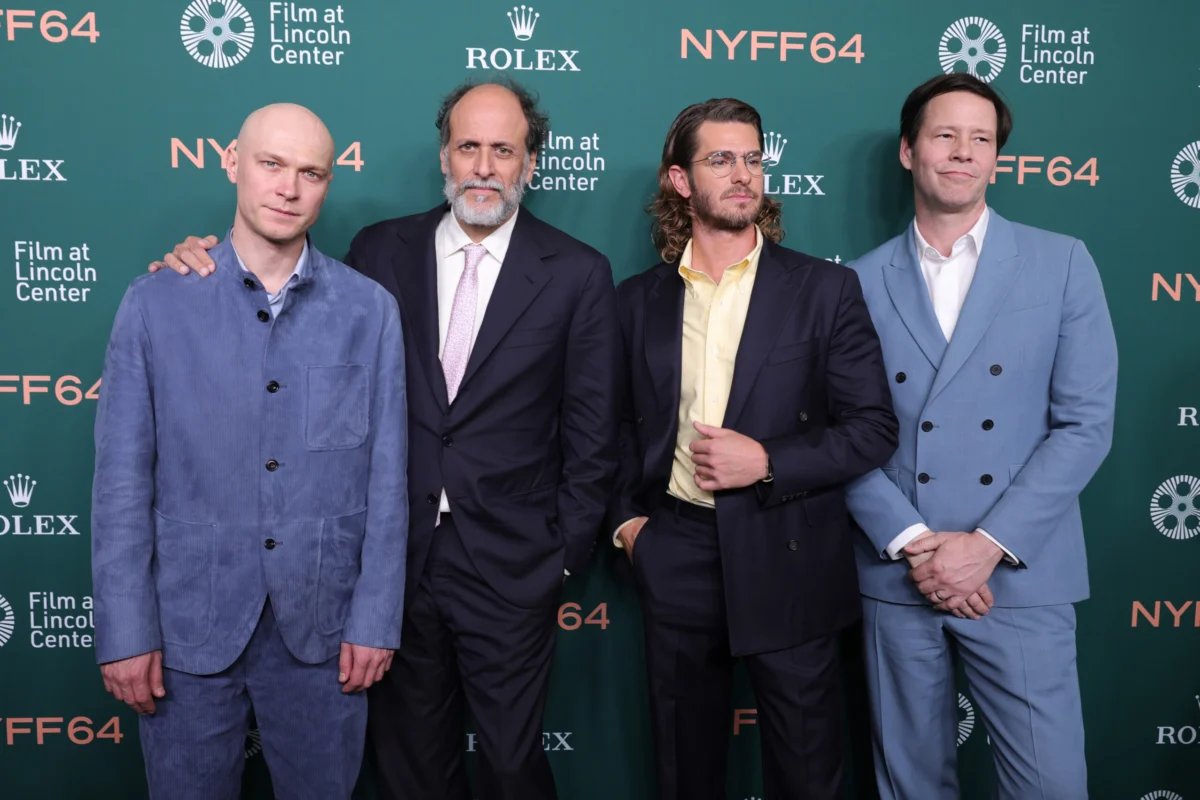
Guadagnino’s film utilizes an ensemble cast to inhabit the figures who have shaped the current AI landscape. The portrayals are intended to mirror the public perceptions and private tensions of these individuals:
- Sam Altman (Andrew Garfield): Portrayed as a charismatic, highly pragmatic leader, the character serves as the film’s ideological pivot point. Garfield’s performance highlights the perceived disconnect between Altman’s public "save the world" rhetoric and the realities of his corporate maneuvering.
- Ilya Sutskever (Yura Borisov): Borisov’s portrayal captures the disillusionment of a researcher watching his life’s work drift from safety-oriented development toward mass-market commercialization.
- Greg Brockman (Cooper Hoffman): Represented as a devoted ally to Altman, the character emphasizes the internal loyalty structures that define the upper echelons of AI firms.
- Geoffrey Hinton (Mark Rylance): Serving as the film’s moral compass, Rylance’s character represents the academic community’s growing anxiety regarding the pace of AI development and the lack of regulatory oversight.
Financial and Corporate Context: The Amazon Conflict
The film’s production history is, in itself, a reflection of the themes it explores. Amazon MGM Studios originally backed the project, only to abandon it following the parent company’s massive financial integration with OpenAI. Industry analysts have pointed to this as a case study in "technocapitalist capture," where the interests of media conglomerates and tech firms are so deeply intertwined that critical discourse becomes difficult to house under the same corporate umbrella.
Guadagnino has noted that the conflict of interest was an "elephant in the room" that became impossible to ignore as the film neared completion. The shift to Neon ensures the film’s release as an independent project, free from the direct editorial pressure of a company with direct financial stakes in the industry depicted on screen.
Industry Reactions and Public Safety Concerns
The release of Artificial coincides with a period of intense public scrutiny regarding AI safety. The film’s postscript references the warnings of whistleblower Jacob Coxon, who has publicly criticized the "speedplow" culture at companies like Anthropic and OpenAI. By linking the fictionalized narrative to real-world whistleblowing, the film attempts to ground its dramatization in current, urgent debates.
The response from the figures portrayed has been mixed. Sam Altman, in recent media appearances, has dismissed the film’s focus on accuracy, suggesting it is a dramatized interpretation rather than a documentary account. This friction underscores the ongoing struggle to define the "true" history of a field that is still in its infancy and continues to evolve at an unprecedented rate.
Analytical Implications: Technology and Human Agency
Beyond the interpersonal drama, Artificial raises fundamental questions about the nature of modern progress. Guadagnino’s perspective—that AI, despite its mathematical foundations, is ultimately a product of human interaction—shifts the focus from the algorithms themselves to the power dynamics of the people building them.
The film explores the concept of "accelerationism," the belief that technological progress should be pushed to its limits regardless of social consequences. Through the inclusion of characters like the "Guy on the Bench" (Jason Schwartzman), who acts as a herald of potential systemic failure, the film suggests that the current path of the industry is a choice rather than an inevitability.
The Broader Cultural Impact
As the film moves toward its wide release, its impact is likely to be measured by its ability to synthesize complex technical developments into a narrative that the general public can digest. The film serves as a "primer" for a society currently grappling with the consequences of mass-market AI deployment.
The juxtaposition of the film’s premiere with real-world political developments—such as debates over federal oversight and the integration of AI into government functions—highlights its relevance. Whether the film acts as a catalyst for deeper regulation or merely as a mirror to existing societal anxiety remains to be seen. However, its existence marks a significant moment in the cultural history of the 2020s, signaling that the "AI era" has moved beyond the tech pages and firmly into the realm of mainstream historical drama.
In its final act, the film challenges the viewer to consider the trade-offs being made in the name of innovation. By documenting the sacrifice of caution for capital, it forces an examination of whether the current AI trajectory is truly serving the public interest or merely consolidating power within a select group of Silicon Valley entities. As the industry continues to accelerate, Artificial stands as a critical documentation of the values, motives, and human frailties that have defined the most transformative technological shift of the 21st century.