


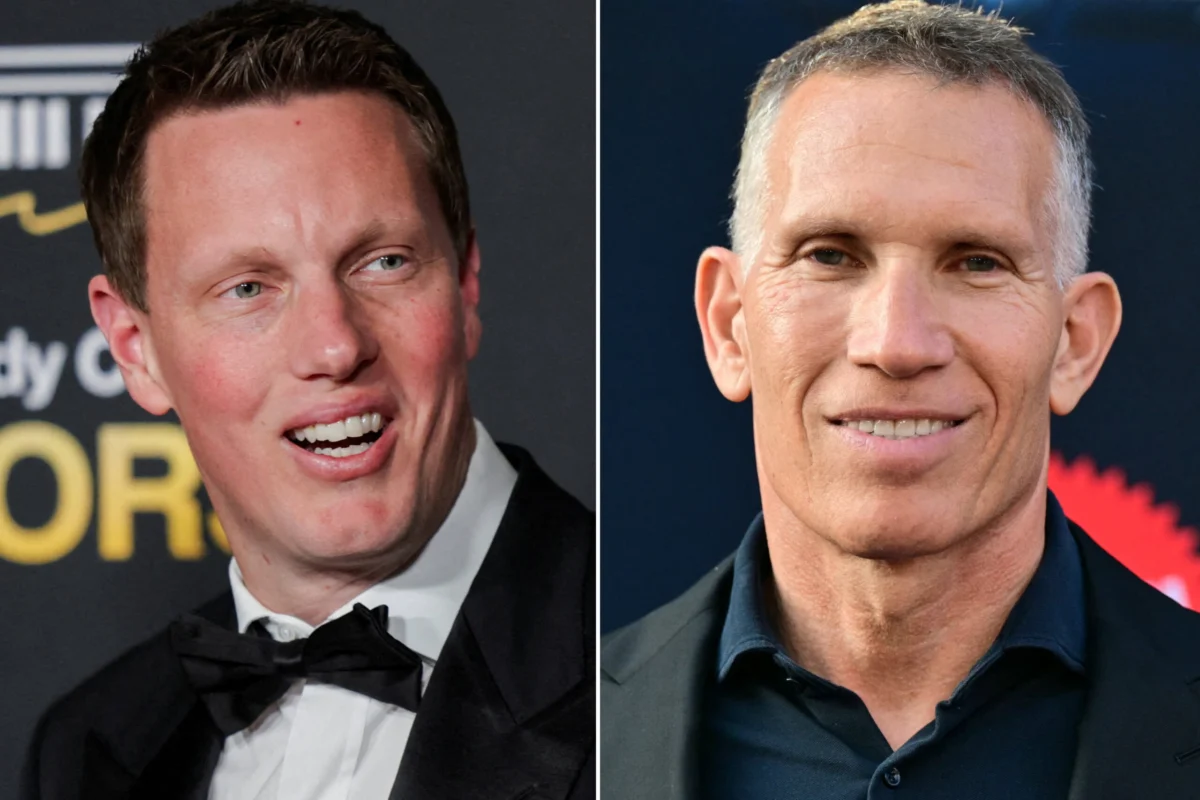
The long-anticipated consolidation of the American media landscape reached a definitive conclusion this Monday as Paramount Skydance CEO David Ellison and incoming co-CEO Ynon Kreiz formally unveiled the executive leadership structure that will steer the newly combined entity. Following the official close of the $110 billion merger with Warner Bros. Discovery on Tuesday, the organization enters a new era, positioning itself as a colossus in the global content production, distribution, and streaming sectors. The announcement marks the culmination of a high-stakes corporate transition that has fundamentally reshaped the entertainment industry over the past eighteen months.
A Strategic Integration of Industry Titans
The integration of Paramount Skydance and Warner Bros. Discovery brings together a vast library of intellectual property, including some of the most recognizable franchises in cinematic history, ranging from the DC Universe and Harry Potter to the Star Trek and Mission: Impossible series. Under the new leadership hierarchy, David Ellison and Ynon Kreiz will operate as co-CEOs, sharing responsibility for the strategic direction of the combined firm.
The leadership team reflects a calculated blend of institutional knowledge and strategic restructuring. Notably, the news divisions will maintain continuity, with Bari Weiss, editor-in-chief of CBS News, and Mark Thompson, chairman and editor-in-chief of CNN Worldwide, continuing their oversight. This decision underscores the company’s intent to maintain editorial stability amidst the broader corporate reorganization. Weiss, who joined the Paramount orbit following the October 2025 acquisition of her digital news outlet, The Free Press, will work alongside Thompson to navigate the complex challenges of modern broadcast and cable news journalism.
Executive Appointments and Operational Structure
The organizational chart reveals a deliberate focus on the company’s dual-pronged future: direct-to-consumer streaming and traditional television production. Casey Bloys, a veteran of the Warner Bros. Discovery ecosystem and the current chairman and CEO of HBO and Max, has been appointed as co-chair and chief content officer of the direct-to-consumer division. He will be joined by JB Perrette, formerly the CEO of global streaming and games at Warner Bros. Discovery. Together, the pair will oversee the combined streaming operations of HBO Max and Paramount+, a portfolio that now holds one of the largest subscriber bases in the industry.
In the realm of television production, George Cheeks, formerly a co-CEO of Paramount, steps into the role of co-chair and chief content officer for Skydance TV. His purview will encompass the company’s extensive television operations as well as its global sports group, a critical pillar of the company’s live-viewing strategy. Perrette will also co-chair this division, ensuring a tight alignment between content creation and digital distribution.
Operational continuity is further reinforced by the appointment of Andy Gordon, Paramount’s former chief strategy and operating officer, to the role of president of Skydance. Dennis Cinelli will remain in his capacity as chief financial officer, providing a steady hand as the company begins the task of reconciling the massive debt loads and cost structures associated with the $110 billion deal.
Chronology of the Mega-Merger
The path to this consolidation has been marked by complex negotiations and regulatory scrutiny. The journey began in February 2026, when the initial $110 billion merger agreement was announced. The deal was designed to create a "next-generation global media and entertainment company," aimed at competing more effectively against tech-native streaming giants like Netflix, Amazon, and Apple.
However, the path to closure was not without friction. In late 2026, the companies faced a significant hurdle in the form of a lawsuit filed by a coalition of state attorneys general, who raised concerns regarding antitrust implications and the potential for reduced market competition. The companies successfully navigated this legal challenge, reaching a settlement in September 2026 that allowed the transaction to proceed. The finalization of the deal on Tuesday signals the end of this intensive regulatory period and the beginning of the post-merger integration phase.
Market Context and Financial Implications
The merger of these two entities represents one of the largest corporate actions in the history of the media sector. By combining the studio assets of Paramount with the expansive reach of Warner Bros. Discovery, the new entity gains unprecedented economies of scale. Analysts point to several key drivers for the merger, including the necessity of aggregating content to reduce churn in the streaming market and the need for a diversified revenue model that balances linear television’s steady cash flow with the long-term growth potential of digital platforms.
Data from the third quarter of 2026 indicates that both Paramount and Warner Bros. Discovery were under significant pressure to optimize their cost structures. The combined company is expected to implement aggressive synergy targets, potentially reaching billions of dollars in annual savings through the elimination of redundant back-office functions and the consolidation of marketing and distribution pipelines.
Leadership Philosophy and Future Outlook
In his address to the staff and stakeholders, David Ellison emphasized a commitment to the creative process as the primary engine of the company’s future value. "The leaders joining me have built some of the most beloved franchises and businesses in the industry," Ellison stated. "They share a deep respect for the creative process and a belief that great stories have the power to entertain, unite and inspire audiences around the world."
This focus on content-led growth is intended to differentiate the new Skydance from competitors who have prioritized rapid volume over brand equity. By empowering established executives like Bloys and Cheeks, Ellison and Kreiz are signaling that they intend to protect the creative cultures of HBO, CBS, and other sub-brands while leveraging the collective scale of the new parent company.
Industry Implications and Long-term Impact
The formation of this media titan will undoubtedly have a ripple effect across the entire entertainment value chain. For talent, the consolidation means fewer major buyers in the marketplace, which may lead to shifts in production budgets and contract negotiations. For consumers, the immediate focus remains on whether the company will move toward a single, unified streaming interface or maintain the current brand-specific streaming platforms.
The market response to the announcement of the executive team has been one of cautious optimism. Investors are eager to see how the management team handles the integration of disparate corporate cultures and the technological challenges of merging massive streaming backends. Furthermore, the company must contend with the broader secular trends affecting linear television, where declining cable subscriptions continue to put pressure on legacy advertising models.
As the company officially moves into the post-merger era, all eyes will be on the quarterly earnings reports and the first major content slates released under the new leadership structure. The success of this merger will likely serve as a litmus test for further consolidation in the media industry, as other traditional players grapple with the transition to a digital-first economy. For now, the leadership team of David Ellison and Ynon Kreiz has the task of transforming a vast, complex organization into a unified powerhouse, a process that will define the next decade of American media consumption.