


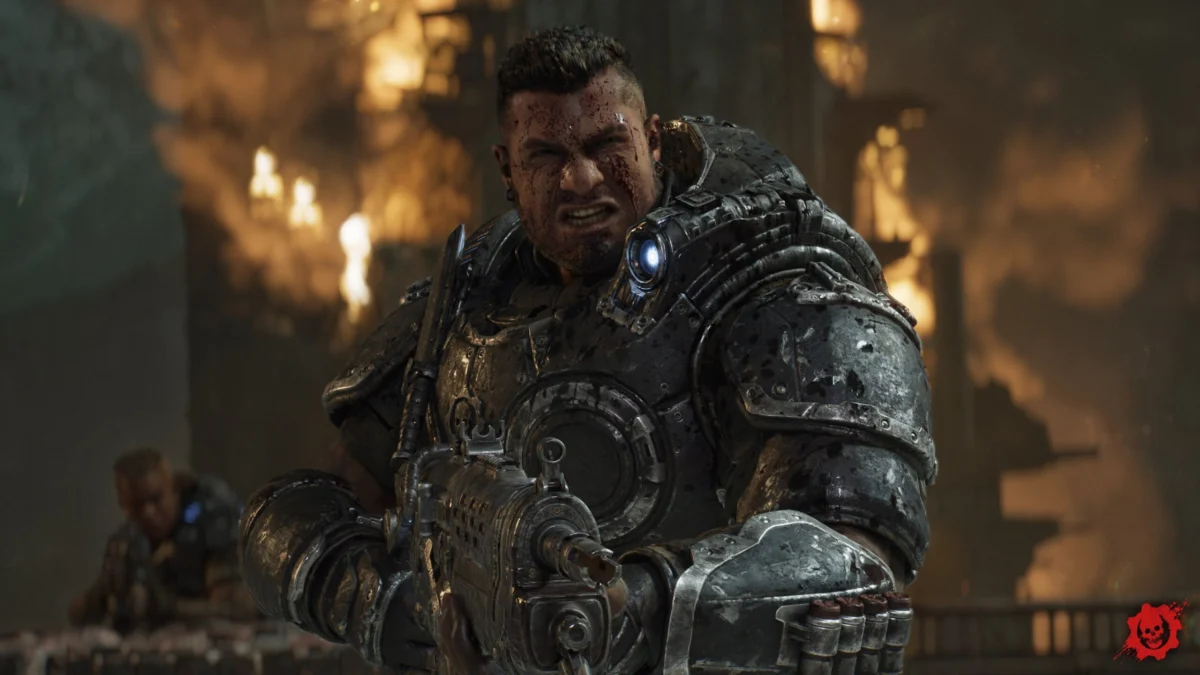
As the current console generation approaches its midpoint, developers are increasingly tasked with bridging the gap between high-end hardware and more constrained systems. The Xbox Series S, while praised for its compact design and accessibility, has long presented a technical challenge for developers due to its 10GB of GDDR6 RAM—a significantly smaller pool compared to the 16GB found in the Xbox Series X. With the highly anticipated title Gears of War: E-Day, developer The Coalition has unveiled a sophisticated software engineering solution that effectively bypasses these hardware limitations, potentially setting a new standard for optimization in the current console cycle.
The Technical Challenge: Bridging the Memory Gap
The core struggle for developers working on the Series S lies in the sheer scale and fidelity of modern AAA gaming environments. High-resolution textures, complex geometry, and advanced lighting models require substantial memory to process in real-time. When a game exceeds the available RAM, performance typically degrades, leading to dropped frames, stuttering, or the dreaded pop-in of environmental assets.
The Coalition, working in collaboration with Microsoft’s Advanced Technology Group, has implemented a technique that utilizes the console’s internal NVMe SSD as an extension of the system’s primary memory. While the concept of "virtual memory" or "swap files" is standard practice in PC and server computing, implementing this on a closed console environment with high-performance requirements requires surgical precision. By treating the NVMe drive as a secondary, slower tier of memory, the engine can offload non-critical assets from the GDDR6 RAM, freeing up space for active gameplay data.
How the Streaming Architecture Works
The innovation behind Gears of War: E-Day relies on advanced heuristics—a set of logical algorithms that analyze asset access patterns in real-time. The game engine monitors which data is being utilized by the CPU and GPU at any given millisecond. Assets that are currently required for rendering the immediate scene are pinned to the high-speed RAM, while idle or secondary assets are moved to the NVMe storage.
Because the Xbox Series S is equipped with a custom NVMe SSD capable of high throughput, this "swapping" process happens near-instantaneously. While the storage drive is technically slower than the system’s dedicated RAM, the latency is low enough that, when managed correctly, the player experiences no discernible difference in gameplay fluidity. According to technical analysis, this method yields roughly one gigabyte of additional usable memory in exchange for a few gigabytes of SSD space. This is a vital trade-off, as it allows the game to maintain the visual fidelity expected of a Gears of War title without compromising the hardware’s integrity.
Chronology of Development and Engineering
The path to this technological breakthrough began years ago as The Coalition transitioned to Unreal Engine 5. Development on E-Day required a fundamental rethinking of how the "Gears" franchise handles environmental complexity.
.jpg?width=570&quality=85&format=jpg&dpr=3)
- Early Development Phase: The team identified that the Series S RAM limitations were a primary bottleneck for the ambitious scale of E-Day’s destructible environments.
- Collaboration with Advanced Technology Group: Mid-development, The Coalition shifted focus from raw brute-force optimization to intelligent memory management, partnering with Microsoft engineers to leverage the architecture of the Xbox Velocity Architecture.
- Refinement of Heuristics: Throughout 2023 and 2024, the team fine-tuned the streaming algorithms to ensure that the "swap" between RAM and SSD did not introduce hitches during high-intensity combat sequences, where the demand for system resources spikes dramatically.
- Final Implementation: The system was finalized for the current build, allowing the game to feature the dense, detailed urban environments synonymous with the "E-Day" narrative arc without requiring a downgrade in texture quality or model complexity on the lower-spec console.
Implications for the Broader Console Industry
The success of this technique has immediate implications for the longevity of the current generation of consoles. As developers push for larger, more reactive worlds, the memory constraints of mid-tier hardware will only become more apparent.
Historically, console generations are defined by static hardware that developers must master over time. However, as the industry faces potential component shortages—partially driven by the massive demand for AI-related hardware—the ability to extend the life of existing consoles via software optimization becomes a strategic imperative. If this memory-swapping technique can be standardized across other titles, it may alleviate the pressure on developers to compromise their creative visions to accommodate the entry-level hardware tier.
Furthermore, this development highlights a shift toward "smarter" engines. Similar techniques have been utilized in Apple’s M-series silicon, which effectively manages unified memory across varying workloads. By bringing this level of intelligent resource management to the Xbox ecosystem, The Coalition is effectively teaching the console how to "think" about its own storage limitations.
A Period of Organizational Flux
Despite the technical triumph of the engineering team, the atmosphere surrounding The Coalition remains complex. The gaming division at Microsoft is currently undergoing a period of significant restructuring. Industry analysts have pointed out the inherent irony of a studio producing groundbreaking technical innovations while facing uncertainty regarding job security.
Reports of potential layoffs and the expiration of internal performance bonuses have cast a shadow over the morale at the studio. While the development of E-Day is a testament to the technical prowess of the team, it serves as a reminder that even the most impressive engineering achievements do not exist in a vacuum. The studio’s ability to retain talent will be as critical as its ability to optimize code, especially as the industry continues to grapple with the rising costs of AAA game development.
Conclusion: Looking Ahead
The integration of NVMe-based memory management in Gears of War: E-Day is more than a technical patch; it is a signal of how the industry will adapt to the constraints of the next several years. As the gaming market continues to demand higher visual standards, the reliance on raw hardware specifications will likely be supplemented by increasingly sophisticated software solutions.
Whether this specific technique will be adopted by other studios for titles like the upcoming Fable or the long-awaited GTA 6 remains to be seen. However, The Coalition has provided a blueprint for how to maintain parity across a split hardware ecosystem. For the Xbox Series S player, this means that the console is likely to remain a viable platform for high-fidelity gaming for longer than initial projections suggested. The success of E-Day, therefore, is not just measured in its critical reception or sales, but in its ability to prove that hardware limitations are not always insurmountable obstacles, provided there is sufficient engineering ingenuity to overcome them.