

Berkeley-based production technology startup LOFTAPPS is officially bringing its generative artificial intelligence production ecosystem, LOFT, to the European market. The software will make its long-awaited continental debut at the upcoming VIEW Conference 2026, scheduled to run from October 12 through October 16 in Turin, Italy. Industry professionals, artists, and technology developers gathered at the OGR Torino venue will be given an exclusive look at the capabilities of the platform, which is designed to overhaul traditional digital content creation pipelines by integrating generative AI directly into the core of studio asset management and workflow orchestration.
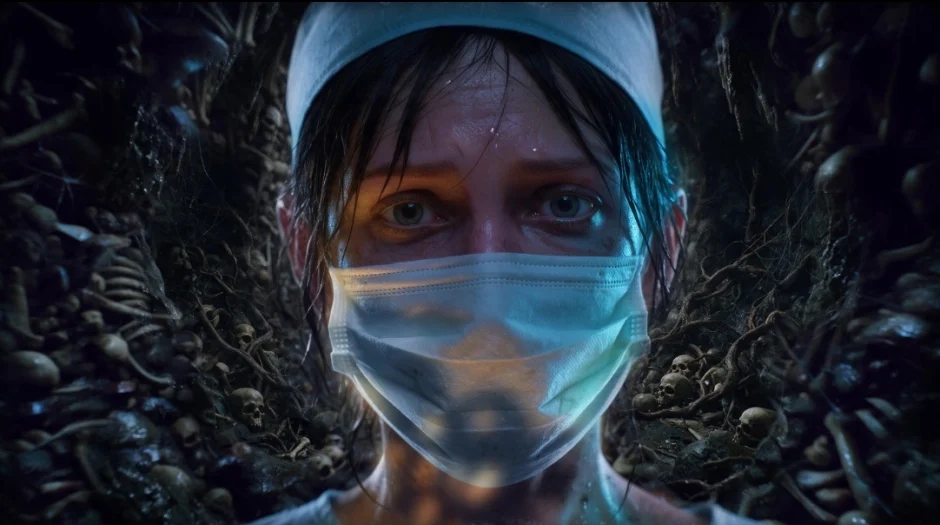
Alongside the technical rollout of the software, the conference will host a high-profile presentation highlighting a major creative collaboration: the official in-production sneak peek of the sequel to Mad God, the critically acclaimed, dystopian stop-motion masterpiece by Academy Award-winning visual effects pioneer and filmmaker Phil Tippett. The project serves as a premier showcase for how LOFT bridges the gap between handmade physical artistry and advanced, AI-driven asset tracking and generation.
The Debut of LOFT and the Evolution of Studio Pipelines
Introduced earlier in the year, LOFT was engineered to address a growing bottleneck in modern visual effects and animation pipelines: the friction between legacy digital content creation (DCC) software and disparate generative AI models. As studios increasingly experiment with artificial intelligence, many have struggled with disjointed workflows that treat AI outputs as isolated novelties rather than manageable, reviewable production assets. LOFT solves this by centralizing asset management, creative intent, prompt libraries, cryptographic provenance, review cycles, and resource allocation into a single, unified operating system.

Built explicitly as an AI-first product, the platform also accommodates hybrid workflows, allowing legacy pipelines to interface smoothly with generative modules. This dual capability ensures that studios do not have to completely discard existing infrastructure to reap the efficiencies of machine learning. Currently, LOFT is being rolled out to select industry partners and customers through a guided onboarding process to ensure seamless integration into complex, high-pressure studio environments.
Gary Mundell, co-founder and chief executive officer of LOFTAPPS, emphasized the philosophical shift the software represents for the entertainment industry. "We developed LOFT as an AI-first solution for production, while supporting hybrid workflows that connect generation to the durable production structure needed to turn model outputs into managed, reviewable, and accountable assets," Mundell stated. "Its value is a connected production process that fundamentally changes how production work is generated, multiplied, and managed."
Phil Tippett and the Production of the Mad God Sequel
The choice of Phil Tippett’s Mad God sequel as a flagship showcase for LOFT underscores the technology’s adaptability. While generative AI is frequently associated with clean, digital aesthetics or synthetic video generation, the collaboration demonstrates how the tool can be harnessed to support and amplify deeply tactile, handmade artistic visions.
Phil Tippett’s name is synonymous with the history of modern visual effects. Over a career spanning multiple decades, his contributions have shaped some of the most iconic cinematic universes in film history. His extensive credits include groundbreaking stop-motion and creature effects work on Star Wars: Episode VI – Return of the Jedi, Jurassic Park (where his transition from go-motion to digital animation inspired a famous line in the film), RoboCop, Starship Troopers, and more recently, The Mandalorian and Grogu.

Tippett’s masterwork, Mad God, became a legend within the animation community due to its prolonged, tortuous development cycle. Conceived in the late 1980s, the dystopian stop-motion epic spent approximately 30 years in intermittent production, funded largely by Tippett himself and fueled by the dedication of volunteers and fellow artists working out of his Berkeley studio. The resulting film—a nightmarish, dialogue-free descent through subterranean circles of industrial decay and grotesque monsters—finally received its theatrical run via Shudder and IFC Midnight in 2022, earning widespread critical acclaim for its uncompromising, handcrafted visceral artistry.
By applying LOFT to the production of the Mad God sequel, Tippett and his team are testing the boundaries of how AI can assist—rather than replace—the painstaking physical processes of armature building, set construction, and stop-motion animation.
VIEW Conference 2026 Panel Lineup and Schedule
The European premiere of LOFT and the unveiling of the Mad God follow-up footage will be supported by two major panel appearances featuring key leadership from LOFTAPPS and special remote participation from Tippett himself.
The State of VFX: Navigating a Changing Market
On Wednesday, October 14, from 12:45 to 1:45 p.m. CET, LOFTAPPS CEO Gary Mundell will take the stage alongside a curated group of chief executives and senior visual effects leaders for a comprehensive panel discussion. Titled "The State of VFX: Navigating a Changing Market," the session will address the turbulent economic realities currently facing the global entertainment industry. Panelists are expected to dissect pressing issues such as shifting production volumes, intense cost pressures, corporate consolidation, and the rise of international competition. The conversation will be moderated by Heiko Burkardsmaier, VFX executive producer and head of business and legal affairs at Accenture Song VFX.

The Hybrid Trap: Why AI-Native Production Matters
On Thursday, October 15, from 4:30 to 5:30 p.m. CET, Mundell will be joined by LOFTAPPS Chief Technology Officer Remko Noteboom for a dedicated technical and creative presentation. Phil Tippett will participate remotely to discuss the practical realities of using the software in an active production environment. Titled "The Hybrid Trap: Why AI-Native Production Matters," the session will explore the thesis that many contemporary studios adopting a superficial hybrid approach to AI are inadvertently solving the wrong operational problems. Drawing directly from their ongoing collaboration on the Mad God sequel, the speakers will share exclusive behind-the-scenes content, demonstrating how AI-supported pipelines can be tailored to preserve a director’s distinct handmade visual style without sacrificing modern scale or efficiency. Both panels will be held in person at the OGR Torino venue.
Broader Industry Impact and Implications
The introduction of LOFT to the European market via VIEW Conference 2026 arrives at a critical juncture for the media and entertainment sector. As studios globally grapple with shrinking budgets, compressed delivery schedules, and ethical debates surrounding artificial intelligence, software solutions that offer strict provenance tracking and transparent asset management are seeing increased demand.
By focusing on accountability—ensuring that AI-generated elements can be properly tracked, reviewed, and integrated into standard legal and production frameworks—LOFTAPPS is positioning its platform not merely as a creative generator, but as an enterprise-grade administrative backbone. The high-profile validation provided by a legendary artisan like Phil Tippett further signals that AI-native tools are finding acceptance even within the most traditional, physical craft-based corners of the filmmaking community. As the software transitions from its initial rollout into broader deployment, its reception among European studios in Turin will likely serve as a bellwether for how generative production systems are adopted across international markets in the years ahead.