

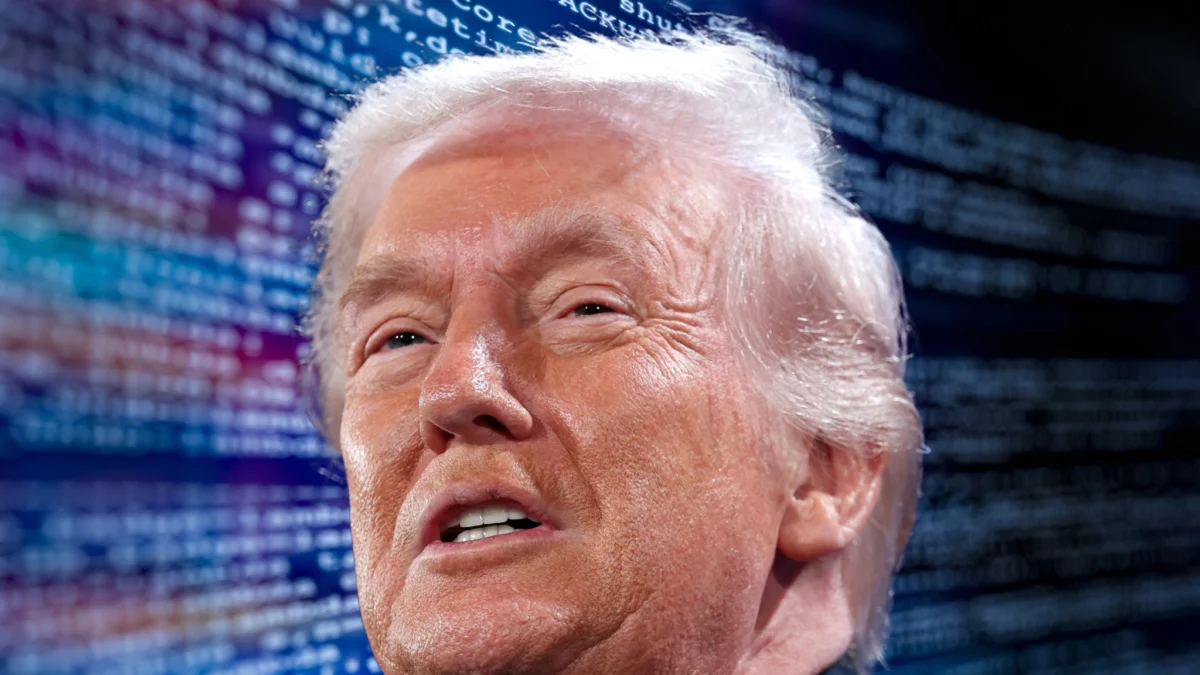
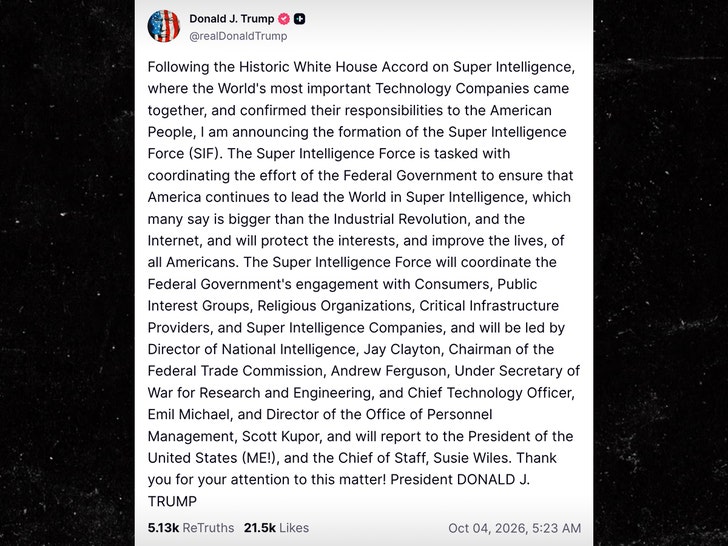
The landscape of artificial intelligence governance in the United States shifted significantly following an official announcement by President Donald Trump regarding the creation of a dedicated task force known as the Super Intelligence Force. Unveiled via his Truth Social platform, the newly minted initiative is designed to ensure that the United States maintains a decisive global leadership role in the development of artificial intelligence while emphasizing safe and responsible technological expansion. Although the concept of an artificial intelligence-focused government force had been previously teased by the administration, this latest disclosure provides concrete details concerning the specific leadership structure tasked with steering the nation through what officials describe as a critical technological race.
Structure and Leadership of the Super Intelligence Force
To oversee the ambitious mandate of the Super Intelligence Force, the administration has appointed a high-ranking quartet of key federal officials. National Intelligence Director Jay Clayton has been designated to lead the group, effectively serving as the nation’s chief "Super Intelligence czar." Joining Clayton on the high-level task force are Federal Trade Commission (FTC) Chairman Andrew Ferguson, Under Secretary of Defense Emil Michael, and Office of Personnel Management (OPM) Director Scott Kupor.
The inclusion of leaders from diverse sectors—ranging from national intelligence and defense to economic regulation and federal personnel—reflects the multifaceted nature of artificial intelligence development and its profound implications for national security, economic competitiveness, and regulatory oversight. In statements given to the Wall Street Journal following the announcement, Jay Clayton expressed confidence in the chosen leadership team. He emphasized that the group brings together individuals with extensive professional experience, diverse skill sets, and a shared commitment to national progress. Clayton noted that the appointees are serious figures who have successfully navigated complex technological opportunities and risks in the past, asserting that their collective objective is to secure an American victory in the artificial intelligence race for the direct benefit of the citizenry.
Background Context and White House Engagements
The formation of the Super Intelligence Force follows a series of high-level consultations between President Trump and chief executives representing major technology and artificial intelligence firms. During these closed-door and public-facing summits, administration officials and industry leaders discussed the implementation of internal corporate reviews, voluntary safety guardrails, and self-regulatory frameworks to mitigate potential risks associated with advanced computational systems.
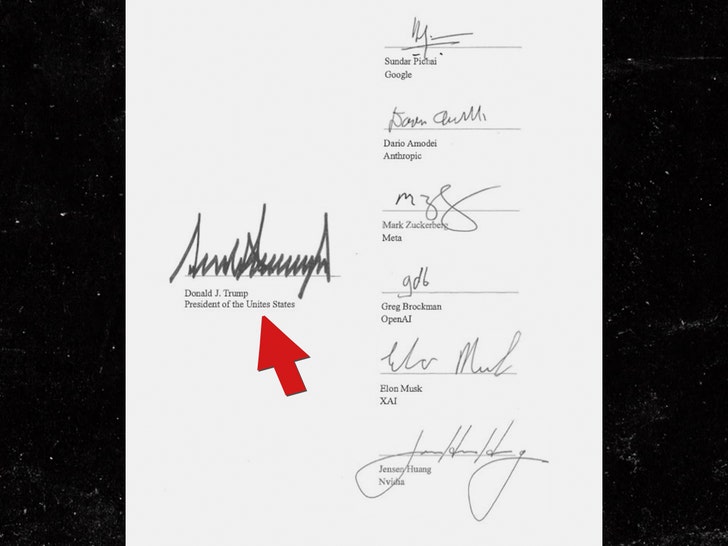
However, these preliminary efforts have not been without controversy or administrative missteps. Following a public relations push to publicize an agreement reached between the White House and prominent tech sector leaders, observers noted a notable administrative error: an official press release distributed by the administration misspelled the title of the President. Despite these minor logistical stumbles, the administration has maintained a firm stance against heavy-handed regulatory burdens that might decelerate domestic technological momentum. President Trump has consistently characterized widespread public anxiety regarding the existential capabilities of artificial intelligence as a manufactured concern, actively pushing back against proposals aimed at slowing down research, development, and deployment cycles within the private sector.
Legislative Counterweights and Congressional Concerns
The aggressive push by the executive branch to accelerate artificial intelligence capabilities stands in sharp contrast to legislative initiatives emerging from Capitol Hill. The debate over how the federal government should manage artificial intelligence has sparked intense bipartisan and cross-ideological friction among lawmakers, civil liberties groups, and industry stakeholders.
Most notably, Senator Bernie Sanders recently introduced federal legislation aimed at establishing stringent government oversight over advanced computing models. The proposed bill goes as far as seeking an explicit ban on the development of artificial intelligence systems that surpass human capabilities—commonly referred to in technical circles as artificial superintelligence. While the administration’s Super Intelligence Force is oriented toward winning a geopolitical and economic race for dominance, congressional watchdogs and progressive lawmakers argue that unchecked growth presents severe hazards to employment, privacy, democratic institutions, and public safety. This ideological divide highlights a growing fracture in Washington policy circles regarding whether artificial intelligence should be aggressively fostered to counter international adversaries, or severely restricted to prevent catastrophic societal disruption.
Timeline of Key Developments in Artificial Intelligence Governance
Mid-September 2026: President Trump publicly hints at the formation of a specialized federal artificial intelligence force during a series of policy speeches addressing national technological competitiveness.
Mid-September 2026: Senator Bernie Sanders introduces a legislative bill designed to place a federal ban on artificial intelligence systems reaching superintelligence thresholds, calling for robust federal oversight and intervention.
Late September 2026: The White House hosts executives from leading artificial intelligence and technology conglomerates to discuss voluntary safety guidelines, resulting in a public relations rollout marred by a typographical error in the presidential title on an official release.
Early October 2026: President Trump officially formalizes the Super Intelligence Force via Truth Social, officially naming National Intelligence Director Jay Clayton, FTC Chairman Andrew Ferguson, Under Secretary of Defense Emil Michael, and OPM Director Scott Kupor to the leadership panel.
Economic and Geopolitical Implications
The establishment of the Super Intelligence Force carries profound implications for the global technological ecosystem. As nations such as China aggressively invest in sovereign computing capabilities, national leaders face mounting pressure to balance innovation with risk management. By appointing figures from the defense and intelligence apparatuses, the United States is signaling that artificial intelligence is no longer viewed merely as a commercial utility or consumer product, but as a critical domain of national power and strategic competition.
Analysts suggest that the task force will likely focus on streamlining federal procurement of advanced technologies, protecting domestic intellectual property from foreign espionage, and establishing unified benchmarks for security without imposing the stringent compliance costs favored by progressive regulators. Nevertheless, critics remain skeptical about whether a government-backed task force dominated by security and regulatory officials can effectively balance rapid commercial innovation with comprehensive safety guardrails. As the Super Intelligence Force begins its operational mandate, its success—or failure—will likely define the trajectory of American technological supremacy for decades to come.