



Lana Daher’s debut feature documentary, Do You Love Me (2026), stands as a sprawling, kaleidoscopic examination of Lebanon’s turbulent cultural memory, constructed entirely from seven decades of found footage and archival materials. The 76-minute multidisciplinary project, which initially premiered at Venice Days before securing an exhibition run at New York’s Metrograph alongside a retrospective of pioneering filmmaker Jocelyne Saab, translates a fractured national history into a visceral, cinematic collage. By stitching together fragments drawn from independent Lebanese cinema, historical newsreels, home movies, and abandoned audiovisual archives, Daher attempts to map the emotional terrain of a country that has long lacked a unified, institutionalized national record.
The resulting film bypasses traditional linear narrative structures in favor of an associative, rhythm-driven exploration of trauma, resilience, and daily life in Beirut. By juxtaposing fictional action sequences with raw journalistic footage of street-level violence, Daher deliberately blurs the boundaries between constructed spectacle and historical reality. The project’s international rollout and its critical reception arrive against the backdrop of persistent regional instability, throwing a sharp focus on the mechanics of cultural preservation, the politics of archival ownership, and the ongoing struggle for self-representation in the Middle East.
Main Facts and Origin of the Project
The conceptual foundation of Do You Love Me was laid in 2018, when Daher embarked on a research endeavor examining the intersection of war and music, specifically investigating how sonic culture carries collective memory through armed conflict. Initially centered on the legacy of the prominent Lebanese pop group the Bendaly Family—whose music inspired the film’s title—the project gradually evolved from a musicological study into a deeply personal, archive-based documentary about Daher’s relationship with her hometown of Beirut.

Operating without the benefit of a centralized national archive or a universally agreed-upon history curriculum, the production team engaged in an extensive retrieval effort. Daher and her researchers gathered over 20,000 audiovisual fragments stored across multiple hard drives. The source material ultimately incorporated footage from approximately 106 independent fiction and documentary features produced between 1958 and the present day, alongside home videos, radio broadcasts, podcasts, photographs, and music videos. The oldest artifact utilized in the final cut is a home movie dating back to 1928. From this vast cache, roughly seven percent of the researched material made it into the final 76-minute runtime, a process that necessitated the clearance of nearly 400 rights contracts.
Chronology of Lebanese Visual History and the Archive
The absence of a centralized state-run repository for cinematic or historical media in Lebanon presents unique challenges for documentary filmmakers. Generations of Lebanese families have experienced displacement, property loss, and forced migration, resulting in the systematic destruction or dispersal of private archives. Daher’s methodology reflects this historical fragmentation, discarding chronological storytelling to mirror the psychological reality of trauma, which rarely operates in a straight line.
To construct the narrative framework, Daher collaborated with Paris-based Syrian editor Qutaiba Barhamji, renowned for his work on Kaouther Ben Hania’s Academy Award-nominated features Four Daughters (2023) and The Voice of Hind Rajab (2025). Working from a four-hour rough cut that Daher had assembled independently over five years, the duo stripped the project down to its foundational elements. They established strict editorial parameters: no complete scenes were lifted directly from existing films, and Lebanese politicians were deliberately excluded from both the visual frame and the sonic landscape.
By employing an editor from outside Lebanon, Daher sought to filter the deeply personal traumas of her homeland through a more universal lens. The resulting chronology moves fluidly between distinct eras, weaving together archival excerpts of intellectuals and everyday civilians discussing political confessionalism and civil war in both Arabic and French. Scenes of weddings and birthday parties sit side by side with footage of families searching for missing loved ones, creating an emotional logic governed by association rather than historical exposition.

Supporting Data and Archival Scope
The construction of Do You Love Me required navigating a complex landscape of private collections, independent studio holdings, and international film archives. The quantitative scale of the production highlights the immense labor required to piece together an alternative national history:
- Total Archival Fragments Evaluated: Over 20,000 audiovisual files.
- Films Utilized: Approximately 106 independent Lebanese fiction and documentary features produced between 1958 and 2026.
- Oldest Visual Record: A home video dating to 1928.
- Final Inclusion Rate: Approximately 7 percent of all researched material appears in the final cut.
- Legal Clearances: Nearly 400 distinct rights contracts secured for public exhibition.
- Runtime: 76 minutes.
This meticulous curation serves a specific political and artistic purpose: centering the female perspective within a historical record predominantly shaped by external geopolitical forces and patriarchal institutional structures. Daher deliberately highlights the work of pioneering Lebanese journalist and filmmaker Jocelyne Saab, whose 1975 documentary Lebanon in Turmoil captures the devastating human cost of the civil war. By incorporating Saab’s footage—wherein the journalist laments the erasure of 150 years of family history following an Israeli bombardment—Daher underscores the role of women as the primary unofficial archivists of Lebanese society. Women frequently preserved the home movies, photographs, and personal diaries that survived successive conflicts, functioning as literal witnesses to history even when excluded from official power dynamics.
Official Responses and Critical Reception
Since its world premiere at Venice Days, Do You Love Me has drawn critical acclaim for its innovative approach to documentary form and its refusal to pander to conventional explanatory tropes common in Western media coverage of the Middle East. Film critics and festival programmers have praised the picture for avoiding standard talking-head interviews and voiceover narration, allowing the archival subjects to speak directly to the audience through their own artistic and domestic creations.
The film’s reception has taken on heightened resonance during its international screenings, particularly as Lebanon navigates renewed military conflict. During the Beirut premiere of the documentary, real-world events mirrored the archival sound design when the distinct hum of an Israeli drone could be heard outside the theater, collapsing the distance between past historical trauma and present-day reality.
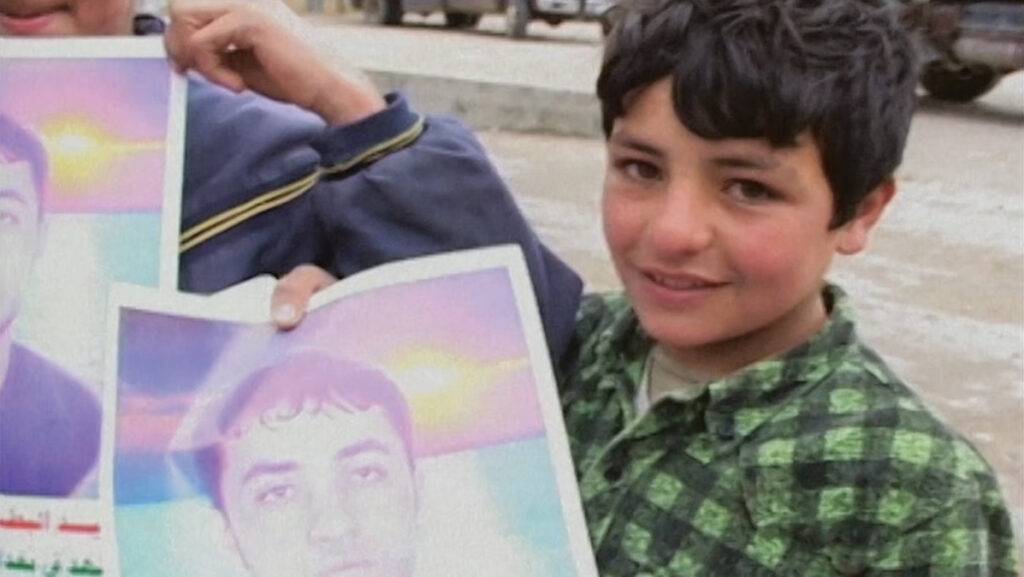
In interviews accompanying the film’s theatrical release, Daher has pushed back against mainstream journalistic framings that characterize Lebanon merely as a neutral party "caught in the crossfire" between external actors like Israel and internal political factions like Hezbollah. Emphasizing the historical continuity of military incursions dating back to the 1978 invasion—predating the formation of Hezbollah—Daher has argued that the nation’s most enduring vulnerability lies in its internal fragmentation rather than external pressures alone.
Broader Impact and Implications
Do You Love Me arrives at a critical juncture for contemporary documentary cinema, demonstrating how archival excavation can serve as an act of cultural resistance and reclamation. In societies where official histories are suppressed, rewritten, or lost to conflict, independent artists are increasingly taking on the mantle of national historians, constructing alternative repositories from the detritus of mass media and private memory.
The film’s broader implications extend to the ethics of transnational film production and archival distribution. By partnering with international editors and securing hundreds of independent rights agreements, Daher has established a sustainable blueprint for rescuing marginalized cinematic traditions from obscurity. The accompanying retrospective series dedicated to Jocelyne Saab at venues like the Metrograph further amplifies this mission, contextualizing Daher’s contemporary voice alongside the foundational matriarchs of Lebanese cinema.
Ultimately, Do You Love Me functions not as a definitive historical textbook, but as an affective space for collective mourning, survival, and joy. By demonstrating that Lebanese culture encompasses humor, tenderness, and artistic vitality alongside generations of inherited trauma, Daher’s debut challenges global audiences to look beyond casualty statistics and recognize the enduring humanity of a resilient population.