


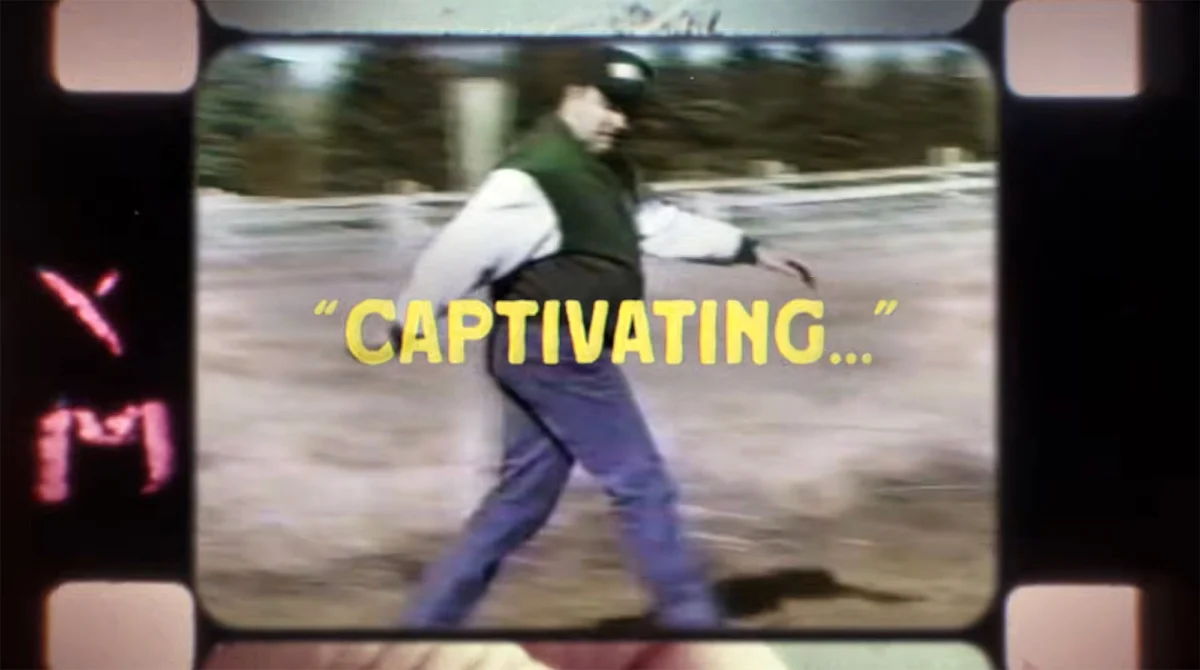
On October 20, 1967, deep within the remote forested terrain of Bluff Creek in Northern California, two men captured a staggering 59 seconds of motion picture footage that would permanently alter global folklore. Roger Patterson and Robert Gimlin managed to film what appeared to be a bipedal, ape-like creature casually striding away from the camera and into the timberline. The subject, affectionately and colloquially dubbed "Patty," sparked an unprecedented cultural phenomenon. Decades later, the definitive history of that iconic recording is finally coming to light. XYZ Films has officially debuted the comprehensive trailer for Capturing Bigfoot, a revelatory documentary feature directed by acclaimed filmmaker Marq Evans. Scheduled for a strategic theatrical and digital release on October 20, 2026—precisely coinciding with the 59th anniversary of the original Patterson-Gimlin encounter—the film promises to dismantle long-held assumptions about money, greed, family legacy, and the absolute power of human belief.
Following its highly praised world premiere at the 2026 SXSW Film Festival, Capturing Bigfoot has carefully guarded its contents from widespread public consumption. Producers intentionally withheld the project from subsequent festival circuits throughout the year, ensuring that the integrity of never-before-seen archival materials remained intact until a synchronized, nationwide rollout could take place. This meticulous distribution strategy mirrors the grassroots promotional efforts of Roger Patterson himself, who famously toured community halls across the United States in the late 1960s to screen his original 16mm reel, generating an estimated box office equivalent of over $5 million when adjusted for modern inflation. Now, 57 years after that initial viral sensation, the discovery of a lost 16mm film reel secured inside a forgotten safe threatens to rewrite the narrative entirely, offering a fresh, investigative lens through which to view the world’s most debated cryptozoological mystery.
The Historical Context and Legacy of the Patterson-Gimlin Film
To fully understand the weight and significance of Marq Evans’s new documentary, one must examine the profound cultural footprint left by the original 1967 expedition. Roger Patterson, an amateur enthusiast and rodeo rider, had spent years obsessed with the legends of Sasquatch before securing financial backing to mount a serious tracking expedition in Humboldt County, California. Armed with a Kodak K-100 16mm camera, Patterson and his partner Robert Gimlin encountered the purported female hominid on a gravel bar along Bluff Creek.
The resulting footage has undergone more intense scrutiny, technological analysis, and frame-by-frame breakdown than almost any piece of cinematic evidence in history. Skeptics have persistently argued that the film represents an elaborate hoax, pointing to sophisticated costume design or the burgeoning special effects industry of the era. Conversely, notable primatologists, biomechanics experts, and visual effects professionals have repeatedly noted anatomical anomalies within the footage—such as muscle flexion beneath the skin, proportional limb lengths, and a distinct, non-human gait—that defy easy replication by 1960s standards. Despite decades of competing theories, mainstream academic institutions have largely dismissed the creature’s existence due to a lack of physical type specimens, leaving the cultural burden of proof entirely on the shoulders of believers, investigators, and the families of the original witnesses.
A New Perspective: Unlocking the Vault and the Human Element

Capturing Bigfoot shifts the cinematic focus away from endless debates over pixel counts and plaster cast footprints, steering the narrative instead toward the deeply human costs associated with the pursuit of the unknown. According to production notes and official synopses, the documentary centers on the untold story revealed by a recently unearthed 16mm film reel discovered securely locked inside a private safe. This pivotal archival find serves as the narrative catalyst, bridging the gap between historical speculation and verified documentation.
For the first time in nearly six decades, Roger Patterson’s own son steps forward to provide a first-hand account of the domestic reality behind the myth. Alongside surviving relatives and key individuals who were physically present during the 1967 expedition, the documentary exposes a complex web of personal sacrifice, shattered friendships, and the relentless financial pressures that drove the endeavor. Director Marq Evans emphasizes that while the creature itself remains the focal point of public curiosity, the true emotional core of the film lies in the psychological burden carried by those closest to the event.
Director Statement and Creative Vision
Director Marq Evans, whose previous non-fiction works include critically acclaimed character studies such as The Glamour & the Squalor, Claydream, and The Diamond King, approaches the subject matter with journalistic rigor and empathetic storytelling. In a statement accompanying the official trailer release, Evans reflected on the emotional weight carried by the primary subjects over the past half-century.
"That footage is one of the most recognizable images in the world, but the people behind it have privately carried its weight for almost sixty years," Evans stated. "This film is their story; about family, loyalty, and the truths they’ve held onto or finally let go of. I’m grateful they trusted me to help them finally tell it."
Produced by Tamir Ardon, Marq Evans, and Nick Spicer, the project aims to transcend traditional genre limitations. Rather than functioning as a standard sensationalist television special designed to scare or titillate late-night audiences, Capturing Bigfoot positions itself as a sociological examination of conspiracy-minded eras, societal credulity, and the psychological mechanisms that drive individuals to search for meaning in the wilderness.
The Chronology of the Release and Distribution Strategy

The distribution timeline for Capturing Bigfoot has been executed with unusual precision, reflecting both the historical significance of its subject matter and modern counter-programming strategies within the independent film market.
- March 2026: The documentary makes its world premiere at the SXSW Film Festival in Austin, Texas, drawing positive notices from mainstream culture critics who praised its ability to contextualize modern conspiratorial thinking through a mid-century lens.
- Spring and Summer 2026: Despite receiving numerous formal invitations to screen at high-profile international documentary festivals, XYZ Films makes the deliberate decision to hold the film back from public view, preserving the surprise value of the newly discovered 16mm archival footage.
- October 20, 2026: The film officially opens nationwide in select theatrical venues and becomes available for digital streaming on Amazon Prime Video. This release date marks the exact 59th anniversary of the day Roger Patterson and Robert Gimlin encountered the creature at Bluff Creek.
The choice of a simultaneous theatrical and streaming rollout is designed to foster a communal viewing experience. By encouraging audiences to gather in cinemas on the anniversary date, distributors hope to replicate the communal shock value of community hall screenings from the late 1960s, allowing modern viewers to process the revelations of the safe-discovered film reel collectively.
Broader Implications for the Cryptozoology Genre and Cultural Belief
The arrival of Capturing Bigfoot coincides with a broader cultural reassessment of fringe beliefs and historical mysteries. In an era defined by deepfakes, digital manipulation, and widespread skepticism of official narratives, cultural analysts have noted a renewed public fascination with analog-era mysteries—unexplained phenomena that rely on physical film stock rather than digital pixels.
Recent cinematic entries, such as the Zellner brothers’ absurdist narrative feature Sasquatch Sunset, demonstrate a sustained appetite within contemporary cinema for exploring humanity’s complex, often comical, and occasionally tragic relationship with the wilderness. However, while fictional and satirical approaches find an audience, Evans’s documentary occupies a different tier by grounding the mythology in rigorous historical inquiry and personal testimony.
By addressing the financial motives and commercial pressures that underscored Patterson’s expedition—encapsulated by the trailer’s stark reminder that "This IS a story about money and greed!"—the film strips away the romanticism often associated with cryptozoological hunts. It asks viewers to consider not just whether the creature exists, but what society’s desperate need for such a discovery says about human isolation, the desire for frontier escapism, and the enduring power of a well-preserved myth.
As audiences prepare to experience Capturing Bigfoot on October 20, 2026, the documentary stands ready to challenge preconceived notions held by skeptics and believers alike. By allowing the families of those present to finally speak on their own terms, the film transforms a half-century-old roadside spectacle into a poignant exploration of truth, legacy, and the human cost of chasing ghosts through the California redwoods.