


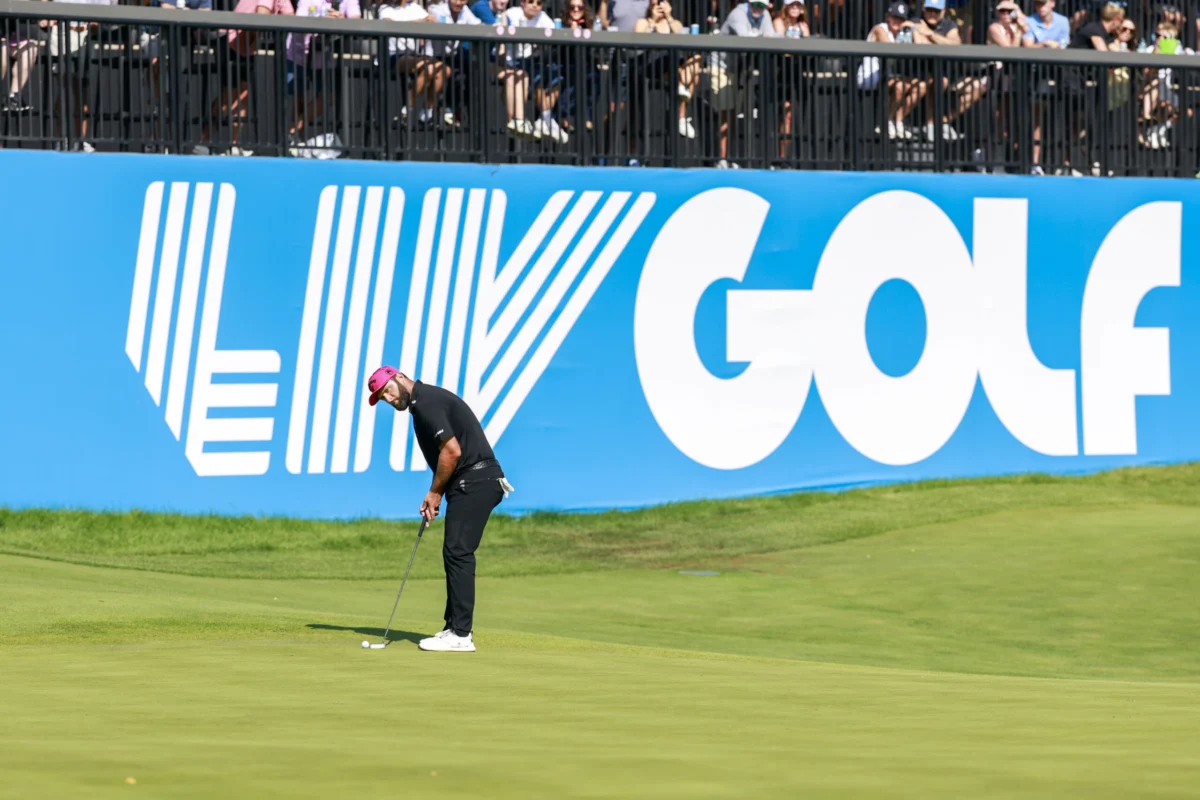
LIV Golf, the disruptive professional circuit that fundamentally altered the landscape of men’s professional golf, has officially filed for Chapter 11 bankruptcy protection in the U.S. Bankruptcy Court for the District of New Jersey. The filing marks a seismic shift for the venture, which was launched in 2022 with the backing of Saudi Arabia’s Public Investment Fund (PIF). The decision follows months of fiscal uncertainty, highlighted by an impending "funding cliff" as the PIF moves to withdraw its primary financial support at the conclusion of the 2026 season.
The restructuring plan, which requires formal approval from the bankruptcy court, hinges on a support agreement reached with BC Partner Advisors LP, the credit arm of the prominent private equity firm BC Partners. Under the proposed terms, LIV Golf aims to transition toward a player-centric ownership model, effectively handing majority control of the league to its participating athletes. This radical pivot is designed to provide the organization with the necessary runway to secure new capital and sustain its operations beyond the current fiscal year.
A Chronology of Financial Volatility
The journey of LIV Golf has been defined by aggressive spending and significant legal and financial hurdles. When the league first debuted, it utilized the immense capital reserves of the PIF to entice marquee players with record-breaking signing bonuses and lucrative tournament purses. By 2023, the league’s rapid expansion led to a surprising announcement: a framework agreement to merge with the PGA Tour. However, that deal, intended to consolidate the sport under a single commercial entity, has faced persistent regulatory scrutiny and internal friction, ultimately failing to materialize into a definitive, binding contract.
The timeline of the current crisis can be traced back to the early months of 2026. By April, reports began circulating that the PIF, under pressure to demonstrate a path toward profitability, intended to terminate its massive subsidies at the end of the 2026 schedule. This prompted an urgent investor roadshow in May, during which LIV leadership sought to raise $350 million from private stakeholders to fill the projected budget shortfall. Despite these efforts, the organization struggled to secure sufficient commitment, leading to the current restructuring.
In June 2026, the situation grew increasingly precarious. CEO Scott O’Neil, in an attempt to stabilize the organization, publicly expressed confidence that the sovereign wealth fund would maintain its commitment through the end of the year. Yet, the reality of the "funding cliff" became unavoidable. The Chapter 11 filing serves as a legal mechanism to freeze debt obligations and renegotiate terms with creditors while the league continues to hold events and manage its player contracts.
Financial Architecture and the Transition to Player Ownership
The bankruptcy proceedings are supported by a $49.6 million debtor-in-possession (DIP) financing package provided by the PIF. This capital infusion is intended to ensure that the league remains solvent and operational during the restructuring process. Once the organization emerges from bankruptcy, the ownership structure is expected to shift significantly.
The proposed "player-first" ownership model is unprecedented in professional sports of this scale. By granting equity to the athletes, the league hopes to align the financial interests of the players with the long-term commercial success of the brand. This shift is intended to transform the league from a PIF-subsidized startup into a self-sustaining enterprise. BC Partners Credit and other minority investors are expected to play a crucial role in the post-bankruptcy capital structure, likely acting as lead underwriters for the transition.
"This process gives us the structure and time to pursue a landmark transaction and begin the next chapter of LIV Golf—one built around the fans, an innovative, player-first ownership model, and a part of the global golf ecosystem," CEO Scott O’Neil stated in an official release. "We are excited about what lies ahead and yet, there is still much to accomplish in the months ahead."
Industry Impact and Market Implications
The decision by LIV Golf to seek bankruptcy protection sends a clear message to the broader sports industry: the era of unlimited, state-backed spending is reaching a point of market correction. LIV’s trajectory has been characterized by its role as a disruptive force, challenging the monopoly held by the PGA Tour. However, the costs of maintaining that disruption have been immense.
Analysts suggest that the pivot to player ownership is a calculated risk. While it incentivizes loyalty among the top-tier golfers who have already committed to the tour, it also places the burden of commercial success squarely on the players themselves. If the league cannot generate sufficient broadcast revenue, sponsorship deals, and ticket sales to offset its high operating costs, the player-led model may struggle to attract the necessary secondary investment.
Furthermore, the failed merger with the PGA Tour continues to cast a long shadow. With LIV now navigating a bankruptcy process, the possibility of a unified professional golf landscape appears increasingly remote. The PGA Tour has remained largely insulated from the financial turmoil affecting its rival, though it has faced its own pressures to increase prize money to retain talent.
Broader Economic Context
The bankruptcy filing also highlights the challenges of professional sports ventures that lack a traditional, organic revenue base. LIV Golf’s initial business model relied on massive capital injections rather than the slow, multi-decadal growth seen in legacy sports organizations. As global economic conditions tighten, sovereign wealth funds and private equity firms are placing greater scrutiny on the "burn rate" of such investments.
The involvement of BC Partners, a firm with a history of strategic credit restructuring, suggests that there is a belief in the inherent value of the LIV brand and its media assets. The challenge remains the league’s ability to transition from an entity driven by external subsidies to one that can generate legitimate cash flow.
Looking Ahead: The Path to Recovery
As the U.S. Bankruptcy Court for the District of New Jersey begins its review of the restructuring agreement, the focus will shift to how the league manages its contractual obligations to its athletes. Many players signed multi-year, guaranteed contracts that may now be subject to modification under the court’s oversight.
The coming months will be critical for the league’s survival. LIV Golf must not only secure court approval for its reorganization plan but also convince sponsors, media partners, and the golfing public that it remains a viable, long-term competitor. The "next chapter" referenced by CEO Scott O’Neil will be defined by whether the league can translate its star power into a stable, profitable business model that does not rely on the bottomless coffers of a single state-backed entity.
While the bankruptcy filing is a major setback for the organization, supporters of the league view it as a necessary maturation phase. By shedding the baggage of its initial funding model and reorganizing its governance, the league may be better positioned to integrate into the global golf ecosystem, provided it can navigate the complexities of the legal process and maintain the participation of its high-profile roster. The landscape of professional golf remains in flux, and the resolution of these proceedings will likely dictate the sport’s commercial structure for the next decade.