
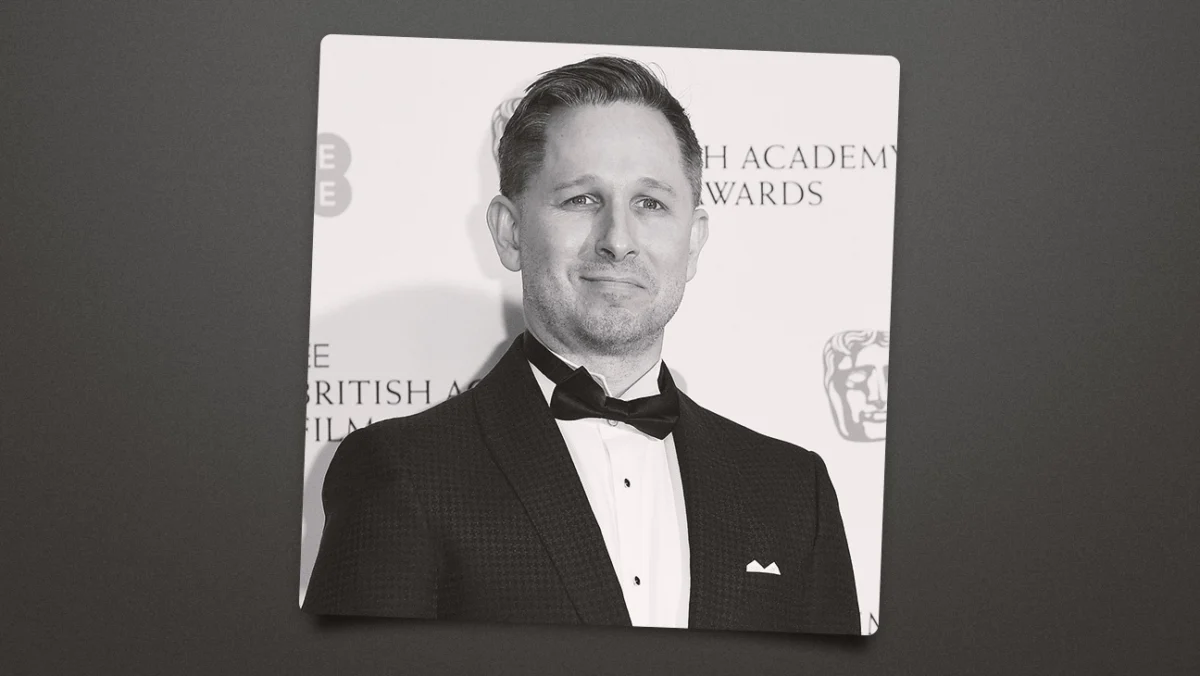
The Los Angeles County Medical Examiner confirmed that Graham died by suicide on Saturday in Los Angeles. His passing marks a significant loss for the post-production community, where he was widely regarded as a technician of immense precision and a storyteller who understood the vital importance of rhythm and pacing in film.
A Career Defined by Narrative Precision
Born on June 8, 1976, in Claremont, California, Graham’s ascent in the film industry was defined by his ability to bridge the gap between large-scale commercial spectacles and intimate, character-driven dramas. His career, which spanned over two decades, saw him working alongside some of the most prominent directors in Hollywood, including Gus Van Sant, Danny Boyle, Bryan Singer, and Cary Joji Fukunaga.
Graham’s early professional life began in the early 2000s, a period of rapid technological transition in film editing as the industry shifted from traditional celluloid splicing to digital non-linear editing suites. His first professional credit as an editor arrived in 2001 with Stephen Norrington’s The Last Minute. This initial experience paved the way for a rapid climb through the ranks, as he soon found himself handling additional editing on high-profile projects like 2003’s X2: X-Men United.
His collaboration with director Bryan Singer continued with Superman Returns (2006), a project that showcased Graham’s ability to manage complex visual effects sequences while maintaining the emotional core of a massive superhero tentpole. However, it was his 2008 collaboration with Gus Van Sant on Milk that brought him to the forefront of industry recognition.
The Impact of Milk and Critical Acclaim
The biopic Milk, which chronicled the life of Harvey Milk, the first openly gay man elected to public office in California, remains one of the most significant projects of Graham’s career. The film, written by Dustin Lance Black and starring Sean Penn, was a critical triumph, garnering eight Academy Award nominations, including a Best Film Editing nod for Graham.
Beyond the technical accolades, Graham’s work on Milk was noted for its documentary-style urgency and its careful curation of archival footage integrated with narrative scenes. Dan Jinks, the Oscar-nominated producer of Milk, reflected on Graham’s contribution to the project, noting that the film’s narrative cohesion was largely a product of Graham’s editorial vision. "The movie wouldn’t have come together in the way it did without Elliot’s amazing work," Jinks stated in a tribute on social media, underscoring the deep professional respect Graham commanded among his peers.
Chronology of a Prolific Filmography
Graham’s portfolio reflects an impressive versatility. His career trajectory can be categorized into three distinct phases: his early breakout years, his mid-career establishment as a premier Hollywood editor, and his late-career work on major international franchises.
2001–2008: The Formative Years
- The Last Minute (2001)
- X2: X-Men United (2003)
- The Greatest Game Ever Played (2005)
- Superman Returns (2006)
- 21 (2008)
- Milk (2008)
2009–2016: The Era of Complexity
- Restless (2011)
- Trash (2014)
- The Amazing Spider-Man 2 (Additional editing, 2014)
- Steve Jobs (2015)
- I Am Michael (Additional editing, 2015)
- Beasts of No Nation (Additional editing, 2015)
2017–2021: Global Franchises and Television
- Molly’s Game (2017)
- Trust (FX Series, 2018)
- Captain Marvel (2019)
- No Time to Die (2021)
His work on Danny Boyle’s Steve Jobs (2015) is often cited by film students as a masterclass in dialogue-driven editing. The film, structured in three distinct acts each taking place before a major product launch, relied heavily on Graham’s ability to maintain high-octane tension through rapid-fire exchanges, a feat that required immense focus and structural foresight.
Awards and Industry Recognition
Graham’s work was frequently recognized by major guilds and awarding bodies. His BAFTA win for No Time to Die, which he shared with editor Tom Cross, was a testament to his ability to handle the massive scope of the James Bond franchise. In No Time to Die, Graham had to synthesize complex action sequences with the franchise’s legacy-driven emotional beats, a task that required him to work closely with director Cary Joji Fukunaga to ensure the film felt both fresh and respectful of its cinematic heritage.
His involvement in the 2018 FX series Trust also demonstrated his ability to pivot to long-form episodic storytelling, where he served not only as the editor but also as a producer, expanding his role to include broader narrative management.
The Role of the Film Editor in Modern Cinema
The passing of an editor of Graham’s caliber invites a broader conversation about the role of the "invisible" artist in Hollywood. Film editing is often described as the "final rewrite" of a movie. Editors like Graham are tasked with selecting from hundreds of hours of raw footage to create the definitive version of a story.
In the case of Captain Marvel (2019), for instance, Graham was responsible for managing the intricate pacing required for a Marvel Cinematic Universe production, where balancing humor, character development, and large-scale CGI battles is paramount. The editorial process on such films often involves thousands of individual cuts, all of which must be calibrated to ensure the audience remains engaged throughout the two-hour runtime.
Professional Legacy and Community Response
The news of Graham’s death has sent a wave of mourning through the Hollywood post-production community. For those who worked with him, Graham was more than just a skilled technician; he was a collaborative partner who viewed the editing suite as a sanctuary for creative problem-solving.
Colleagues have noted his calm demeanor under the immense pressure of studio deadlines and his commitment to the integrity of the director’s vision. In the high-stakes environment of film production, where budgets can reach hundreds of millions of dollars, the editor is often the individual who manages the tension between creative ambition and logistical reality. Graham was frequently cited as a steadying force in these environments.
Implications and Mental Health Awareness
While the industry celebrates his professional achievements, the circumstances surrounding his death have also prompted discussions within the film community regarding the mental health challenges faced by creative professionals. The film industry, known for its grueling hours, long periods of isolation in dark editing bays, and the extreme pressure of high-profile releases, can be a demanding environment.
Industry advocacy groups have long called for better mental health support for below-the-line workers—the craftspeople, technicians, and editors who work behind the scenes to bring cinema to life. The loss of a talent like Elliot Graham serves as a somber reminder of the need for sustained support systems within the entertainment sector.
A Final Look at an Illustrious Career
Elliot Graham’s legacy is preserved in the frames of the films he helped shape. From the political halls of Milk to the high-tech boardrooms of Steve Jobs and the globe-trotting action of No Time to Die, his work ensured that these stories reached audiences with clarity, emotional impact, and technical brilliance.
He was a master of his craft who understood that every cut is a choice—a decision about how to guide the audience’s attention and how to reveal the truth of a character. As his peers and the public reflect on his contributions, it is clear that his influence will continue to be felt in the way films are edited and understood for years to come. The industry has lost a vital, quiet voice that did so much to define the visual language of modern film.
For those affected by the themes in this report, resources are available. In the United States, individuals can call or text 988 to reach the Suicide & Crisis Lifeline, available 24 hours a day, seven days a week.