

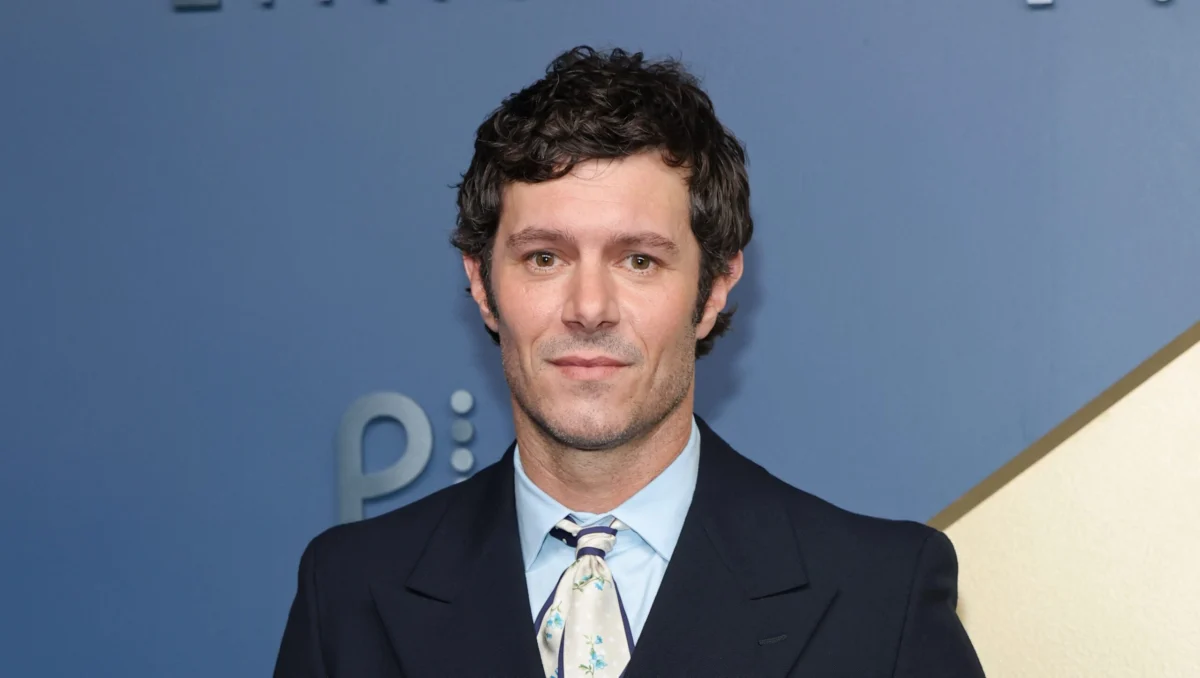
Adam Brody, the acclaimed actor currently starring in the hit Netflix series Nobody Wants This, has publicly addressed the ongoing Israel-Gaza conflict, marking a significant moment in the intersection of Hollywood celebrity culture and international geopolitical advocacy. In a recent, wide-ranging interview with GQ, the actor, who portrays a rabbi in his current project, utilized the platform to articulate his stance on the crisis, explicitly calling for a "free Palestine" and labeling the situation a "genocide." This development arrives at a time when the entertainment industry is grappling with how to balance creative work with the intense public scrutiny surrounding the Middle East conflict.
The conversation with GQ touched upon the broader shifts in the political climate within Hollywood. When asked about his perspective on the industry’s perceived move toward conservatism, Brody suggested that the pursuit of power and financial stability often influences the ideological landscape. He noted that the cumulative impact of the COVID-19 pandemic, the prospect of a second Donald Trump administration, and the escalating humanitarian crisis in Gaza have revealed deeply held, and at times disheartening, divisions within the creative community.
A Chronology of the Conflict and Celebrity Involvement
The conflict, which saw a major escalation on October 7, 2023, following attacks by Hamas in southern Israel, has triggered a sustained and devastating military campaign in Gaza. According to data from the United Nations and the Gaza Health Ministry, the resulting conflict has led to tens of thousands of casualties and widespread displacement, creating what humanitarian organizations have described as an unprecedented humanitarian catastrophe.
Throughout the past year, the global entertainment industry has faced mounting pressure to address the crisis. In the immediate aftermath of the October 7 attacks, numerous talent agencies and studio executives issued statements condemning the violence. However, as the conflict persisted and the scale of the destruction in Gaza became clearer, a growing faction of actors, writers, and directors began to leverage their platforms to call for a ceasefire.
Brody’s comments represent an increasingly common sentiment among high-profile figures who feel that private advocacy is no longer sufficient. By stating, "Put me down as thinking it’s a genocide," the actor has aligned himself with a vocal minority of industry peers who have faced professional repercussions or public backlash for similar stances. His admission that he has "spoken a lot about it privately" but held back publicly reflects the tightrope walk many celebrities navigate, balancing personal conviction against the potential for alienating professional networks or domestic audiences.
The Contrast in Creative Perspectives
The divergence between Brody’s personal political commentary and the creative mission of his current series, Nobody Wants This, highlights a central tension in contemporary media production. Erin Foster, the creator of the Netflix rom-com, has been clear about her intention to keep the show focused on positive representation of Jewish identity rather than geopolitical debate.
In an August 2025 interview with The Hollywood Reporter, Foster addressed the challenge of producing a Jewish-centric series in a world defined by the conflict in Israel and Palestine. She noted that discussions occurred within the production team regarding whether to integrate the conflict into the show’s narrative following the events of October 7. Ultimately, the creative team decided against it.
"It was really important to me and continues to be really important to tell positive Jewish stories," Foster stated. "I know that it can be polarizing, but it shouldn’t be. This is not the show to tackle conflict in Israel and Palestine." Her perspective underscores a belief held by many showrunners that entertainment can serve as a sanctuary or a vehicle for cultural nuance, rather than an arena for explicit policy debate. Foster’s position—that she is "not the person to tell that story"—reflects a desire to protect the integrity of a series focused on interfaith romance and personal discovery from the complexities of an intractable geopolitical war.
Data and Humanitarian Context
The geopolitical reality underlying these individual statements is supported by grim data. The Integrated Food Security Phase Classification (IPC) has repeatedly warned of imminent famine in parts of Gaza, with the majority of the population facing emergency levels of food insecurity. International legal bodies, including the International Court of Justice, have been tasked with investigating allegations of war crimes, which has further fueled the discourse among public figures.
For actors like Brody, the decision to speak out is often framed as a moral imperative. However, the data also suggests that such statements carry significant weight in the digital age, where social media engagement can amplify a message to millions, potentially influencing public opinion or policy pressure. Conversely, the industry’s historical tendency toward caution—often driven by concerns over brand safety and market reach—remains a powerful counter-force.
Broader Implications for Hollywood
The episode involving Brody and the production team of Nobody Wants This serves as a case study in the modern "political celebrity" paradigm. As the lines between personal life and professional branding continue to blur, stars are increasingly expected by their fanbases to take stances on global issues.
Analysts note that the entertainment industry is currently undergoing a "political reckoning." The era of the "politically neutral" celebrity is fading, replaced by a climate where audiences monitor social media feeds for signals of ideological alignment. For studios, this creates a complex environment where the political statements of a lead actor may conflict with the stated goals of a series’ creator.
The long-term implications are yet to be seen. While some industry veterans argue that political activism distracts from the art, others contend that in an era of global connectivity, it is impossible for creative professionals to remain insulated from world events. The fact that an actor can, in the same news cycle, be celebrated for an Emmy-nominated performance while being criticized for his political rhetoric illustrates the polarized nature of the contemporary media landscape.
Future Trajectories
As Netflix prepares to release the third season of Nobody Wants This on October 22, the series will continue to be evaluated not just on its merits as a comedy, but as a cultural product existing within a highly charged political atmosphere. The critical and commercial reception of the upcoming season will be closely watched by industry analysts to see if the personal politics of its star will impact the show’s performance.
Ultimately, the discourse surrounding Adam Brody serves as a reminder that the personal remains deeply political in the eyes of the public. Whether his public stance will inspire further dialogue within the industry or exacerbate existing divisions remains to be seen. However, one thing is certain: the expectation for transparency from figures in the public eye is higher than ever, and the intersection of entertainment and international policy will likely continue to be a primary source of tension in the months ahead.
The industry remains divided on whether this trend is a healthy evolution of the celebrity’s role in society or an encroachment of performative politics into spaces that were once reserved for escapism. As the conflict in Gaza persists, the pressure on creative individuals to use their platforms will not subside, and the responses of actors like Brody will continue to be a focal point for both supporters and critics of their advocacy.
In the final analysis, the situation underscores the difficulty of managing a public persona when one’s private values are at odds with the demands of a globalized media market. As Nobody Wants This returns to screens, the show will occupy a unique space: one that celebrates Jewish identity and tradition while its lead actor simultaneously challenges the actions of the state of Israel, a duality that is increasingly representative of the multifaceted and often contradictory nature of modern celebrity life.