
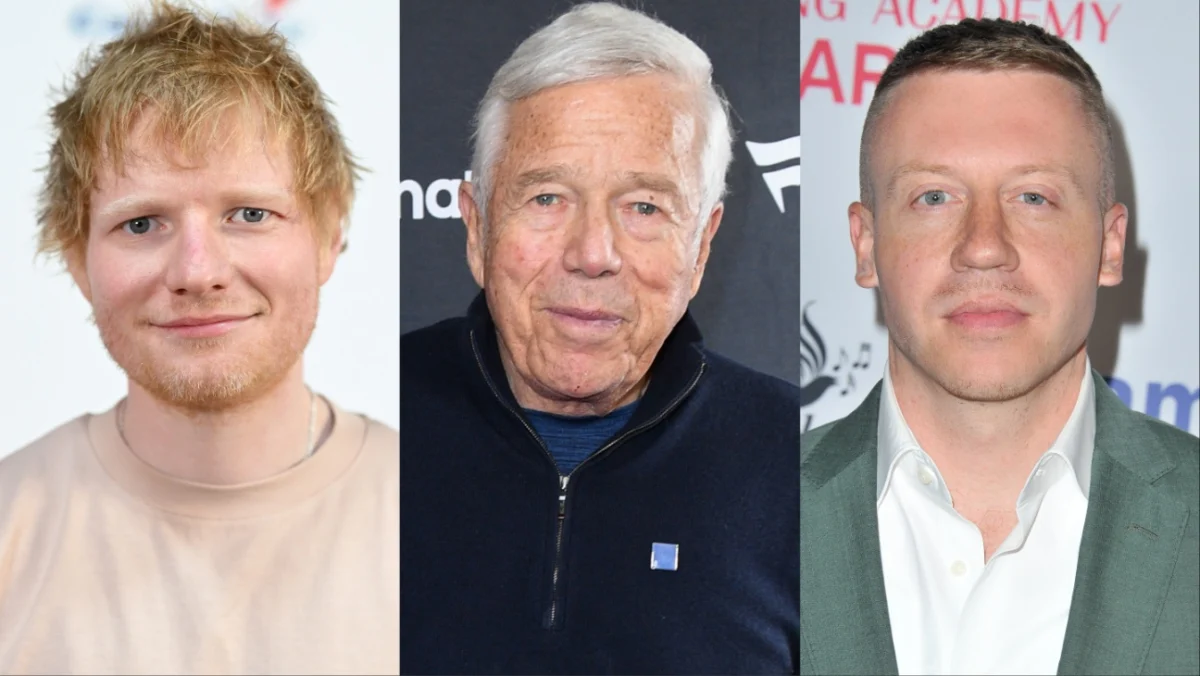
The abrupt removal of rapper Macklemore from Ed Sheeran’s U.S. Loop Tour has ignited a significant debate regarding the intersection of artistic expression, corporate liability, and the geopolitical tensions surrounding the ongoing conflict in Gaza. What began as a series of guest performances by the Grammy-winning artist spiraled into a complex logistical and diplomatic crisis, ultimately forcing concert promoters to choose between the continuation of a high-revenue stadium tour and the political stances of a featured support act.
The Sequence of Events: A Chronology of Conflict
The tension materialized in early September 2024, when Macklemore, an outspoken critic of the Israeli military campaign in Gaza, utilized his opening slots at MetLife Stadium in East Rutherford, New Jersey, to voice his support for the Palestinian cause.
On September 4, during the first of two consecutive nights at the venue, Macklemore performed his track "Hind’s Hall," a song named after the building renamed by student protesters at Columbia University in honor of Hind Rajab, a six-year-old Palestinian girl killed in Gaza. During this set, the artist explicitly declared "Free Palestine" to the stadium crowd.
The immediate aftermath saw swift backlash from various advocacy groups, including the Israeli-American Council, StopAntisemitism, and the Combat Antisemitism Movement. These organizations petitioned for the rapper’s removal, citing his rhetoric as inflammatory. Simultaneously, high-profile figures such as the singer Pink added their voices to the chorus of criticism, exerting pressure on tour organizers.
By September 5, reports indicate that representatives for several prominent NFL stadium owners—including Robert Kraft (New England Patriots/Gillette Stadium), David Tepper (Carolina Panthers), Arthur Blank (Atlanta Falcons), and Jeffrey Lurie (Philadelphia Eagles)—had initiated contact with the Messina Touring Group, the primary promoter for the Loop Tour. The owners expressed profound discomfort with the political nature of Macklemore’s performances. Allegedly, in an attempt to salvage the remaining tour dates, tour management provided assurances to these stakeholders that the rapper would refrain from further political commentary.
However, during the second night at MetLife Stadium on September 5, Macklemore doubled down. He addressed the crowd, stating, "One of the reasons why I wanted to come on this tour was because I wanted to stand up here on stages and stadiums across America and say two words that are very near and dear to my heart: Free Palestine! I want to say this to all of my Jewish brothers and sisters. Criticism of Israel, criticism of apartheid, being against genocide in no way is a criticism of you."
Behind the Scenes: The 40-Minute Call
A pivotal development in the timeline was a 40-minute telephonic conversation between Ed Sheeran and Robert Kraft. According to details reported by The Wall Street Journal, the exchange underscored the divergence in perspectives between the artist and the stadium ownership. Kraft reportedly characterized Macklemore’s statements not as protected political discourse, but as hate speech, explicitly distancing his stadium operations from the rapper’s rhetoric.
This conversation highlighted the immense leverage held by venue owners in the modern touring landscape. Because NFL stadiums are multi-million-dollar operations governed by private corporate entities, their owners possess the authority to cancel contracts if they determine that a performer’s presence poses a reputational or operational risk to the venue.
The Official Exit and Institutional Rationale
On September 14, the situation reached a breaking point. The Messina Touring Group issued a formal statement announcing that Macklemore would be removed from the remaining eight U.S. dates of the tour. The statement was candid about the financial and logistical pressures: "We have been notified by venues on the upcoming U.S. tour dates that they will not allow a concert to take place with Macklemore on the lineup, which would result in the cancellation of the tour and impact hundreds of thousands of fans."
Ed Sheeran subsequently issued a public statement clarifying his position. He emphasized that the decision to drop Macklemore was made by the promoters and venue owners, not himself. Sheeran noted that he had spent the week in negotiations, attempting to "build a bridge" between the various parties, but ultimately, the ultimatum presented by the stadium owners left no room for compromise.
The Solidarity Fallout
The fallout from the removal extended beyond the primary conflict. The decision triggered a wave of solidarity among other supporting acts on the tour. Musicians including Finneas, Lukas Graham, and Aaron Rowe, as well as the backing band Beoga, announced their withdrawal from the remaining dates. This collective departure signaled a growing trend within the music industry: artists are increasingly willing to sacrifice touring revenue and career exposure to maintain ideological alignment with their peers on political issues.
Philanthropic Responses and Financial Implications
On September 16, Macklemore pivoted the conversation toward financial accountability. He publicly announced that he would donate his total earnings from the Loop Tour—estimated at approximately $1 million—to six organizations supporting humanitarian aid for Palestinians. In a direct challenge, he called upon Robert Kraft to match the donation.
In a notable turn of events, Kraft, through his philanthropic initiatives, responded by pledging $2 million toward combating antisemitism and promoting community cohesion, effectively engaging in a high-profile public exchange of capital that underscored the polarized nature of the debate.
Analysis: Implications for the Touring Industry
The Macklemore controversy provides a case study in the vulnerability of large-scale touring models to contemporary political polarization. Several key implications emerge:
- The Erosion of "Neutral" Venues: NFL stadiums, traditionally viewed as neutral commercial spaces, are increasingly being treated as ideological battlegrounds. The influence of owners who hold strong political or philanthropic views is creating a new gatekeeping mechanism for performers.
- Contractual Liability and Risk Management: The incident highlights the shift in power dynamics within the concert industry. As concert tickets reach record prices, the "cancellation risk" for promoters has skyrocketed. Venues are now proactively monitoring the political speech of performers to avoid potential protests or negative press that could threaten venue operations.
- The Limits of Free Speech in Private Spaces: While the First Amendment protects citizens from government censorship, it does not apply to private contracts between artists, promoters, and venue owners. This case illustrates that in the private sector, speech deemed controversial by those who control the infrastructure of the industry can be effectively silenced through contractual termination.
- The "Solidarity" Effect: The decision by other support acts to pull out of the tour demonstrates that for many modern musicians, the "brand" is increasingly tied to social and political activism. This suggests that future tour logistics will require more rigorous vetting not only of the headliner but of the entire roster of support acts to ensure ideological compatibility with host venues.
Broader Context: The Music Industry and Geopolitics
This event is not an isolated incident but rather a symptom of a broader trend where artists are increasingly expected to take stances on international conflicts. From the protests surrounding the Eurovision Song Contest to the debates over the Israel-Palestine conflict within the recording academy and independent label associations, the music industry is grappling with how to balance global human rights concerns with the business realities of international touring.
The case of the Loop Tour serves as a stark reminder of the fragile balance required to maintain the business of live entertainment in an era of heightened social awareness. As fans and stakeholders demand more transparency and accountability, the industry faces an uncertain future regarding how political speech will be managed, moderated, or suppressed on the world’s largest stages. Whether this sets a precedent for more restrictive clauses in future performance contracts remains a subject of intense speculation among industry analysts, but one thing is certain: the era of the "politically neutral" stadium tour is facing significant, perhaps permanent, challenges.