


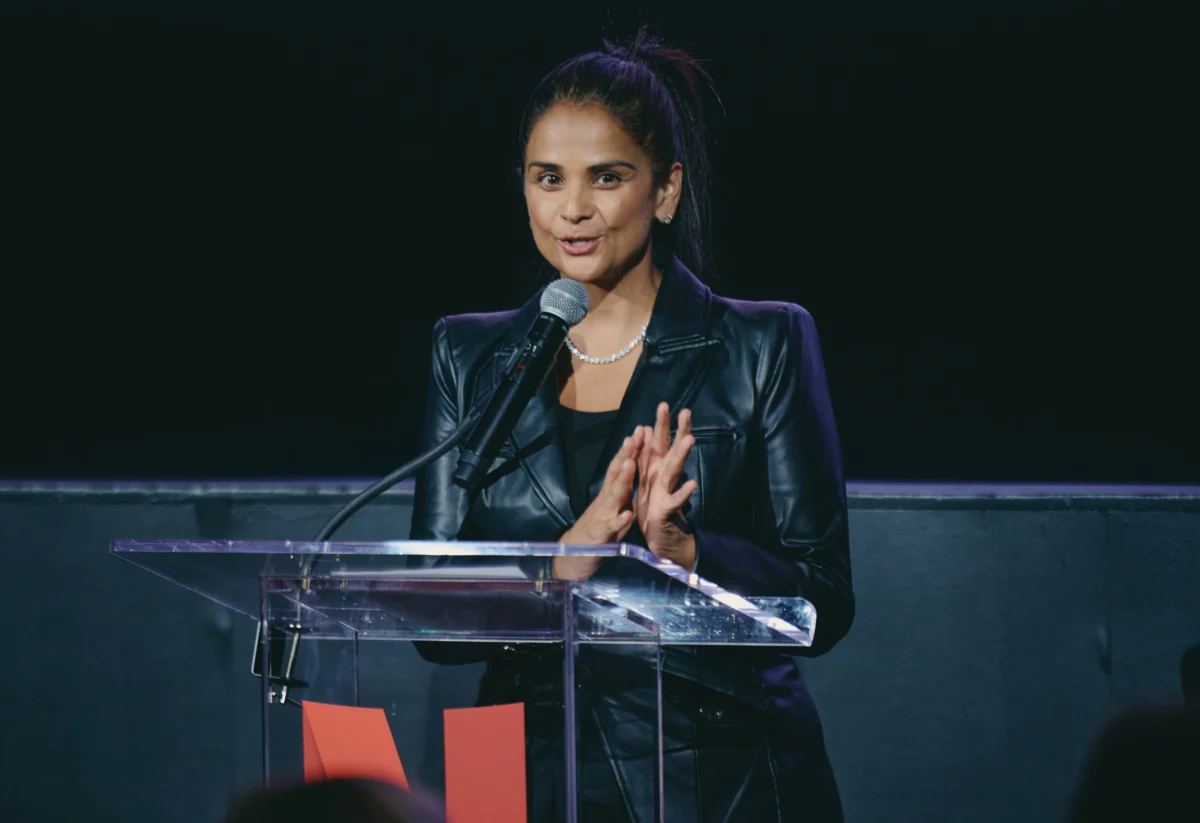
Netflix is fundamentally reshaping its approach to live programming, moving away from traditional sports broadcast models in favor of a curated "event-based" strategy. As the global streaming giant pivots toward live content, Chief Content Officer Bela Bajaria has clarified that the company’s objective is not to become a traditional sports network, but rather to serve as a platform for cultural phenomena that demand immediate, collective viewership. By prioritizing "unmissable" moments over the acquisition of massive, multi-year, multi-game packages, Netflix is attempting to leverage its massive global subscriber base to turn disparate sporting and entertainment spectacles into global water-cooler conversations.
This strategic direction comes at a critical juncture in the media landscape, where legacy broadcasters and digital platforms are increasingly overlapping. With the NFL evaluating its future media rights packages and competitors like YouTube exploring content ingestion models, Netflix’s positioning suggests a calculated attempt to avoid the inflationary costs of long-term sports rights while maintaining the high engagement levels required to reduce subscriber churn.
The Philosophy of the Event
At the core of Netflix’s current sports strategy is a rigid definition of what constitutes an "event." According to Bajaria, an event is characterized by its ability to capture the zeitgeist, foster intense social conversation, and create a sense of appointment-style viewing. This philosophy was on full display during the historic NFL regular-season game held in Melbourne, Australia, which saw the San Francisco 49ers secure a 27-7 victory over the Los Angeles Rams. The broadcast, which aired globally on Netflix, served as a proof-of-concept for the company’s ability to turn an international sporting fixture into a singular, high-profile event.
When pressed on whether established, high-volume properties such as NBC’s "Sunday Night Football"—the longest-running primetime leader in television history—fit this mold, Bajaria emphasized the distinction between consistent, recurring programming and the bespoke nature of Netflix’s current slate. The company is currently avoiding the massive, broad-reach packages that define traditional network television, choosing instead to focus on moments that can be marketed as unique experiences, such as the upcoming Christmas Day NFL games, the World Baseball Classic in Japan, or high-stakes cultural broadcasts like the BTS concert in Seoul.
Chronology of Expansion and Recent Milestones
Netflix’s foray into live and near-live content has accelerated rapidly over the last 24 months. The following timeline tracks the platform’s shift from an on-demand content provider to a destination for live experiences:
- 2025: Consolidation of streaming dominance as the industry observes the record-setting performance of traditional sports networks.
- July 2026: Netflix announces it has secured the U.S. and Canadian rights for the 2027 and 2031 Women’s World Cup, signaling a deeper commitment to global athletics.
- September 2026: Netflix broadcasts the first-ever regular-season NFL game in Australia, marking a significant step in the platform’s international expansion.
- Late 2026: Confirmation of a five-game NFL package for the 2026-27 season, including Thanksgiving Eve and Christmas Day slots, designed to anchor subscriber engagement during key holiday windows.
- Future Horizon (2029-30): The NFL media rights opt-out clause becomes active, potentially allowing for a massive reshuffling of league partnerships.
Market Data and Competitive Positioning
The competition for streaming market share has intensified, with Nielsen’s "The Gauge" reports consistently highlighting the growing dominance of platforms that offer both long-form and short-form content. As of mid-2026, YouTube held approximately 14.2% of total streaming viewership, significantly outpacing Netflix’s 7.8%. This gap has prompted speculation regarding whether Netflix would pivot toward the short-form, high-velocity content style favored by younger demographics.
However, Bajaria has remained steadfast in the belief that the platform’s "bread and butter" remains high-quality long-form narrative content. The strategy is not to compete with short-form aggregators but to augment the platform’s value proposition through periodic, high-impact events. By maintaining a focus on film and television as the primary driver of subscriptions, Netflix aims to avoid the "hand-wavy" dismissal of long-form content, arguing that audiences—regardless of age—will engage with authentic, well-produced stories when they are presented as significant cultural events.

The Future of Sports Rights and NFL Negotiations
The NFL’s upcoming media rights cycle presents a unique opportunity for Netflix. With Commissioner Roger Goodell expressing openness to reworking established packages, industry analysts suggest that international rights—a niche that remains fragmented—could be a primary target for Netflix. Given its existing global infrastructure, Netflix is uniquely positioned to handle the technical and logistical hurdles of international sports distribution.
Furthermore, the potential for bidding on the FIFA Men’s World Cup in 2030 and 2034 remains a topic of intense industry interest. Having secured the rights to the Women’s World Cup, Netflix has already established a rapport with FIFA, providing a foundation for future negotiations. These moves are not merely about acquiring content; they are about leveraging the global nature of these tournaments to drive subscriptions in regions where Netflix is looking to deepen its penetration.
Ingestion Models and Partnerships with Legacy Media
A significant development in the streaming sector is the move toward "ingestion," where platforms incorporate content from other providers to create a more unified consumer experience. YouTube’s recent integration of NBCUniversal’s Peacock content is widely viewed as a bellwether for the future of the industry.
Netflix is currently testing similar waters. The partnership with France’s TF1 Group serves as a laboratory for embedding live content from third-party media companies directly into the Netflix interface. Bajaria noted that the existing, multifaceted relationship with NBCUniversal—which includes both film licensing and the production of live sports for Netflix—could serve as a template for further collaborative ventures. By positioning itself as a platform that can host content from various sources, Netflix is exploring a role as the "aggregator of choice," potentially softening the friction between legacy broadcast networks and the digital-first streaming model.
Strategic Implications for the Industry
The implications of Netflix’s current trajectory are twofold. First, it signifies a departure from the "everything for everyone" model of content acquisition. By being selective, Netflix is exercising fiscal discipline, protecting its $20 billion content budget while still maintaining the ability to capture massive audiences during specific windows of time. Second, the potential for Netflix to act as a partner to legacy broadcasters—rather than purely a disruptor—suggests a new phase of market maturation.
As the lines between traditional cable, streaming services, and social media platforms continue to blur, the winners in this space will be those who can balance the high cost of premium live sports with the sustained, high-margin revenue of original entertainment. Netflix’s strategy, rooted in the concept of the "buzzy, unmissable moment," represents a sophisticated attempt to navigate this transition without abandoning the core narrative-driven identity that made the platform a household name.
Ultimately, whether this strategy can sustain long-term growth will depend on the company’s ability to convert the massive, fleeting viewership of live sports into long-term retention. While the NFL games and World Cup matches bring millions of eyes to the service, the challenge remains ensuring those viewers remain engaged once the final whistle blows and the event concludes. For now, Netflix appears confident that by curating the culture, it can dictate the terms of its own success in an increasingly crowded digital arena.