

Universal Studios Hollywood officially opened its latest high-octane attraction to the general public on Wednesday, introducing thrill-seekers to Fast & Furious: Hollywood Drift. The long-anticipated outdoor roller coaster marks a significant departure for the theme park, blending cutting-edge amusement ride engineering with one of Hollywood’s most financially lucrative and enduring film properties. As the franchise marks its 25th anniversary since the release of the original 2001 film, the introduction of the coaster provides both a celebration of the brand’s roots and a physical manifestation of its trademark high-speed action.
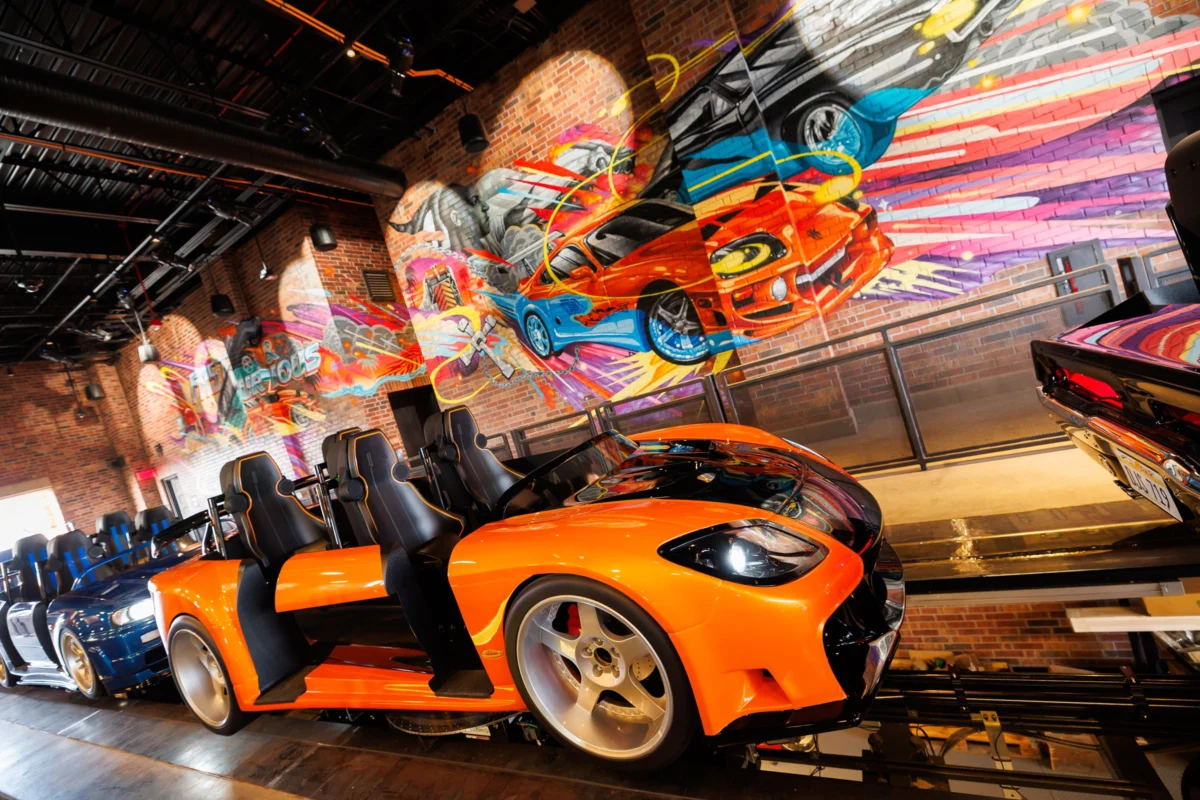
Featuring replicas of iconic muscle cars from the films—most notably Dominic Toretto’s 1970 Dodge Charger R/T—the ride propels passengers along more than 4,000 feet of track. Reaching maximum speeds of up to 72 miles per hour, the attraction incorporates four distinct launch sections and three corkscrew inversions. Designed to simulate the physics-defying stunts that define the cinematic universe, the ride utilizes seat-mounted speakers to mimic engine revving, alongside advanced mechanical braking resistance engineered to simulate physical drifting mechanics during sharp turns.
Chronology and Development of the Franchise
The debut of Hollywood Drift arrives a quarter-century after the theatrical release of the original The Fast and the Furious, directed by Rob Cohen and starring Vin Diesel and the late Paul Walker. What began as a modest action film centered around underground street racing in Los Angeles evolved over the subsequent two and a half decades into a massive global enterprise.
Over the course of ten principal films, the series transformed from gritty crime dramas about hijacked DVD electronics into global espionage blockbusters featuring armored vaults, submarines, and orbital vehicles. This exponential escalation in scale culminated in 2023 with the release of Fast X, which grossed over $700 million worldwide despite mounting production budgets and reported creative friction behind the scenes.
Plans for a dedicated roller coaster at Universal Studios Hollywood have been in development for several years, forming a cornerstone of the park’s broader capital improvement strategy to modernize its upper and lower lot attractions. Universal announced that a corresponding iteration of the ride is currently scheduled to open at Universal Orlando Resort next year, signaling the company’s long-term commitment to anchoring its physical theme park experiences in the intellectual property of the film division.
Community Response and Environmental Concerns
While the ride has received positive initial reviews from media preview attendees emphasizing its speed and immersive mechanical design, its physical proximity to residential areas has triggered localized friction. The attraction operates adjacent to Toluca Lake, an affluent residential neighborhood bordering the Universal City property.
In the weeks leading up to the public grand opening, local homeowners voiced formal concerns regarding ambient noise pollution, specifically citing the high-decibel volume of passenger screams carrying across the property lines during peak operational hours. Local municipal authorities and neighborhood associations have engaged with Universal representatives to monitor sound mitigation measures, including the deployment of structural sound barriers designed to deflect and absorb noise generated by the coaster’s high-speed launches and outdoor maneuvers.

Despite these logistical tensions, the media preview on Tuesday drew hundreds of content creators and entertainment journalists. However, the event experienced a notable absence from the franchise’s central figure, actor and producer Vin Diesel. Although Universal promotional materials indicated Diesel would participate in a ceremonial ribbon-cutting event alongside studio executives, the actor did not appear on-site. Instead, promotional duties were met by park visitors and promotional staff dressed in character attire.
Concurrently, digital activity on official social media channels suggested alternative professional priorities for the actor. Diesel utilized his platform to highlight upcoming projects outside the automotive franchise, specifically sharing production imagery for The Last Witch Hunter sequel, an upcoming dark fantasy film distributed by Lionsgate. Industry analysts have noted that the divergence in promotional focus occurs as the eleventh installment of the core film series, tentatively titled Fast Forever, continues to face prolonged delays in entering full production due to script rewrites and budgetary recalibrations.
Economic Implications and Strategic Shift for Universal
The launch of Fast & Furious: Hollywood Drift underscores a broader economic strategy within the entertainment industry: leveraging physical infrastructure to sustain fan engagement during prolonged gaps between cinematic releases. With the timeline for the final cinematic chapter remaining fluid, theme park attractions have assumed a vital role in maintaining the commercial viability of legacy franchises.
Financially, the original cinematic series has generated over $7 billion globally, establishing itself as one of the most reliable revenue streams for Comcast-owned Universal Pictures. By distilling the franchise’s core aesthetic—characterized by automotive customization, urban street racing culture, and themes of loyalty—into an engineering marvel, the studio aims to capture demographic cohorts that span multiple generations of filmgoers.
The queueing architecture of the Hollywood Drift attraction deliberately incorporates nods to the earlier, more grounded iterations of the cinematic series. Guests navigate paths styled after Los Angeles street racing culture, featuring automotive workbenches, localized art installations, and mechanical references to the franchise’s 2001 origins. This design choice serves as a calculated nod to long-term supporters who have followed the evolution of the brand from regional heists to international operations.
Future Outlook for the Brand
As Universal expands the footprint of its intellectual properties into immersive, physics-based attractions, the long-term trajectory of the brand relies heavily on the success of these physical environments. The impending Florida installation will test whether the regional appeal of the Hollywood attraction can translate to the highly competitive East Coast theme park market, where Universal is concurrently preparing for the launch of its expansive Epic Universe park.
For the immediate future, Hollywood Drift operates daily at capacity, drawing substantial visitor queues despite local municipal scrutiny and the absence of high-profile promotional appearances from the film’s primary cast. Whether the cinematic saga concludes with the delayed eleventh film or gradually transitions into a permanent installation within Universal’s portfolio of theme park attractions, the franchise has successfully cemented its status as a permanent fixture of modern pop-culture infrastructure.