


Representatives for the Paramount Skydance entity are scheduled to convene with the office of California Attorney General Rob Bonta this coming Monday, marking a pivotal moment in the ongoing legal battle to block the $110 billion merger between Paramount and Warner Bros. Discovery. The meeting, first reported by The New York Times, represents a tentative shift in a dispute that has paralyzed one of the most significant media consolidations in modern history.
The pressure to reach an out-of-court settlement has intensified throughout the summer. A growing coalition of political and labor leaders—including California Governor Gavin Newsom, Los Angeles Mayor Karen Bass, and the Directors’ Guild of America—has publicly urged the involved parties to find common ground. Their collective concern stems from the potential economic fallout a prolonged legal battle could have on the Southern California entertainment sector, which relies heavily on the steady production and distribution pipelines provided by these corporate giants.
Despite the scheduled dialogue, sources close to the discussions suggest that a resolution is far from guaranteed. The history of communication between the legal teams has been fraught with friction, and there remains significant skepticism regarding whether Paramount is prepared to offer the structural concessions that the Attorney General’s office deems non-negotiable.
The Conflict at the Center of the Storm
The antitrust litigation, which was filed in July by a multi-state coalition of 12 attorneys general, centers on the assertion that a combined Paramount-Warner Bros. Discovery would create an anticompetitive behemoth. The merger, which aims to unite legendary film studios with massive streaming platforms such as Paramount+ and HBO Max, would consolidate an unprecedented volume of television networks under a single corporate umbrella.
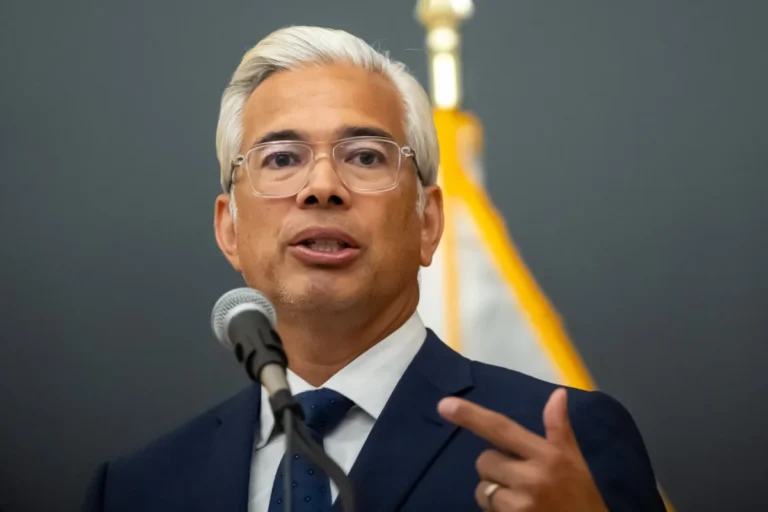
Attorney General Rob Bonta has been vocal about his specific objections. During a recent interview with CNBC, Bonta characterized previous attempts at negotiation by Paramount as unproductive, noting that the company’s representatives frequently attempted to pivot the conversation toward irrelevant topics such as foreign regulatory landscapes or the streaming market—areas not central to the specific antitrust violations cited in the state’s complaint.
"We want to talk about the three markets that we set forth in our complaint, where we think there’s antitrust violation," Bonta stated. He has made it clear that any path toward a settlement must be paved with "robust structural remedies." For Bonta, this implies that Paramount must address the potential for higher prices, reduced content variety, and diminished bargaining power for movie theaters and cable distributors, rather than simply attempting to argue the merger’s virtues on a global scale.
Chronology of a Mega-Merger
The path to this potential deal has been marked by significant regulatory hurdles and financial volatility:
- June 2026: The antitrust division of the U.S. Department of Justice issues its clearance for the proposed merger, signaling that federal regulators found insufficient evidence to block the deal.
- July 2026: European antitrust regulators follow suit, granting their approval for the acquisition.
- July 2026: A coalition of 12 state attorneys general, led by California, files an antitrust lawsuit to block the deal, citing concerns over market dominance and consumer harm.
- July 2026: Paramount agrees to delay the acquisition until as late as June 2027 to accommodate the mounting legal challenges and allow for trial preparations.
- August 2026: High-level political pressure mounts, leading to the scheduling of the upcoming settlement discussions between Paramount and the California Attorney General’s office.
- March 2027: The currently scheduled date for the beginning of the trial, provided no settlement is reached.
The Financial Ticking Clock
The delay of the acquisition carries severe financial implications for the entities involved. As part of the merger agreement, Paramount is subject to a "ticking fee" structure. If the deal is not finalized by September 30, 2026, Paramount becomes obligated to pay Warner Bros. Discovery shareholders a fee that could escalate to approximately $650 million per quarter.
These mounting costs create a powerful incentive for Paramount to find a resolution before the end of the third quarter. However, the stakes of an outright collapse are even higher: should the deal fail completely, the breakup fee is estimated at $7 billion. This financial precariousness explains why, despite the aggressive posturing in the courtroom, Paramount is actively seeking an audience with the Attorney General to explore a potential compromise.
Industry and Economic Implications
The apprehension surrounding the merger extends far beyond the boardroom. Industry unions, including the Writers Guild of America, have expressed significant concern regarding the potential for widespread job losses. Historically, mega-mergers in the entertainment sector lead to massive operational redundancies. As two of the world’s most storied film studios integrate their departments—ranging from marketing and distribution to post-production and administrative support—the risk of significant workforce reduction is a primary concern for labor advocates.
Furthermore, economists following the case have noted the impact on the "downstream" entertainment ecosystem. A combined entity would hold significant leverage over local movie theaters and small-to-medium-sized basic cable distributors. The fear, as articulated by the 12 attorneys general, is that this consolidation would lead to a reduction in the diversity of content and an increase in the cost of entry for theater chains, ultimately shifting the burden of the merger’s cost onto the average consumer.
The Path Forward: Structural Remedies vs. Rhetoric
For the upcoming Monday meeting to bear fruit, analysts suggest that Paramount will likely need to propose divestitures—the sale of specific assets, such as individual cable networks or certain distribution rights—to satisfy the California Attorney General’s concerns.
Bonta’s public stance suggests that he is not interested in behavioral promises, which are often difficult to enforce. Instead, he is seeking "structural remedies," which are permanent, quantifiable changes to the corporate makeup of the merged entity. Such remedies could include the spin-off of specific channels or regional assets that would ensure a more competitive landscape remains intact even after the merger.
While the meeting represents a thaw in the icy relationship between the regulators and the corporations, the gap remains wide. Paramount is navigating a complex landscape where it must balance the demands of shareholders, the constraints of the financial ticking fees, and the rigorous, non-negotiable requirements of the California Department of Justice.
As the industry watches, the outcome of these talks will likely set a precedent for how future media consolidations are handled in a regulatory climate that has become increasingly sensitive to the impacts of market concentration. If a settlement is reached, it will likely involve a scaled-back version of the original merger plan, one that prioritizes the preservation of competition over the total integration of assets. If the talks fail, the case will proceed to trial in March, setting the stage for a protracted legal battle that could define the economic trajectory of Hollywood for the next decade.
In the final analysis, the meeting between Paramount and Attorney General Bonta is not merely a negotiation; it is a barometer for the health of the entertainment industry. The tension between the desire for global scale and the legal mandate to maintain domestic competition has never been more apparent, and the resolution of this conflict will resonate across every sofa and movie theater seat in the United States.