

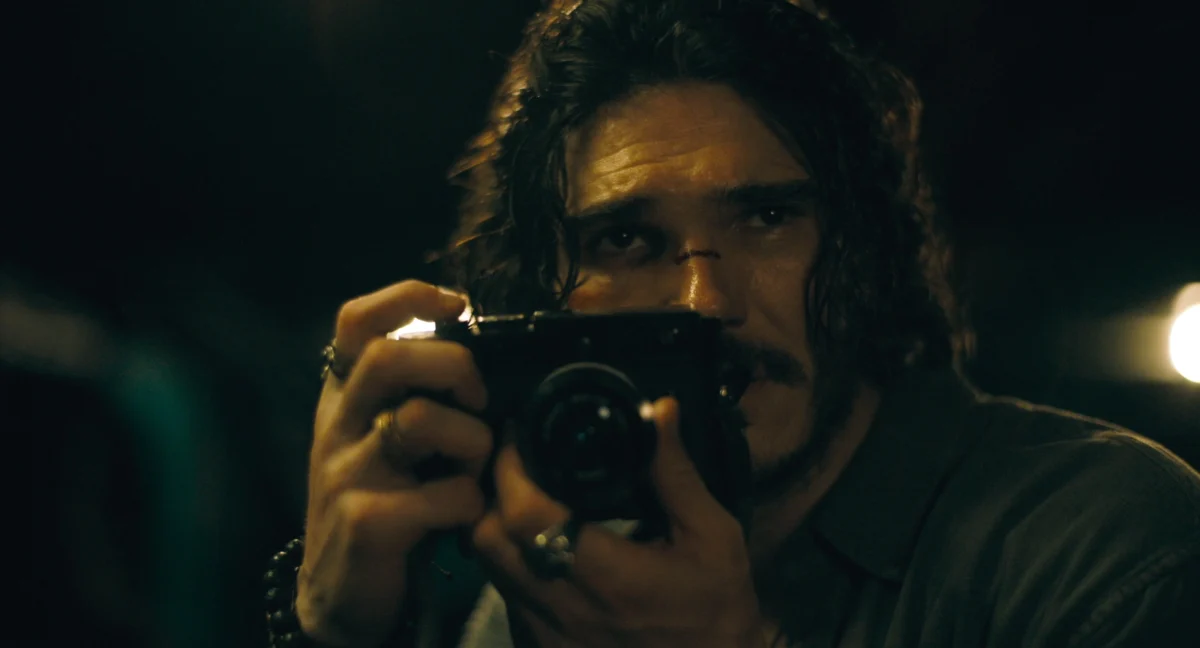
The film, an action-thriller set against the rugged backdrop of the South American wilderness, follows an ex-DEA agent on a desperate search for his murdered diplomat siblings’ children. He is accompanied by a troubled photographer who serves as the sole witness to the crimes, leading to a narrative that promises to blur the lines between reality and psychological trauma. The screenplay, penned by Kurt Johnstad—a frequent collaborator who also worked on Snyder’s recent Netflix-backed Rebel Moon saga—aims for a grounded, visceral intensity, yet early audience reports suggest a viewing experience that ranges from technically impressive to structurally disjointed.
A Two-Decade Evolution of a Passion Project
The journey of The Last Photograph began long before Snyder became synonymous with high-concept superhero epics and space operas. Conceived as an original story by the filmmaker, the project has remained in a state of development for roughly twenty years. During this time, the scope of the film shifted significantly, evolving from a standard genre thriller into what Snyder has described as an intimate, personal endeavor.
For the first time in his career, Snyder opted to bypass traditional studio backing and streaming distribution entirely. By producing the film through his own shingle, The Stone Quarry, in conjunction with Gianni Nunnari’s Hollywood Gang Productions, Snyder maintained full creative autonomy. In addition to directing, he took on the roles of cameraman and cinematographer, marking an unprecedented level of hands-on involvement in the visual construction of the piece. The musical score, a collaborative effort between legendary composer Hans Zimmer, Omer Benyamin, and Steven Doar, was intended to anchor the film’s atmospheric shifts, yet critics remain split on whether these elements coalesce into a unified whole.
The Toronto Reaction: A House Divided
The reception at the Toronto International Film Festival (TIFF) has been characterized by a notable hostility from a significant portion of the critical contingent, while others point to the film’s technical audacity as a redeeming quality. The discourse surrounding the film has quickly become one of the most volatile topics of the festival.
Critics who reacted negatively to the screening cited issues with pacing, tone, and narrative cohesion. Several reviews published on social media platforms described the film as “bloated” and “sluggish,” with some attendees suggesting that the lack of studio oversight resulted in a lack of necessary editing and restraint. One prevailing sentiment among the dissenters is that the film suffers from an indulgence that hampers the storytelling, with some reviewers going so far as to label it a “mess” that fails to reach the heights of its intended genre inspirations.
Conversely, a minority of attendees praised the film’s visual fidelity and the sheer audacity of its production. Supporters highlighted the stunning cinematography of the South American landscapes and the intimate, gritty nature of the character study as proof of Snyder’s ability to move beyond the tropes of his previous blockbusters. This divide reflects the broader “Snyder-esque” paradox: a filmmaker whose singular vision is frequently cited as either his greatest strength or his most glaring liability.
Technical Analysis and Production Context
To understand the friction surrounding The Last Photograph, one must examine the current landscape of independent filmmaking. In an era where mid-budget thrillers are increasingly rare in theaters, opting for a self-financed independent model is a bold, if risky, move for a director of Snyder’s profile.
The production utilized a lean, focused approach compared to the world-building requirements of the Rebel Moon films. By stripping away the CGI-heavy environments of his recent work, Snyder forced his audience to engage with the performances of Stuart Martin and Fra Fee. However, early criticism suggests that the script may have been unable to support the weight of the film’s two-hour-plus runtime. Historically, Snyder’s films—such as Watchmen or Batman v Superman: Dawn of Justice—have often faced initial critical backlash only to find a dedicated, long-term audience. The question remains whether The Last Photograph, lacking a franchise hook, can achieve a similar longevity.
Implications for Independent Distribution
The film’s presence at TIFF serves as a litmus test for the viability of high-profile directors producing independent works outside the traditional studio system. Without a distributor attached at the time of the premiere, the project acts as a high-stakes pitch to the market. The mixed, and in some cases vitriolic, response from critics may complicate the path to a widespread theatrical release.
Industry analysts suggest that the “grotesque” and “uncompromising” nature of the film, as described by some attendees, might limit its appeal to a niche, albeit fervent, audience. Furthermore, the comparison of the film to various political or social media-driven content suggests that the discourse has transcended mere film criticism, touching upon the perceived political undertones of the narrative. This adds an extra layer of complexity for any potential distributor looking to market the film to a broader, general audience.
Chronology of the Project
- 2006–2010: Initial concept development and early script drafting.
- 2011–2020: The project undergoes various iterations while Snyder focuses on his tenure at Warner Bros. and DC Comics.
- 2023: Official announcement of The Last Photograph as an independent production following the wrap of the Rebel Moon series.
- Early 2026: Principal photography completes in South America; post-production begins under the direction of Snyder and his team.
- September 14, 2026: The world premiere takes place at the Toronto International Film Festival.
Future Outlook
As the dust settles on the festival screening, the immediate future of The Last Photograph remains uncertain. While the film has garnered significant attention—a prerequisite for any festival entry—the conversion of that attention into a successful release strategy depends on whether audiences outside the critical bubble respond to the film’s gritty, non-traditional narrative structure.
For Zack Snyder, the experiment serves as a clear indication of his future intentions: a move toward personal, auteur-driven projects that operate free from the pressures of franchise continuity or corporate mandates. Whether the audience is ready to follow him into this more raw and, at times, polarizing territory remains to be seen. For now, The Last Photograph stands as a testament to the risks of total creative freedom, serving as a reminder that the absence of constraints can be as challenging for a filmmaker as the presence of them.
Ultimately, the reception in Toronto underscores the cultural divide that continues to follow Snyder’s career. While he remains a polarizing figure in modern cinema, his ability to elicit such strong, impassioned reactions—both positive and negative—remains unmatched. Whether or not the film finds its footing in the global market, it has already secured its place as one of the most debated entries in the 2026 festival season.