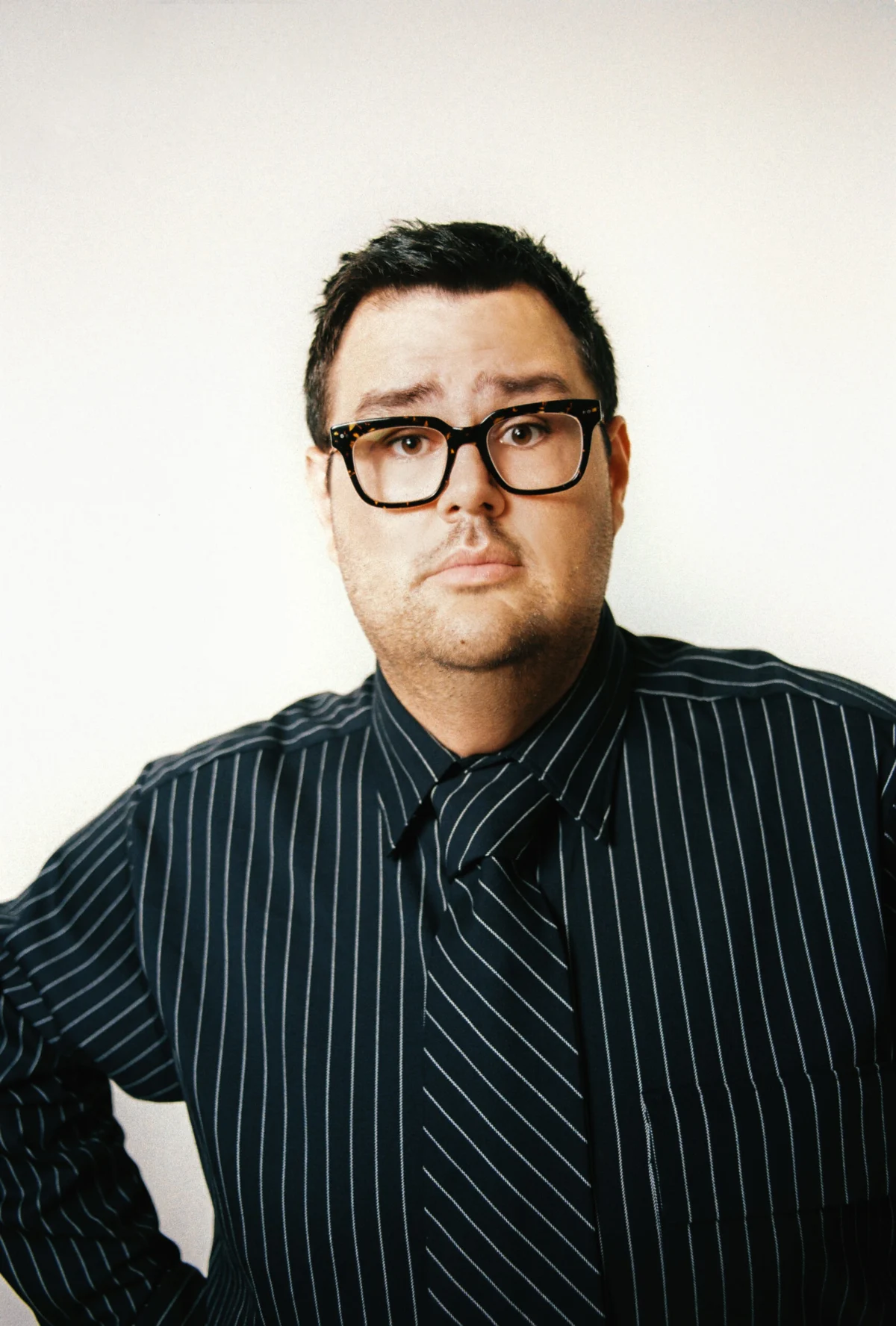
The Toronto International Film Festival (TIFF) is widely regarded as the premier launching pad for independent cinema, serving as a critical barometer for the industry’s upcoming prestige projects. This year, the festival features the world premiere of Trash Mountain, a film that stands as the most intimate and career-defining project to date for writer, comedian, and actor Caleb Hearon. Directed by independent filmmaking veteran Kris Rey, the film serves as a poignant, semi-autobiographical exploration of grief, family dynamics, and the often-absurdist logistics of rural American life.
Origins and Autobiographical Foundations
Caleb Hearon’s ascent in the entertainment industry has been defined by his ability to pivot between sharp, observational stand-up comedy and nuanced dramatic performance. Raised in a small Missouri town with a population of fewer than 10,000 residents, Hearon has frequently mined his upbringing for creative output. For a young queer individual in such a confined geographic space, these roots often provide a complex duality: a source of lasting emotional friction and the foundation for a resilient, razor-sharp sense of humor.
Trash Mountain functions as an extension of this personal history. The narrative follows Gavin, a gay man living in Chicago who is summoned back to his rural hometown following the death of his estranged, hoarder father. He is joined by his half-sister, played by Zooey Deschanel, as the two navigate the grueling physical and emotional task of clearing out their parent’s estate.
The screenplay was born from a period of profound personal loss. Several years ago, Hearon experienced the unexpected death of his own father. During this time, while concurrently balancing a demanding career in a Los Angeles writers’ room, Hearon was forced to grapple with the mundane, often overwhelming bureaucratic realities of death—a process that involves navigating legal paperwork, managing estate logistics, and confronting the literal accumulations of a parent’s life.
The Chronology of an Indie Production
The path to production for Trash Mountain was not linear, mirroring the volatile nature of independent film financing. Hearon initially penned the screenplay as a cathartic outlet, harboring few expectations that the project would reach the screen. However, after circulating the script among industry peers, he secured the backing of producers Colin Trevorrow and Lilly Wachowski.
Despite this high-profile support, the project faced years of fits and starts. In the independent film sector, funding frequently shifts based on cast availability and tax incentive cycles. The project remained in development hell for an extended duration, with various cast configurations materializing only to dissipate as the production struggled to secure a green light.
The momentum shifted abruptly in early 2026. At the time, Hearon was mid-production on the highly anticipated sequel The Devil Wears Prada 2, a project that significantly elevated his profile alongside industry heavyweights Meryl Streep and Anne Hathaway. During a brief hiatus, Hearon received a call from Trevorrow confirming that the funding had finally been secured. The catch, however, was a compressed timeline: production was required to begin within thirty days.
Cast and Creative Collaboration
The casting of Zooey Deschanel was facilitated through professional connections at Creative Artists Agency (CAA). Upon learning of her availability during the production’s tight window, Hearon engaged in a lunch meeting in Los Angeles to pitch the project. The decision to commit to a low-budget, intensive production in rural Illinois during the winter months was a significant professional risk for an established star like Deschanel.

Hearon later reflected on the logistics of the production, noting that the entire shoot lasted only 18 days. This compressed schedule is characteristic of "micro-budget" independent filmmaking, where creative ingenuity often substitutes for financial resources. The production frequently relied on "guerrilla" tactics, including the use of non-closed, public locations. In one notable instance, the crew filmed inside a retail big-box store, unable to pay for a full buyout. Hearon recalls having to pause filming multiple times due to ambient noise from shoppers, highlighting the stark contrast between his high-budget studio work and the grounded reality of independent production.
Fact-Based Analysis of the Indie Landscape
The independent film model has faced significant headwinds in recent years. According to industry reports from organizations like the Independent Filmmaker Project (IFP), the median budget for independent films has fluctuated as distribution models shift toward streaming services. The ability to complete a project with such a small, 18-day footprint is a testament to the "craftsmanship over capital" approach that has defined the careers of collaborators like Kris Rey.
For Hearon, Trash Mountain represents a shift from being a supporting player to carrying the weight of the call sheet. His performance is analyzed by industry critics as a litmus test for his range as a leading man. In a 2026 survey of emerging talent, Hearon was highlighted for his "multi-hyphenate" versatility, successfully bridging the gap between social media-driven comedy and traditional narrative acting.
Broader Impact and Implications
The release of Trash Mountain at TIFF marks a pivotal moment for Hearon, who has spent years establishing himself through prestige television roles in series such as Fargo and Mr. & Mrs. Smith, as well as his well-regarded podcast, So True with Caleb Hearon.
The film serves as an argument for the necessity of "personal" cinema in an era dominated by franchise IP. By focusing on the specific, often messy details of a family cleaning out a hoarder’s home, Trash Mountain taps into universal themes of grief and reconciliation. For the audience, the film offers a discovery experience—a hallmark of festival programming where smaller, lower-budget projects receive the critical oxygen needed to reach wider audiences.
Furthermore, Hearon’s insistence that this film represents his core identity as an artist is significant. While he remains grateful for the digital platforms and podcasting success that garnered him an initial following, he distinguishes these roles from the "work" he intends to define his career. "I was acting before I was ever a presence on the internet," Hearon noted in recent promotional interviews. "I do want people to know that, sure, I have a popular podcast that I’m very grateful for, but this is what I got into all this for."
Conclusion: The Future of the Project
As Trash Mountain makes its festival circuit debut, its success will likely be measured by its ability to secure a distribution deal that allows it to reach mainstream audiences. The film’s reliance on the strength of the script and the chemistry between its two leads is a classic Hollywood formula, yet one that remains difficult to execute in the current market.
By successfully navigating the transition from a cathartic writing exercise to a TIFF-bound feature, Caleb Hearon has demonstrated the viability of independent creative work when driven by personal stakes. Whether the film finds its audience in theaters or on a streaming platform, its production history stands as a roadmap for independent creators navigating the complex, often unpredictable path of modern filmmaking. The story of Trash Mountain is not just one of a film about a hoarder’s house, but of the persistence required to translate a private, complex trauma into a public, creative work of art.