Narrative Architecture and Character Dynamics
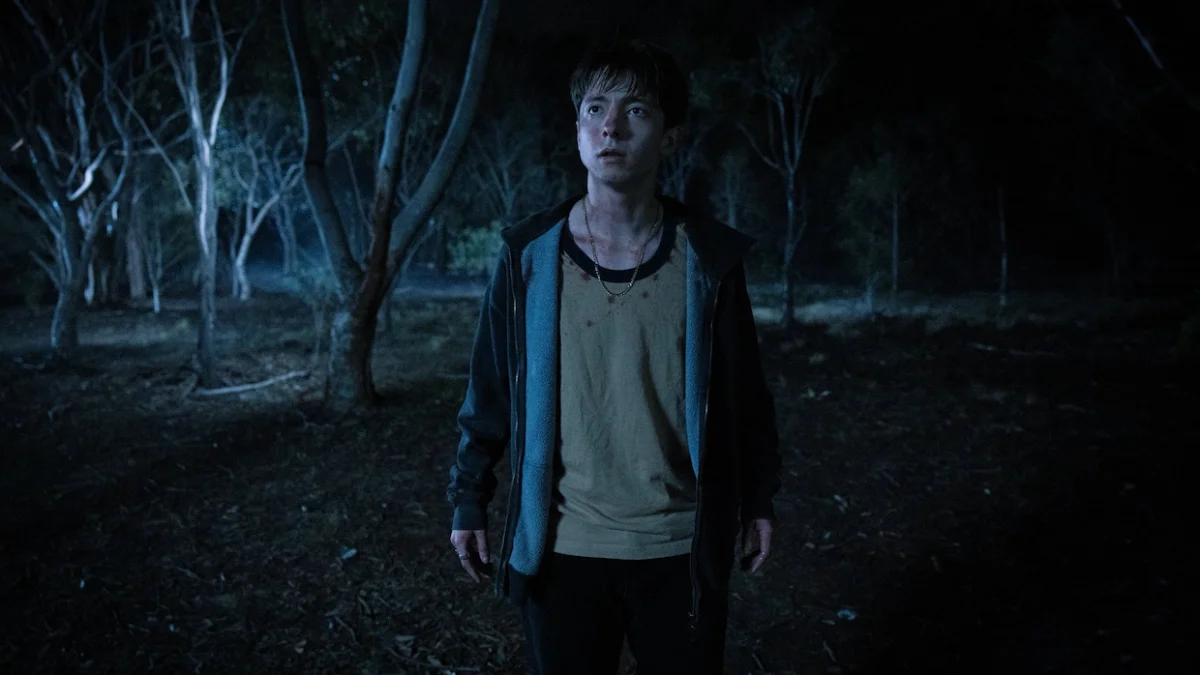
Set against the backdrop of a desolate industrial town in the Australian outback, the film follows Naim, portrayed by Joe Bird, a reserved newcomer who becomes entangled in the rigid social and religious structures of his new home. Naim’s primary point of connection is Ryan, played by Stacey Clausen, a charismatic classmate whose outward bravado masks the vulnerabilities of living under constant surveillance. The tension between the two boys culminates in a moment of intimacy in an abandoned building, an act that is immediately met with Naim’s own internal conflict and self-surveillance—a "fear of the self" that Chiarella posits as the core of the queer experience in hostile environments.
The plot reaches a critical juncture when Hunter (Jeremy Blewitt), the son of the local preacher, intervenes in their relationship. Following a violent and confusing encounter between Hunter and Ryan, Naim—driven by a mixture of jealousy and a misguided hope for a "lesser" punishment—reveals their activities to the church authorities. This act of "tattling" triggers a series of events that shift the film from a coming-of-age drama into a high-stakes survival horror. Chiarella utilizes the horror trope of the "transgression and its consequence" to illustrate the devastating impact of betrayal within marginalized communities.
The Monster as a Metaphor for Systemic Homophobia
The central supernatural threat in Leviticus (2026) is a manifestation of a hex cast by the local church, intended as a radical form of conversion therapy. The monster operates on a specific set of rules: it appears only when a victim is alone and adopts the visage of their deepest romantic or sexual desire. This mechanic forces the protagonists into a state of forced isolation. If they stay together, they risk being deceived by a double; if they stay apart, they are vulnerable to the entity’s predations.
This metaphor extends to the film’s portrayal of "false allyship." Throughout the narrative, the boys encounter figures who offer help, only to reveal ulterior motives or deep-seated prejudices. Hunter’s sister provides a notable example of this "bait and switch" tactic, while Naim’s mother, played by Mia Wasikowska, embodies the complex intersection of maternal protection and religious oppression. Her statement to her son—"We need fear"—serves as a chilling justification for the psychological violence inflicted upon the youth of the community.
Production Design and Visual Language
The visual identity of the film is defined by its "barren landscapes and weathered architecture," according to production notes. Chiarella and his creative team sought to create a "modern biblical parable" by contrasting the man-made industrial elements of the town with the harsh, indifferent beauty of the Australian pastoral landscape. This juxtaposition highlights the tension between human nature and the rigid edicts of the religious community.
Cinematographically, the film relies heavily on themes of perception. Much of the horror is glimpsed through secondary lenses: windows, mirrors, and security cameras. This choice reflects the "willful ignorance" of the town’s broader population. Those not afflicted by the curse are literally unable to see the monster, a direct parallel to the way systemic homophobia is often invisible to those who are not its targets. For Naim, the deception is constant; his own eyes betray him as he repeatedly mistakes the demonic entity for Ryan, reinforcing the theme that in this environment, even one’s senses cannot be trusted.
Socio-Political Context and the History of Conversion Practices
The release of Leviticus (2026) coincides with a period of renewed scrutiny regarding conversion practices globally and specifically within Australia. Despite legislative efforts to ban such "therapies" in various Australian states—including Victoria’s Change or Suppression (Conversion) Practices Prohibition Act 2021—advocacy groups report that informal, faith-based suppression practices remain a significant issue in rural and isolated communities.
Data from the Australian Federation of AIDS Organisations (AFAO) and the Human Rights Law Centre indicates that survivors of conversion practices often suffer from long-term psychological trauma, including high rates of PTSD, depression, and suicidal ideation. Chiarella’s decision to frame these practices through the lens of horror is a deliberate attempt to capture the visceral, life-threatening nature of this trauma. By literalizing the "demonization" of queer desire, the film provides a platform for discussing the real-world consequences of religious extremism.
Influences and Genre Lineage
Chiarella has cited several landmark films as inspirations for Leviticus (2026), particularly those that use horror to explore "the other." He references the Nightmare on Elm Street series, specifically Freddy’s Revenge (1985), which has long been analyzed as a subtextual allegory for the closeted experience. Additionally, John Carpenter’s The Thing (1982) is noted for its exploration of paranoia and the inability to trust the person standing directly in front of you.
By grounding the film in these "forbidden lodestars," Chiarella situates his work within a tradition of "Queer Horror" that dates back to the early 20th century, from the coded monsters of Universal’s horror classics to the "New Queer Cinema" movement of the 1990s. However, Leviticus (2026) distinguishes itself by moving away from the "oppressive doom" typical of older queer narratives. While the film acknowledges that trauma may never fully dissipate, it focuses on the necessity of camaraderie and the resilience required to survive systemic hostility.
Critical Analysis of the Ending and Modern Implications
The conclusion of the film departs from traditional horror resolutions. Rather than a definitive defeat of the monster, the ending remains ambiguously hopeful yet grounded in reality. Chiarella explains that the final frame suggests the trauma—much like the monster in a classic horror film—may not be truly dead. It remains a part of the survivors’ lives, a "crawling back" of past experiences that requires ongoing management and strength.
Industry analysts suggest that Leviticus (2026) represents a broader shift in independent cinema toward "elevated genre" films that prioritize thematic depth over simple jump scares. The inclusion of high-profile talent like Mia Wasikowska indicates a growing market for sophisticated horror that tackles complex social issues. As queer media continues to evolve, films like Leviticus (2026) serve as a reminder that the genre remains a powerful tool for unearthing "terrible and intimate" truths about the human condition.
Chronology of Development
The development of Leviticus (2026) followed a multi-year trajectory typical of high-concept Australian independent features:
- 2022-2023: Adrian Chiarella began drafting the screenplay as a response to a global rise in anti-LGBTQ+ rhetoric and the regression of civil rights in various jurisdictions.
- Late 2023: The project secured funding through a combination of state film bodies and private investment, with casting for the leads commencing shortly after.
- 2024: Principal photography took place over eight weeks in remote regions of South Australia, utilizing local industrial sites to achieve the film’s specific aesthetic.
- 2025: Post-production focused on the subtle visual effects required for the "invisible lover" and the demonic doubles, emphasizing psychological dread over gore.
- 2026: The film premiered at major international festivals before its wider theatrical and streaming release, garnering attention for its unique blend of religious allegory and visceral horror.
The film stands as a testament to the enduring relevance of the horror genre as a site of social critique. By focusing on the specificities of the Australian outback and the universal themes of desire and fear, Leviticus (2026) offers a harrowing yet necessary examination of the costs of intolerance and the enduring power of the self.