



The 78th Primetime Emmy Awards, scheduled for broadcast on September 14, 2026, represent one of the most complex logistical and competitive undertakings in the history of the Television Academy. While the Academy Awards often dominate the cultural conversation regarding cinematic achievement, the Emmy Awards operate on a significantly larger scale. The main ceremony will see 23 awards distributed across comedy, drama, and limited series, alongside variety and reality competition programs. This primary event is preceded by two Creative Arts Emmy ceremonies, which distribute approximately 100 additional awards focusing on technical craft and guest performances. However, the 2026 season is defined less by its scale and more by a series of drastic rule changes and a volatile political climate that has directly impacted some of television’s most prominent late-night figures.
Strategic Shifts in Academy Regulations and Guest Eligibility
The Television Academy has a long-standing reputation for frequently adjusting its rules to address emerging trends or perceived loopholes in the voting process. This year, a significant modification was introduced regarding the eligibility of guest performers. The new regulation prevents an actor from being nominated in a guest category for a role they have previously portrayed as a lead or supporting actor in the same series. This rule was designed to prevent "category padding," where established stars return for brief cameos to secure additional hardware.
A historical precedent for this change is the 2021 win by Claire Foy. Foy, who won the Emmy for Lead Actress in a Drama in 2018 for her portrayal of Queen Elizabeth II in The Crown, returned for a brief appearance in the show’s fourth season. Despite the brevity of the role, she secured a win for Guest Actress, sparking debate over the fairness of veteran leads competing against true guest performers.
The immediate casualty of this rule in 2026 was Jon Hamm. Apple TV+ submitted Hamm for a guest actor nomination for his work on The Morning Show. However, because Hamm had been nominated as a supporting actor for the same role in 2024, the Academy disqualified the submission. While Hamm remains a contender in two other categories for separate projects, the disqualification underscores the Academy’s rigorous enforcement of its new standards.
The Re-merger of the Variety Series Category
Perhaps the most consequential change for the 2026 ceremony is the reunification of the variety talk and variety sketch categories. This decision has set the stage for a high-stakes confrontation between traditional late-night talk shows and scripted sketch programs. To understand the gravity of this merger, one must look at the 75-year evolution of the category.
Established in 1951, the Variety Series category has undergone several transformations. In the early 1970s, the Academy briefly split the category to prevent traditional talk programs, such as The Tonight Show Starring Johnny Carson, from competing against high-concept musical and sketch shows like The Carol Burnett Show. By the mid-1970s, the categories were merged again, leading to decades of "mismatched" competition. During the 1990s, this resulted in unconventional outcomes, such as Jay Leno’s Tonight Show competing against and defeating MTV Unplugged in 1995.
By the mid-2000s, the category became dominated by a specific cohort of male late-night hosts, including Jon Stewart, Stephen Colbert, Jimmy Kimmel, and Conan O’Brien. Jon Stewart’s The Daily Show established a historic record by winning the category for ten consecutive years. In an effort to provide more opportunities for sketch-based content, the Academy split the category again in 2015 into "Variety Talk" and "Variety Scripted." This allowed shows like Inside Amy Schumer and Key & Peele to find success, and eventually paved the way for Saturday Night Live (SNL) to embark on a six-year winning streak.
The most recent disruption occurred when the Academy moved HBO’s Last Week Tonight with John Oliver—a show that had won seven consecutive Emmys in the Talk category—into the Scripted Variety category. Oliver’s program proceeded to win three additional Emmys in its new home. For 2026, the Academy has reversed this distinction, forcing John Oliver, Stephen Colbert, Jimmy Kimmel, and the cast of SNL to compete for a single trophy.
The Cancellation of The Late Show with Stephen Colbert
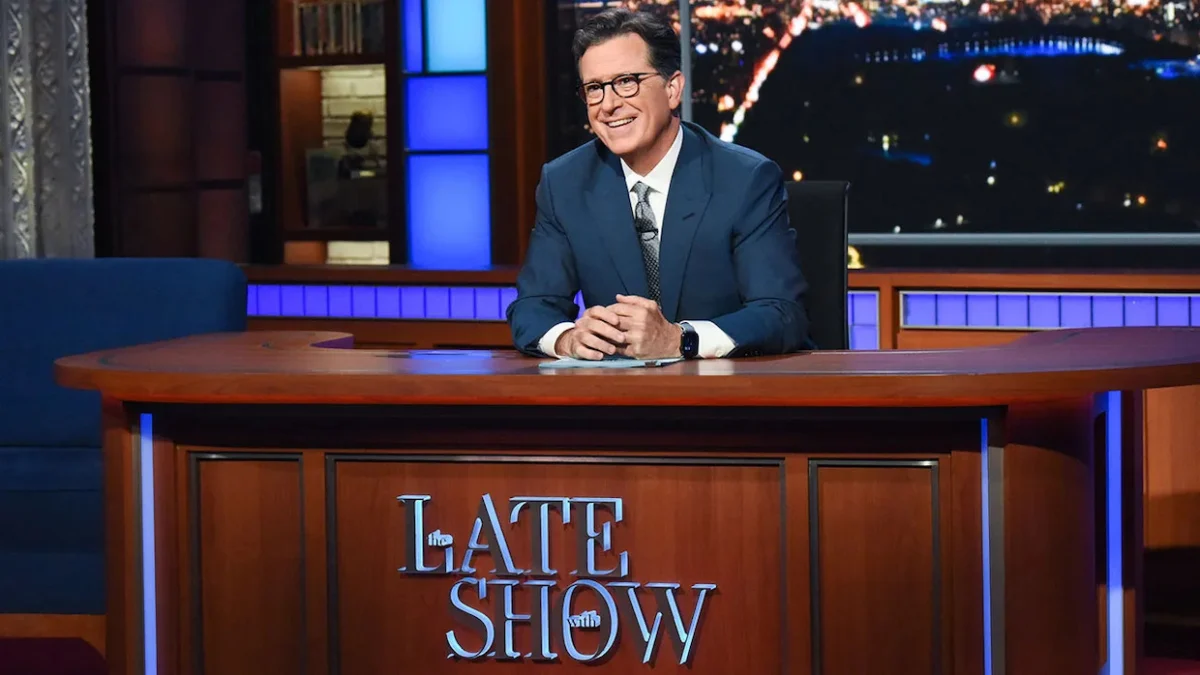
The 2026 Emmy race is heavily influenced by the sudden conclusion of Stephen Colbert’s tenure at CBS. The Late Show with Stephen Colbert, a cornerstone of the CBS lineup for 33 years (dating back to David Letterman’s arrival in 1993), aired its final episode on May 21, 2026. The cancellation followed the acquisition of CBS’s parent company, Paramount, by Skydance Media, led by David Ellison.
The official narrative provided by Skydance executives cited financial concerns, claiming the program was operating at a loss of approximately $40 million per year. However, industry analysts and media critics have expressed skepticism regarding these figures. Many point to the political friction between Colbert’s sharply critical monologues regarding the Trump administration and the reportedly amicable relationship between the Ellison family and the current executive branch.
Colbert’s final season was characterized by a surge in viewership and critical acclaim. Following his first Variety Talk Series Emmy win in September 2025, Colbert’s final episodes featured a roster of high-profile guests who frequently addressed the nature of his departure. For Emmy voters, the 2026 ceremony represents the final opportunity to honor a show that has been a dominant force in the genre for 11 seasons.
Regulatory Pressure and the Jimmy Kimmel Incident
The volatility of the current media landscape was further highlighted by the brief suspension of Jimmy Kimmel Live! in September 2026. On September 17, the show was pulled from the air following a controversial monologue in which Kimmel commented on political activist Charlie Kirk. The incident drew immediate condemnation from the Trump administration and FCC Chairman Brendan Carr.
The situation escalated when major station owners, including Nexstar Media Group and Sinclair Broadcast Group, threatened to cease broadcasting the show on their ABC affiliates. For several days, the future of the franchise remained in jeopardy. However, a significant public backlash and organized threats of consumer boycotts forced a reversal. Kimmel returned to the air on September 23, 2026. The return episode was a ratings phenomenon, drawing 6.26 million viewers—a series high—while the accompanying social media clips generated over 26 million views within 24 hours.
Competitive Analysis and Projections
As the September 14 ceremony approaches, the Variety Series category is widely viewed as a three-way race between Colbert, Kimmel, and Oliver.
- The Late Show with Stephen Colbert: As a "swan song" entry, Colbert holds a sentimental and political edge. Academy members often use their ballots to signal support for creators who have faced perceived institutional or political pressure. A win for Colbert would serve as a symbolic rebuke of the circumstances surrounding his cancellation.
- Jimmy Kimmel Live!: Despite 12 consecutive nominations, Kimmel has never won the top Variety Series Emmy. His resilience in the face of FCC pressure has bolstered his standing among liberal-leaning voters, making him a strong contender for the second-place slot or a potential upset victory.
- Last Week Tonight with John Oliver: Oliver remains the most formidable competitor in terms of pure Emmy momentum. Having won ten Emmys across two different variety categories in ten years, his show is the gold standard for research-heavy, satirical journalism.
- Saturday Night Live: Now in its 51st season, SNL remains a staple of the category. While the show has leaned more into absurdist humor following the departure of fan-favorite Bowen Yang in December 2025, its 50th-anniversary momentum and the successful launch of SNL UK in London have solidified Lorne Michaels’ continued influence.
- The Daily Show: Under a rotating host format with Jon Stewart returning for Monday nights, the program remains a consistent nominee. While it won during the period when John Oliver was moved to a separate category, the merged field makes a win for the Comedy Central veteran less certain.
Industry Implications and the Path Forward
The 2026 Emmy Awards serve as a barometer for the health of late-night television during a period of intense consolidation and political scrutiny. The merger of the Variety categories reflects an Academy trying to find stability in a genre that is rapidly evolving. As streaming platforms continue to absorb traditional media and political tensions influence programming decisions, the Emmy ballot has become more than a measure of artistic merit; it is a reflection of the industry’s internal struggle for creative independence.
The outcome of the September 14 ceremony will likely have a lasting impact on how networks approach political satire and variety programming. If Colbert or Kimmel emerges victorious, it may signal to media conglomerates that there is still a significant "prestige" value in hosting voices that challenge the status quo. Conversely, a win for a less politically charged entry might indicate a shift toward safer, more generalized entertainment. Regardless of the winners, the 2026 Emmys will be remembered as a pivotal moment where the line between television entertainment and national politics became almost entirely indistinguishable.