


The 78th Primetime Emmy Awards, scheduled for September 14, 2026, arrive at a transformative juncture for the television industry, marked by significant regulatory shifts and a highly charged political atmosphere. While the Academy of Television Arts & Sciences will distribute 23 awards during the main telecast—spanning comedy, drama, limited series, and reality categories—the most significant narrative of the season centers on the restructuring of the variety categories. This consolidation, paired with the recent cancellation of high-profile late-night programming and unprecedented federal pressure on broadcasters, has positioned the 2026 ceremony as a potential referendum on the intersection of entertainment and political discourse.
Regulatory Overhaul and the Guest Actor Disqualification
The Television Academy has long been characterized by a fluid set of rules designed to adapt to the evolving nature of content distribution. However, the 2026 cycle introduced a specific regulation that has already altered the field of nominees. A new rule now prevents any performer from being nominated in a "guest" category for a role in which they have previously received a "lead" or "supporting" nomination. This rule was implemented to address perceived imbalances where established stars could dominate minor categories for recurring roles.
The historical precedent for this change is often traced back to the 2021 victory of Claire Foy, who won an Emmy for a brief appearance in The Crown as Queen Elizabeth II, a role for which she had previously won the Outstanding Lead Actress Emmy in 2018. In the current cycle, this regulation led to the high-profile disqualification of Jon Hamm. Despite his critical acclaim in Apple TV+’s The Morning Show, Hamm was deemed ineligible for the Guest Actor category because he had been nominated as a supporting actor for the same role earlier in 2024. While Hamm remains eligible for other projects, including his work in limited series, the disqualification underscores the Academy’s commitment to strict category boundaries.
The Re-Consolidation of the Variety Categories
Perhaps the most impactful change for the 2026 ceremony is the merger of the Variety Talk and Scripted Variety (formerly Variety Sketch) categories. The history of these categories reflects a 75-year struggle to define the parameters of non-narrative entertainment.
When the category was established in 1951, it served as a catch-all for the era’s "vaudeo" style of programming. In the early 1970s, the Academy briefly split the category to prevent traditional talk shows, such as The Tonight Show Starring Johnny Carson, from competing directly against musical-variety powerhouses like The Carol Burnett Show. This split was abandoned in the mid-1970s, leading to decades of "mismatched" competitions. Throughout the 1990s, the category saw disparate programs like Dennis Miller Live, MTV Unplugged, and Muppets Tonight vying for the same trophy.
The mid-2000s were dominated by the "Daily Show Era," during which Jon Stewart secured a record-breaking ten consecutive wins. In 2015, the Academy again split the category into "Variety Talk" and "Variety Sketch" to accommodate the rise of sketch-heavy programs like Inside Amy Schumer and Key & Peele. This division allowed Saturday Night Live (SNL) to embark on a six-year winning streak. However, the dominance of HBO’s Last Week Tonight with John Oliver eventually led to further shifts; after winning seven consecutive talk series Emmys, Oliver’s program was moved to the scripted variety category in 2023, where it continued its winning streak.
The 2026 merger brings these heavyweights back into a single arena. For the first time in over a decade, The Late Show, Jimmy Kimmel Live!, Last Week Tonight, and Saturday Night Live will compete for a single "Outstanding Variety Series" Emmy, creating one of the most competitive fields in the history of the telecast.
The Cancellation of The Late Show and Paramount’s Strategic Shift
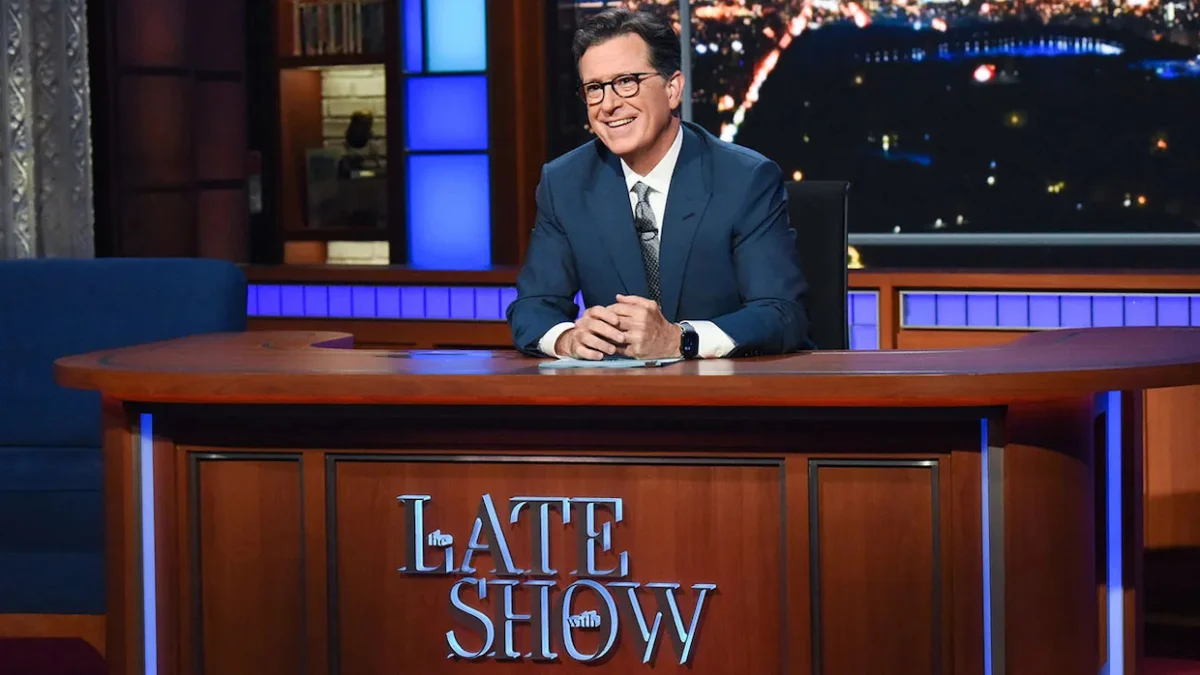
The 2026 Emmy race is heavily influenced by the abrupt conclusion of Stephen Colbert’s tenure at CBS. On May 21, 2026, The Late Show with Stephen Colbert aired its final episode, ending an 11-season run and closing a 33-year chapter for the franchise that began with David Letterman in 1993.
The cancellation followed the acquisition of Paramount Global by Skydance Media, led by David Ellison. Official statements from Paramount cited financial sustainability as the primary driver, claiming the program was incurring annual losses of approximately $40 million. Industry analysts, however, have noted the timing of the cancellation relative to the broader political climate. Colbert has been a consistent and sharp critic of the current administration, leading to speculation that the network’s decision may have been influenced by a desire to mitigate political friction during a sensitive merger period.
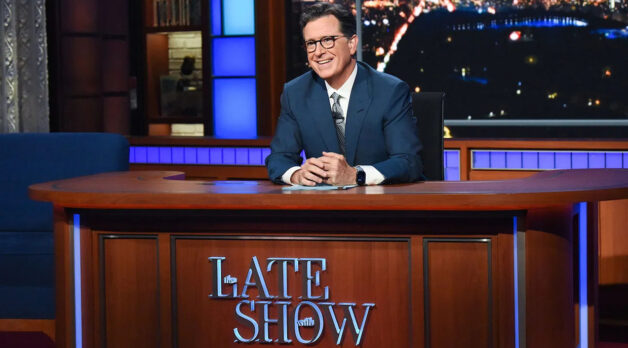
Colbert’s final season was marked by high viewership and a significant outpouring of support from the creative community. Having won the Outstanding Talk Series Emmy in September 2025, Colbert enters the 2026 race as a sentimental favorite. Academy members often utilize the ballot to honor departing icons, and the "swan song" narrative for The Late Show provides a powerful incentive for voters who may view the cancellation as a loss for televised political satire.
The Jimmy Kimmel Controversy and the FCC
Parallel to the Colbert cancellation, ABC’s Jimmy Kimmel Live! faced its own existential crisis in late 2025. Following a monologue delivered on September 17, which included a controversial remark regarding political activist Charlie Kirk, the program was briefly pulled from the air. This suspension occurred amidst public pressure from the Federal Communications Commission (FCC) and Chairman Brendan Carr, as well as threats from major affiliate groups, including Nexstar Media Group and Sinclair Broadcast Group, to cease broadcasting the show.
The subsequent public backlash and the threat of large-scale audience boycotts forced a reversal. Kimmel returned to the air on September 23, 2026. His return episode garnered 6.26 million viewers—a series record—while the accompanying monologue reached an estimated 26 million views across various social media platforms.
The resilience of Kimmel’s program has bolstered his standing within the Television Academy. Despite 12 consecutive nominations, Kimmel has never won the top prize in the variety category. The events of the past year have transformed him from a perennial nominee into a symbol of broadcasting independence, potentially shifting the voting dynamics in his favor.
Institutional Stability: SNL and The Daily Show
Amidst the volatility of the network talk shows, Saturday Night Live remains a formidable contender. Now in its 51st season, the show continues to leverage the momentum of its 50th-anniversary celebrations. While the program saw the departure of veteran cast member Bowen Yang in December 2025—a significant loss given Yang’s four previous acting nominations—the show has successfully transitioned into a more "absurdist" comedic tone.
Furthermore, the international expansion of the brand with the debut of SNL UK in London has reinforced Lorne Michaels’ status as a dominant force in global comedy. While SNL typically avoids the level of direct political confrontation seen in the Colbert and Kimmel monologues, its cultural ubiquity ensures its place as a top-tier nominee.
Concurrently, The Daily Show on Comedy Central has maintained its relevance through a hybrid hosting model. With Jon Stewart returning for Monday night broadcasts and a rotating roster of correspondents handling the remainder of the week, the program has sustained its viewership and critical standing. This "multi-host" format earned a nomination in 2025 and is widely expected to secure a spot in the 2026 lineup, serving as the primary representative for cable-based political satire.
Analysis of Implications and Industry Impact
The 2026 Emmy Awards represent more than a celebration of artistic achievement; they serve as a barometer for the health of the late-night format. The financial pressures cited in the Colbert cancellation highlight the precarious state of linear television in an era dominated by streaming. The $40 million deficit reported by CBS is emblematic of a broader trend where high production costs for daily variety shows are increasingly difficult to offset with traditional advertising revenue.
Moreover, the political undertones of the 2026 race suggest that the Television Academy’s 24,000 members may use their votes to signal support for creative freedom. If The Late Show or Jimmy Kimmel Live! secures a victory over the historically dominant Last Week Tonight, it will likely be interpreted as a collective statement against the perceived encroachment of political interests into the media landscape.
As the September 14 ceremony approaches, the industry remains focused on the potential for the telecast to serve as a platform for advocacy. With the merger of the variety categories, the stakes have been elevated, ensuring that the winner of the Outstanding Variety Series Emmy will be recognized not only for comedic excellence but for navigating one of the most turbulent periods in the history of American television.