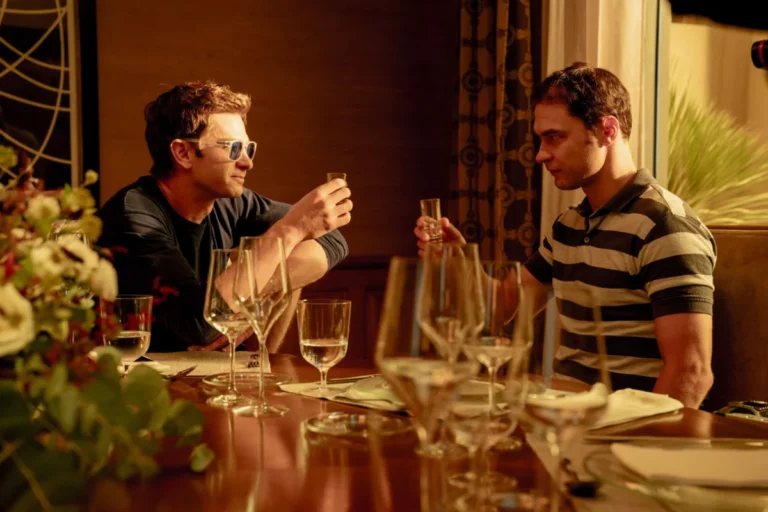



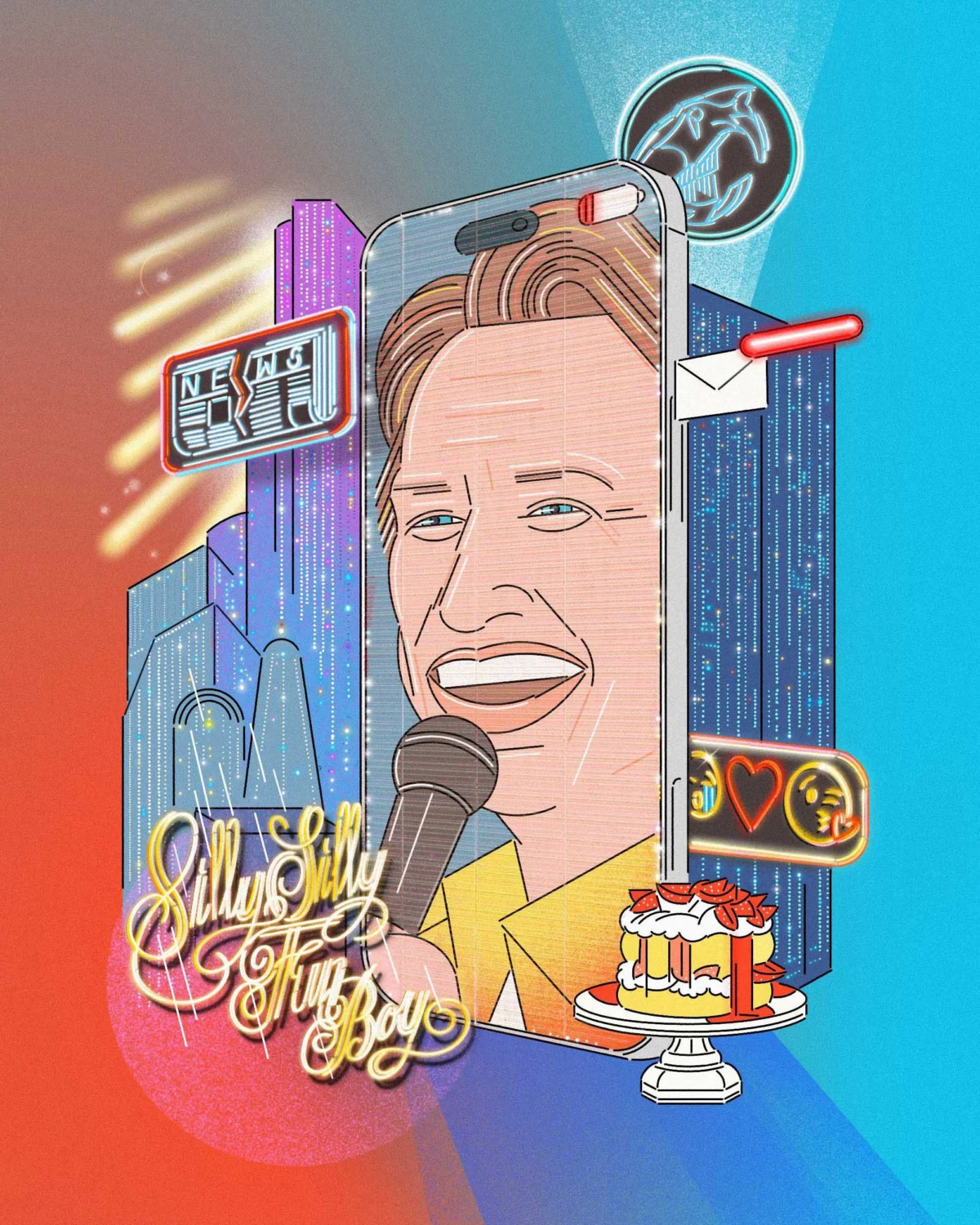
The intersection of celebrity culture and digital hygiene has found a prominent voice in Pete Holmes, the creator and star of HBO’s Crashing and the stand-up special Silly Silly Fun Boy. In a detailed exploration of his personal relationship with technology, Holmes has emerged as an advocate for digital minimalism, maintaining a daily screen time average that significantly undercuts national norms. By employing specific psychological "hacks"—such as maintaining a grayscale display and utilizing screen-time widgets—Holmes has transitioned from a passive consumer of digital content to a deliberate user of tools. His approach offers a counter-narrative to the prevailing "hustle culture" of Silicon Valley, suggesting that a return to analog-style interactions may be the inevitable result of the current saturation of artificial intelligence and digital misinformation.
The Metrics of Digital Restraint: Screen Time and Notification Management
While the average American adult spends between five and seven hours on their smartphone daily, according to data from various mobile tracking analytics firms, Pete Holmes reports a weekly average of just one hour and 15 minutes. This level of restraint is achieved through a combination of hardware aesthetics and software limitations. Holmes utilizes a "grayscale" setting on his iPhone, a technique often recommended by productivity experts to reduce the dopamine-triggering effects of vibrant colors. By stripping the device of its visual allure, the smartphone is transformed from a "slot machine" of sensory rewards into a utilitarian device.
Holmes further manages his digital intake by placing the screen-time widget prominently on his home screen. This provides a constant, unavoidable feedback loop regarding his usage, similar to the psychological effect of a bathroom scale for those monitoring their physical health. His communication habits further reflect this minimalist philosophy. Holmes currently maintains approximately 80 unread text messages and over 55,000 unread emails. Rather than viewing this as a failure of organization, Holmes frames it as a rejection of "manufactured urgency." He posits that the modern professional environment creates a cycle of unnecessary correspondence that mimics the structure of an office, even within personal friendships. By refusing to engage in the "hot potato" of rapid-fire emailing, Holmes argues that individuals can reclaim significant portions of their cognitive bandwidth.
Hardware Preferences and the Critique of Modern Design
Holmes’ choice of hardware reflects a nostalgia for the design philosophy of the Steve Jobs era at Apple, which prioritized clean lines and intentionality over feature bloat. He expresses a specific preference for devices that appear "minimal" and "clean," contrasting them with modern "Pro Max" models which he characterizes as having excessive battery life and unattractive camera arrays—referred to colloquially as the "spider eyeball phone."
His current primary device is a conceptualized "iPhone Air," which he values for its perceived rarity and slim profile. Holmes suggests that the current trajectory of smartphone development involves "Apple playing catch-up with Android," incorporating features that may not be necessary for the average user but serve to increase device complexity. This aesthetic preference extends to his computing habits; he utilizes a 2022 MacBook Air with an M2 chip, though he maintains a sentimental attachment to discontinued models like the 11-inch MacBook Air and the 17-inch MacBook Pro. He views the "planned obsolescence" of modern hardware as a barrier to forming a long-term "relationship" with technology, comparing the temporary nature of modern laptops to a fleeting acquaintance.
Chronology of a Digital Shift: From Twitter Humor to AI Skepticism
The evolution of Holmes’ digital life mirrors broader shifts in the tech landscape over the last decade. During the early 2010s, platforms like Twitter (now X) served as a primary hub for comedic discovery and community. Holmes notes that during this period, the platform was a source of genuine entertainment, highlighting the work of comedians like Rob Delaney and Shelby Farrow. However, the current state of social media has led him to abandon these platforms almost entirely.
The timeline of this shift coincides with the rise of algorithmic feeds and the integration of generative AI. Holmes identifies a growing trend of "disinformation" and "manufactured content" that he believes will eventually drive users away from digital platforms altogether. He predicts a "slow walk away" from smartphones, suggesting that the ubiquity of AI-generated content will eventually render digital inboxes and social feeds untrustworthy or uninteresting. This, he argues, will lead to a resurgence of "Amish-style" in-person interactions, where coffee meetings and physical presence once again become the standard for communication.
Artificial Intelligence: Optimism Tempered by Realism
Despite his personal distance from his devices, Holmes identifies as an "AI optimist," though his optimism is rooted in a cynical understanding of corporate marketing. He views the current "catastrophizing" of AI—the narrative that it represents either a god-like savior or an existential threat—as a strategic move by tech companies to avoid regulation or to drum up investment.
Holmes describes AI not as "intelligence" in the biological sense, but as a "word prediction model" that is "fast and confident." He warns that humans are naturally inclined to trust fast and confident systems, making society susceptible to being "conned" by sophisticated software. His recent interactions with AI reflect this utilitarian view; he recently used a generative model to seek solutions for "swim soreness," receiving generic advice such as "take a hot shower." While he finds the technology impressive in its ability to mimic human confidence, he remains unconvinced of its current ability to provide deep, nuanced value beyond basic task automation.
The Role of Technology in Modern Parenting and Personal Connection
While Holmes maintains a strict boundary with most tech, he acknowledges the "synthetic" benefits of FaceTime for maintaining family bonds. As a parent, he uses video calling to allow his daughter to interact with her mother, Valerie, during periods of solo parenting. This application of technology is cited as one of the "great achievements of modern life," providing a sense of presence that audio-only communication cannot replicate.
Interestingly, Holmes uses technology to preserve personal traditions and foster his daughter’s development. He records videos of his daughter engaging in the same comedic "bits" he performed as a child—such as putting her face into a strawberry shortcake—effectively using the smartphone as a digital archive of family history. He also utilizes Google’s reverse image search as an educational tool, identifying animal skulls found in nature with his daughter. These instances highlight a selective use of technology: rejecting the "slot machine" of social media while embracing the "encyclopedia" and "video album" aspects of the modern smartphone.
Analysis of Implications: The Future of Digital Hygiene
The habits of Pete Holmes reflect a growing movement toward "digital hygiene" among high-net-worth individuals and creative professionals. As the "attention economy" becomes increasingly aggressive, the ability to disconnect is becoming a status symbol and a prerequisite for deep creative work. Holmes’ prediction that Gen Z will "naturally" dial back their tech usage is supported by emerging trends among younger demographics who are increasingly adopting "dumb phones" or utilizing app blockers to mitigate the mental health impacts of constant connectivity.
From a journalistic perspective, Holmes’ stance represents a significant critique of the "always-on" culture. His 55,000 unread emails serve as a radical rejection of the professional expectation of constant availability. This "big fuck off" to the digital void suggests that the perceived necessity of constant communication is often a self-imposed burden rather than a professional requirement.
Conclusion: A Return to the Tactile
Pete Holmes’ technological profile concludes with a nostalgic nod to tactile devices, such as the Tascam four-track tape deck. He contrasts the "pressure" and "fun" of recording on physical tape—where mistakes have consequences—with the low-stakes environment of modern software like GarageBand. This preference for the tactile, the limited, and the intentional serves as the cornerstone of his philosophy.
As society continues to navigate the complexities of AI integration and the erosion of digital privacy, the "Holmes Model" of digital minimalism offers a potential roadmap. By treating the smartphone as a tool with specific, limited functions rather than a portal to a constant stream of information, users may find a path back to the "in-person" world that Holmes believes is poised for a comeback. Whether his prediction of a mass "Amish" shift away from technology comes to fruition remains to be seen, but his personal success in maintaining a one-hour daily screen time average suggests that such a lifestyle is possible, even for those at the center of the modern entertainment industry.