


The cultural landscape of late-twentieth-century New York City was defined by a grit and experimentalism that has largely been sanitized in the digital age. At the center of this era’s media rebellion was Robin Byrd, a former adult film actress who transitioned from the screen to the host’s chair, creating a public access phenomenon that challenged the boundaries of censorship, sexuality, and community advocacy. With the release of the HBO documentary Bang My Box: The Robin Byrd Story, directed by Jyllian Gunther and Stephanie Schwam, the historical significance of The Robin Byrd Show is being re-examined not merely as a relic of "analog smut," but as a pivotal chapter in the history of the First Amendment and public health communication during the HIV/AIDS epidemic.
The Genesis of a Public Access Phenomenon
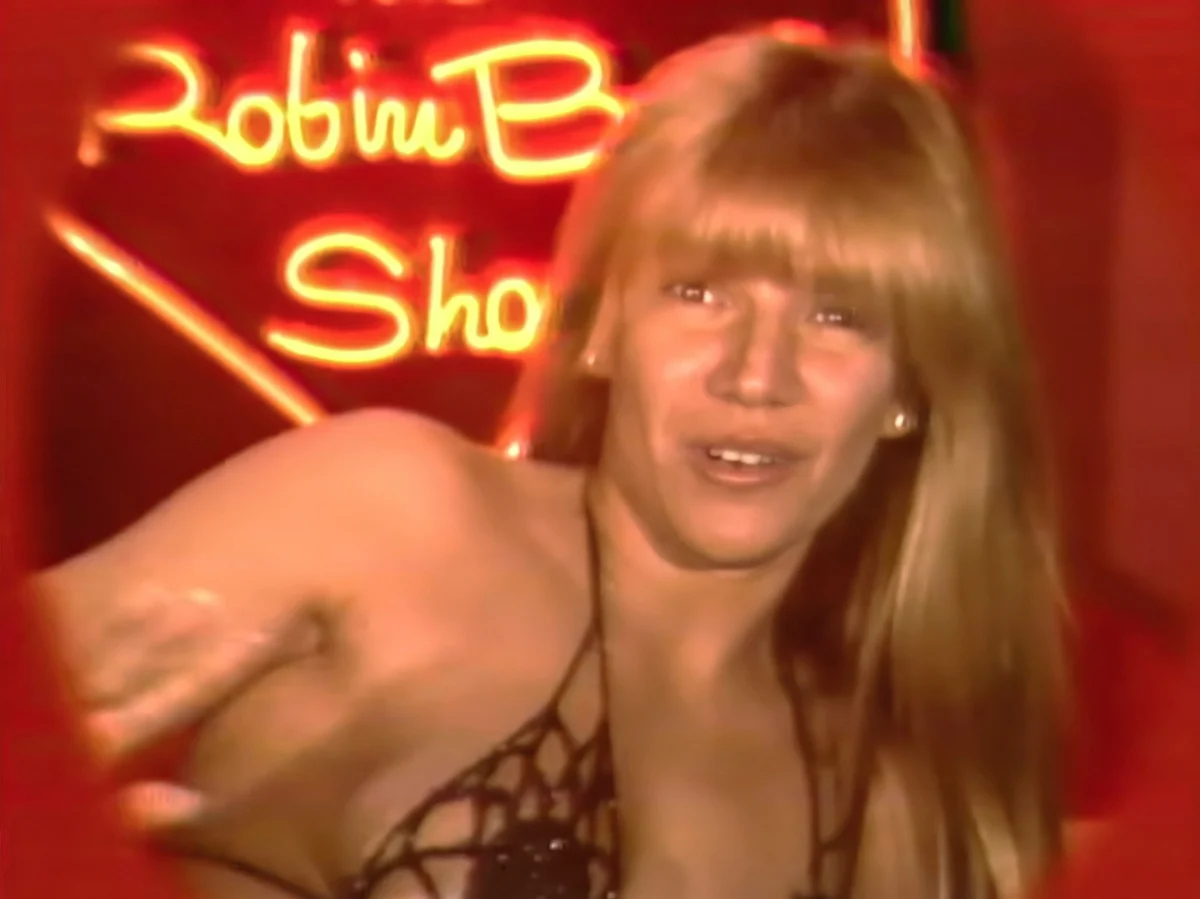
Launched in 1977, The Robin Byrd Show became a staple of Manhattan Neighborhood Network’s Channel 35. For over two decades, the program occupied the post-10:00 PM time slot, offering a surreal blend of variety show aesthetics and adult entertainment. Byrd, known for her peroxide-blonde hair and signature black mesh bikini, curated a space that was simultaneously garish and intimate. The show’s format remained remarkably consistent: Byrd would interview adult performers or exotic dancers against a heart-shaped backdrop, followed by a striptease and a closing dance to her rockabilly theme song, "Baby, Let Me Bang Your Box."
The production was famously low-budget. Eschewing traditional talent fees, Byrd employed a barter system she colorfully described as "tit for tat and dick for dat," providing guests with video tapes of their appearances in lieu of monetary payment. This DIY ethos was characteristic of the public access movement, which sought to democratize the airwaves by providing ordinary citizens—and marginalized subcultures—with a platform to reach a mass audience without the oversight of major network censors.
A Chronology of the Byrd Era
To understand the impact of Robin Byrd, one must look at the timeline of her career in parallel with the evolution of New York City’s social and legal climate:
- 1977: The Robin Byrd Show premieres on Manhattan public access. It arrives during a period of fiscal crisis in New York, where the city’s raw energy was reflected in its experimental media.
- Early 1980s: As the HIV/AIDS crisis begins to devastate the New York arts and LGBTQ+ communities, Byrd pivots her platform to advocate for safe sex. Her catchphrase, "Don’t forget to wear your rubbers," becomes a ubiquitous public health reminder delivered with a wink.
- 1992: The United States Congress passes the Cable Television Consumer Protection and Competition Act. Section 10 of the Act grants cable operators the right to prohibit "indecent" programming on public access channels, directly threatening Byrd’s livelihood.
- 1996: Time Warner Cable attempts to move "adult" public access programming to a scrambled, pay-per-view tier. Byrd becomes a lead plaintiff in a landmark legal battle defending the First Amendment rights of public access producers.
- 1998: The original run of the show concludes after more than 600 episodes, though it continues to air in reruns, maintaining a cult following.
- 2024: HBO releases Bang My Box, a documentary that frames Byrd’s career within the broader context of sex-positivity and media history.
The Legal Battle for the First Amendment
The most significant professional challenge Byrd faced was not the social stigma of her industry, but the legislative attempts to sanitize public access television. In the mid-1990s, the battle over "indecency" on cable reached the Supreme Court. The 1996 Telecommunications Act intensified the pressure on cable providers to regulate content.
Byrd, alongside other public access producers, challenged Time Warner Cable’s efforts to censor or relegate her show to restricted channels. Legal analysts note that this period was crucial in defining the "public forum" doctrine as it applied to cable television. Proponents of Byrd’s show argued that public access channels were the digital equivalent of a town square; if the government or a franchised cable monopoly could dictate the content of that square based on its "decency," the foundations of free speech were at risk.
Byrd’s eventual legal victories helped ensure that public access remained a venue for unconventional voices, preventing a precedent that could have allowed cable companies to unilaterally silence unpopular or provocative viewpoints. This legal legacy is a primary focus of the new documentary, which illustrates how a woman often dismissed as a "porn star" became a formidable defender of constitutional rights.
Public Health Advocacy and the HIV/AIDS Crisis
While mainstream media was often slow or clinical in its response to the HIV/AIDS epidemic, Byrd used her platform to speak directly to the populations most at risk. In the 1980s, the adult film industry and the LGBTQ+ community were on the front lines of the crisis. Byrd’s show became an unlikely but effective vehicle for harm reduction.
Byrd’s advocacy was characterized by a lack of judgment. By normalizing the conversation around condoms and safe sex—interspersed with her trademark humor—she reached viewers who might have tuned out traditional public service announcements. Public health historians have noted that during the height of the epidemic, "alternative" media like The Robin Byrd Show provided essential community-level education that bypassed the bureaucratic delays of federal health agencies.
In the documentary, Byrd reflects on this period as one of necessity. She recalls the loss of friends and colleagues, noting that her insistence on "wearing rubbers" was not just a catchphrase but a survival strategy for a community under siege.
Supporting Data: The Reach of Public Access
Data from the 1980s and 1990s highlights the unique reach of public access in New York City. At its peak, Manhattan Neighborhood Network (MNN) reached over 400,000 households. Unlike traditional network television, public access viewership was often concentrated in urban centers where diverse subcultures thrived.
- Viewership: Surveys from the late 1980s suggested that late-night public access programming in Manhattan had a higher "pass-through" rate than many mid-tier cable networks, as viewers sought out the "only in New York" authenticity of shows like Byrd’s.
- Longevity: With over 600 original episodes spanning 21 years, The Robin Byrd Show remains one of the longest-running independently produced programs in cable history.
- Economic Model: The show operated on a micro-budget, often costing less than $500 per episode to produce, proving the viability of the "low-fi" content model decades before the advent of YouTube and social media.
Official Responses and Cultural Reactions
The reception of The Robin Byrd Show was always polarized. Conservative watchdogs frequently cited the program as evidence of moral decay facilitated by public funding or municipal franchises. However, the New York artistic community embraced her. New York Magazine famously compared her to Mister Rogers, a sentiment Byrd herself echoes by noting that she "raised" a generation of "Byrd-watchers" who viewed her as a familiar, if unconventional, maternal figure.
Directors Jyllian Gunther and Stephanie Schwam, who identify as "Byrd-watchers," intended the documentary to serve as a "love letter to the analog era." They argue that Byrd’s influence can be seen in the modern era of sex-positive feminism and the "democratization of smut" via platforms like OnlyFans. However, they also highlight a crucial difference: Byrd’s show was a communal experience, a shared late-night ritual for New Yorkers, whereas modern adult content is often consumed in digital isolation.
In recent interviews, Byrd has expressed a sense of pride in her role as a media pioneer. "I was raised by the TV, and look at that, I became the TV," she remarked, reflecting on her transition from a consumer of 1950s puppet shows like Shari Lewis’s Lamb Chop to a creator of 1980s adult variety programming.
Analysis of Implications and Legacy
The story of Robin Byrd is a case study in the evolution of media censorship and the power of niche branding. Byrd was a "meme" before the term existed, utilizing catchphrases, a distinct visual identity, and a consistent theme song to build a brand that survived the transition from the analog to the digital world.
Her legacy suggests three primary implications for modern media:
- The Resilience of the Niche: Byrd proved that a highly specific, localized program could achieve national recognition through sheer consistency and a clear voice.
- The Role of the Unconventional Advocate: Her work during the AIDS crisis demonstrates that effective advocacy often comes from within the communities it serves, rather than from external authorities.
- The Fragility of Public Platforms: The legal battles Byrd fought serve as a reminder that "public" spaces in media are constantly under threat from corporate and legislative interests.
As Bang My Box: The Robin Byrd Story streams on HBO Max, it offers a window into a version of New York that was unpolished, unapologetic, and fiercely protective of its right to be weird. Robin Byrd, now 71, remains a symbol of that era—a woman who used a black mesh bikini and a heart-shaped set to carve out a permanent place in the history of American television.