
The iconic Ghostbusters franchise is embarking on a strategic expansion into animation with its upcoming Netflix series, Ghostbusters: Night Shift, a move explicitly designed to emulate the transformative success seen with Lucasfilm’s Star Wars animated universe. This ambitious new series seeks to deepen the established mythology, introduce a new generation of paranormal investigators, and serve as crucial "connective tissue" within the overarching Ghostbusters narrative, bridging the gap between the beloved 1980s originals and the contemporary "legacy" sequels.
The Lucas/Filoni Blueprint: A Model for Franchise Reinvention
In the early 2000s, following the commercially successful but often critically divisive Star Wars prequel trilogy, George Lucas, the visionary creator of the saga, made a pivotal decision. He began shifting the franchise’s creative center of gravity away from live-action feature films and towards animated storytelling. Collaborating closely with Dave Filoni, a protégé who would become a key architect of the modern Star Wars narrative, Lucas initiated a slate of animated series that would profoundly impact the franchise’s trajectory.
This initiative bore fruit with Star Wars: The Clone Wars, which premiered in 2008. Initially viewed by some as supplementary material, The Clone Wars rapidly evolved into a critically acclaimed series that not only enriched the prequel era but also deepened character backstories, introduced complex moral dilemmas, and explored nuanced aspects of the Jedi Order and the Galactic Republic. Characters like Ahsoka Tano, Captain Rex, and Grand Admiral Thrawn, all originating or significantly developed within these animated series (which also include Star Wars Rebels and The Bad Batch), garnered immense popularity. Their compelling arcs and contributions to the lore became so central that many of these animated originals have since made successful transitions into live-action productions, such as The Mandalorian and Ahsoka, becoming integral components of Disney’s expanded Star Wars universe. This animated strategy effectively revitalized fan interest, provided narrative depth, and even retrospectively improved the critical perception of the prequel films by providing essential context and character development. The ability of these animated narratives to fill gaps, introduce new perspectives, and organically grow the canon has become a benchmark for franchise extension.
Ghostbusters: Night Shift – Filling a Critical Narrative Void
It is this precise model that Ghostbusters: Night Shift aims to replicate for the world of proton packs, Ecto-1, and wise-cracking parapsychologists. While The Clone Wars skillfully navigated the period between Attack of the Clones and Revenge of the Sith, Night Shift is meticulously positioned to slot into a previously unexplored era of the Ghostbusters timeline. Netflix recently offered a tantalizing tease of the series at the Annecy International Animation Film Festival, revealing its strategic placement: it bridges the significant gap between Ivan Reitman’s foundational 1980s films—Ghostbusters (1984) and Ghostbusters II (1989)—and the recent wave of "legacy" sequels, Jason Reitman’s Ghostbusters: Afterlife (2021) and Gil Kenan’s Ghostbusters: Frozen Empire (2024).
Crucially, the series firmly establishes itself within this specific continuity, consciously excluding Paul Feig’s 2016 gender-swapped reboot from its canon. That film, despite its intentions, faced an unprecedented torrent of misogynistic online abuse prior to its release and ultimately disappointed commercially, leading to its effective "exorcism" from the primary Ghostbusters narrative by the current creative team. This decision underscores the commitment to a unified and coherent timeline for Night Shift.
Set in New York City in 1994, five years after the original Ghostbusters famously melted the Stay-Puft Marshmallow Man (a reference to the climax of the first film, which led to their public recognition, though the 1994 setting places it after Ghostbusters II as well), Night Shift delves into a largely untouched period of the franchise. This allows for the introduction of a new generation of Ghostbusters, fresh supernatural villains, and an expanded paranormal mythology, all within a vibrant, specific historical context. The underlying ambition is clear: these new characters and elements could, in due course, migrate into future live-action films, mirroring the successful transition of Star Wars animated characters.
The Genesis of a New Era: From Live-Action Mystery to Animated Exploration
The concept for Ghostbusters: Night Shift emerged organically during the writing process for Ghostbusters: Afterlife. Jason Reitman, son of original director Ivan Reitman and a key figure in the franchise’s current iteration, along with co-writer and director Gil Kenan, found themselves grappling with narrative gaps. "We gave ourselves a mystery to solve," Reitman recounted. "We thought of this young girl who found a proton pack in a barn, and we were trying to figure out who she was, how’d she wind up there, how did this proton pack get there." This line of inquiry naturally led to a pivotal question: "Wait a second, what about that whole decade in between? What happened in the ’90s? That was the birth of this show."
This creative curiosity highlights a deliberate effort to enrich the lore rather than merely produce another spin-off. By exploring the "missing decade," the series can address fan curiosities about the Ghostbusters’ activities and the state of paranormal phenomena in the immediate aftermath of their initial heroic endeavors, setting the stage for the later discovery of Egon Spengler’s legacy in Afterlife.
Jason Reitman emphasizes the series’ canonical significance with a touch of humor: "It’s only important if you’re concerned about space and time." He quickly clarifies the serious intent behind this placement: "Night Shift is very specifically set within the larger context of the Ghostbusters stories. You’ll be able to watch the movies, come into the show, watch more movies and never miss a beat. It all links up." This commitment to seamless integration is paramount for a franchise with a passionate fanbase keen on continuity.
A Collaborative Vision: Bringing 1990s New York to Life

The series boasts a formidable creative team, a testament to the high stakes of this franchise expansion. Produced by Sony Pictures Animation, Netflix, and Ghostcorps—the latter being the production company co-founded by Ivan Reitman and Dan Aykroyd—with animation production by Flying Bark Productions (Stranger Things: Tales from ’85), Night Shift benefits from a blend of established expertise and fresh perspectives. Jason Reitman and Gil Kenan serve as executive producers, alongside Amie Karp, a producer on the feature sequels, and original Ghostbuster Dan Aykroyd, whose deep understanding of the franchise’s mythology is invaluable. Ben Hibon and Elliott Kalan take the reins as showrunners, tasked with translating this ambitious vision into weekly episodes.
For Gil Kenan, a trained animator whose directorial debut was the critically acclaimed animated feature Monster House (2006), the appeal of animation extends far beyond mere visual spectacle. It offers a unique narrative freedom that live-action films often cannot achieve due to budgetary or practical constraints. "We started to watch [1980s/90s cartoon] The Real Ghostbusters," Kenan explained, referring to the popular Saturday morning series that ran from 1986 to 1991. "It actually became more than just inspiration for those films. It made us see the extraordinary possibility that Ghostbusters stories have when you stretch your elbows out a little bit. A series allows you to tell a character story, or character stories, with more space."
While acknowledging the affection for The Real Ghostbusters—a gleefully surreal series that sent Venkman, Egon, and their companions on increasingly bizarre supernatural adventures—the new show’s tone is consciously modeled more closely on Ivan Reitman’s original live-action films. Jason Reitman clarifies this distinction, managing audience expectations: "Anyone who’s coming into this animated series thinking they’re about to watch the series from the ’80s, oh, are they in for a surprise. It is funnier, it is scarier. The visuals are incredibly dynamic, and it does the thing that that first film in ’84 did, which is you come in thinking, okay, maybe I’ll have a laugh, and then it spooks the shit out of you."
This delicate balance between genuine terror and laugh-out-loud comedy is considered the core "magic trick" of the original film and serves as the guiding principle for Night Shift. "That is unique in the history of modern film," Kenan states. "When you try to distill what the DNA of Ghostbusters is, it’s that tone."
Ben Hibon confirms that the filmmakers deliberately resisted recreating the aesthetic of the old cartoon. "I think we all loved it in maybe different ways," he said of The Real Ghostbusters. "It is so inventive, it’s so different, it has such a great identity. Maybe we are reining it in a little bit because this series is canon, and we’re trying to stay within the realm of maybe the movies. But at the same time it’s animation, so we’re still able to really expand and explore."
Instead of drawing solely from previous animated iterations, Hibon and Kalan found a rich wellspring of inspiration in New York City itself, specifically the gritty, vibrant New York of 1994. "New York is both at the same time the greatest city on the face of the earth, and also disgusting," Kalan observes. "We want the show to feel like you’re there in the city in the 1990s, this very special time when New York hadn’t been cleaned up yet, when it was still a city where pretty much anything could happen." This specific historical and urban backdrop promises a unique atmosphere for the new Ghostbusters’ adventures, tapping into a nostalgic yet unromanticized vision of the city.
This period also defines the series’ protagonists. "Our characters are in their early 20s," Kalan reveals. "They’re at that stage in their life where they’re figuring out what is my life going to be? New York is the kind of city that it chews you up and spits you out, but sometimes it spits you out as a Ghostbuster." This focus on young adults finding their footing in a challenging urban environment, unexpectedly thrust into the world of the supernatural, offers relatable character arcs within the paranormal action.
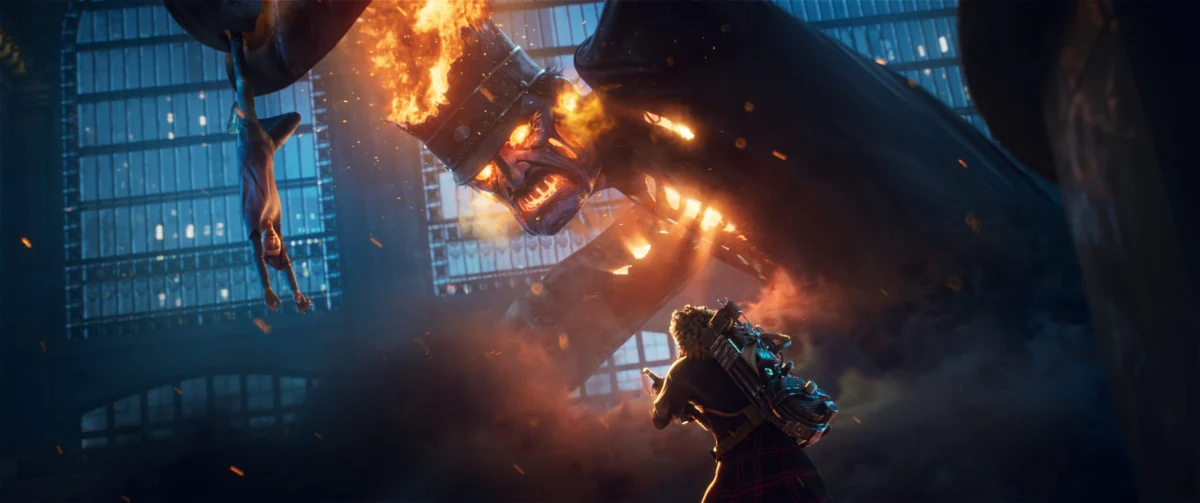
Despite embracing the creative freedoms of CG animation, Hibon emphasizes that Night Shift‘s visual language is rooted more in live-action cinema than traditional cartoons. "There’s definitely a film language," he notes, citing influences from horror photography, lighting, and camera work prevalent in the era. The goal, Kalan adds, is "a show set in the ’90s, but made now so while we want to reflect that time it will still feel very modern." This fusion aims to deliver a visually sophisticated and tonally consistent experience with the broader Ghostbusters cinematic universe.
Broader Impact and Implications: A New Era for Ghostbusters
Whether Ghostbusters: Night Shift ultimately achieves the same canonical and cultural impact as The Clone Wars remains to be seen. Its success will largely hinge on whether audiences embrace its new characters and narratives with the same fervor that Star Wars fans demonstrated for animated originals like Ahsoka Tano or Captain Rex, who seamlessly transitioned into live-action. However, the intent behind this venture extends beyond merely extending the franchise’s timeline. It represents a deliberate handing of the torch to a new generation of storytellers, empowering them to expand the universe in unforeseen ways.
Jason Reitman articulates this deeply personal commitment: "I feel very protective of Ghostbusters, for all the obvious reasons." Yet, he finds profound excitement in this evolution: "The really exciting part of this process for me has been to pass the torch and see two storytellers [Ben Hibon and Elliott Kalan] take Ghostbusters to places that I had never even imagined. Elliott’s understanding of the language of Ghostbusters—when he writes, he sounds like Aykroyd—and Ben’s ability to create a Ghostbusters universe that audiences have literally never seen before, ghosts they’ve never imagined before, equipment they’ve never seen before, and a version of New York that has never had Ghostbusters in it."
For longtime fans, Reitman promises "discoveries rather than nostalgia," signaling a commitment to innovation within established lore. He also positions the series as an ideal entry point for newcomers: "And for anyone who’s never watched any of Ghostbusters, I can’t imagine a better entrance to the franchise." Gil Kenan echoes this sentiment, assuring audiences of the series’ accessibility and integrative design: "The connective tissue is there. Whether you started with ’84, whether you started with Afterlife, or whether this is your first time watching something for Ghostbusters. You’re gonna have a great time watching the show."
This strategic animated expansion, therefore, is not just about filling a narrative gap; it’s about future-proofing the Ghostbusters franchise. By leveraging the flexibility of animation to explore new characters, expand mythology, and revisit a distinct historical setting, Ghostbusters: Night Shift aims to solidify the brand’s canonical coherence and ensure its enduring relevance for both dedicated fans and a new generation of paranormal enthusiasts, much as its Star Wars predecessor did. The stage is set for a new chapter in the saga of busting ghosts, offering a blend of classic tone and modern storytelling that could redefine the franchise for years to come.