

Supreme Court Justice Sonia Sotomayor accepted concert tickets valued at $4,333 from Rimas Entertainment, the record label co-founded by Bad Bunny’s manager, Noah Assad, during a private trip to Puerto Rico in August 2025. The gift, detailed in Sotomayor’s annual financial disclosure, has drawn attention to the ongoing discussions surrounding judicial ethics, transparency, and the acceptance of gifts by members of the nation’s highest court. While the disclosure confirms compliance with existing federal regulations, the nature and value of the gift underscore persistent calls for greater clarity and stricter guidelines governing the conduct of Supreme Court justices.
The Disclosure and Its Immediate Context
The revelation emerged from Justice Sotomayor’s annual financial disclosure report, a document mandated by federal law to promote transparency among high-ranking government officials. The report, covering the calendar year 2025 and released in early 2026, itemized the $4,333 worth of concert tickets provided by Rimas Entertainment. The tickets were reportedly for Justice Sotomayor and her guests while she was undertaking a private visit to Puerto Rico, her ancestral homeland, in August 2025.
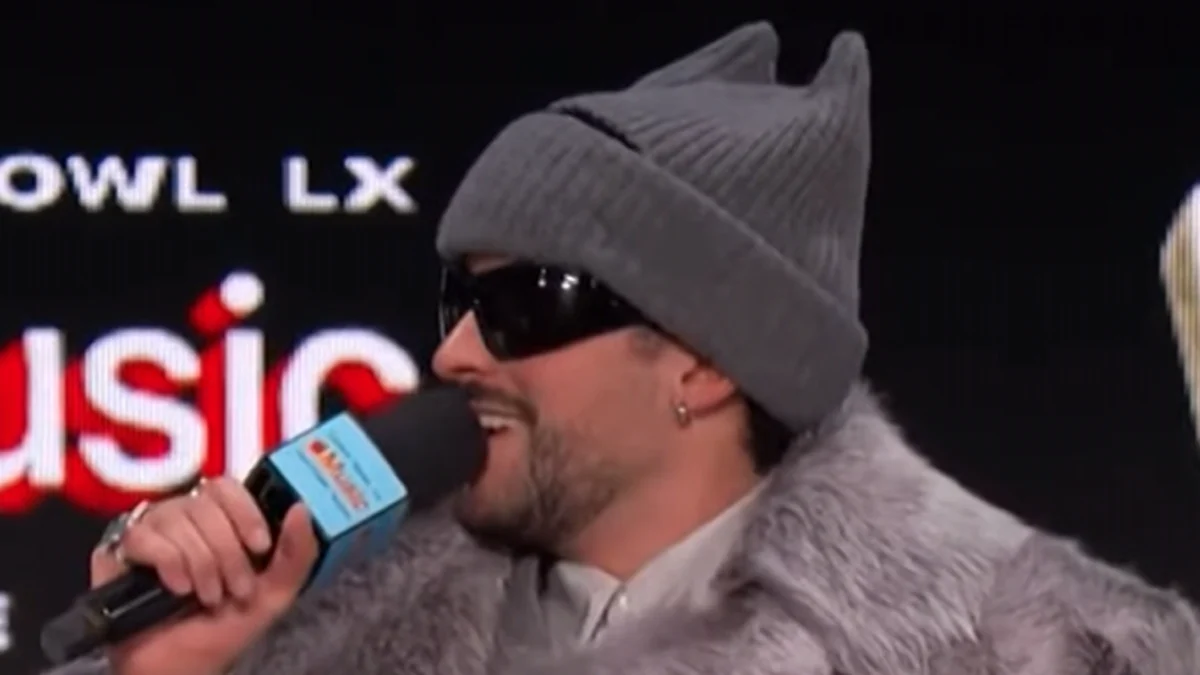
Rimas Entertainment, a dominant force in the Latin music industry, is well-known for launching the global career of Benito Antonio Martínez Ocasio, famously known as Bad Bunny. Noah Assad, Bad Bunny’s manager, co-founded the label, which boasts a roster of influential artists beyond the reggaeton superstar. While the disclosure did not explicitly name Bad Bunny as the performer for the concert attended by Sotomayor, it noted that Bad Bunny himself held a series of performances in Puerto Rico during August 2025, making his concert a plausible, though unconfirmed, event. The specifics of which Rimas artist performed are not detailed in the public record, leaving room for speculation given the label’s extensive talent pool.
The timing of the gift coincided with a period of heightened scrutiny over the ethical conduct of Supreme Court justices, particularly concerning undisclosed gifts, luxury travel, and financial dealings. Justice Sotomayor’s transparent reporting of the tickets, however, aligns with federal regulations that permit justices to accept certain gifts, provided they are properly disclosed and do not originate from parties with direct business before the Supreme Court.
Judicial Ethics and the Disclosure Framework
The acceptance of gifts by federal judges, including Supreme Court justices, is primarily governed by the Ethics in Government Act of 1978 and subsequent regulations promulgated by the Judicial Conference of the United States. These rules aim to prevent conflicts of interest and maintain public confidence in the judiciary. Under these guidelines, justices are generally prohibited from accepting gifts from individuals or entities that have business before the court. However, exceptions exist for gifts from personal friends, relatives, or those where the donor has no direct interest in matters before the court.
The key provision that Sotomayor’s acceptance appears to fall under is the requirement for disclosure. Any gift exceeding a certain monetary threshold (which fluctuates with inflation but was well below $4,333 at the time) must be reported in the justice’s annual financial disclosure statement. This system is designed to provide transparency, allowing the public and watchdog organizations to assess potential conflicts of interest, even if the gift itself is deemed permissible.
For a gift to be permissible, the donor must typically demonstrate no specific, direct business or legal interest that would come before the Supreme Court. In the case of Rimas Entertainment, a music record label, it is highly unlikely they would have direct litigation or regulatory issues pending before the Supreme Court. This distance from direct court business is often cited by ethics officials as a crucial factor in determining the permissibility of such gifts. However, critics argue that the appearance of impropriety, regardless of direct legal standing, can erode public trust.
Chronology of Events and Public Reaction
- August 2025: Justice Sonia Sotomayor undertakes a private trip to Puerto Rico. During this trip, she and her guests receive concert tickets valued at $4,333 from Rimas Entertainment. It is during this month that Bad Bunny also performs in Puerto Rico.
- Early 2026 (Approx. Q1/Q2): Justice Sotomayor’s annual financial disclosure report for the calendar year 2025 is submitted and subsequently released to the public. This report includes the itemized gift from Rimas Entertainment.
- June 30, 2026: News of the disclosure breaks, drawing public and media attention to the gift.
Upon the public release of the disclosure, reactions have been varied. Legal ethics experts generally acknowledge that Justice Sotomayor appears to have complied with the letter of the law by disclosing the gift. However, judicial watchdog groups and transparency advocates have voiced concerns about the optics of Supreme Court justices accepting gifts of significant value, even if legally permissible.
An ethics expert, speaking anonymously to a major news outlet, noted, "Justice Sotomayor’s disclosure fulfills the legal requirement for transparency. The question isn’t necessarily about legality here, but about the broader implications for public perception of judicial independence. The dollar amount, while not astronomical, is certainly not insignificant for a discretionary gift."
Rimas Entertainment and Bad Bunny: A Cultural Phenomenon
Rimas Entertainment, founded by Noah Assad and Jonathan Miranda, emerged in the mid-2010s and quickly established itself as a powerhouse in the Latin music scene. Its meteoric rise is largely attributed to its early signing and development of Bad Bunny, who has since transcended genre boundaries to become one of the most streamed artists globally. Bad Bunny’s music often incorporates elements of reggaeton, Latin trap, and alternative rock, and his lyrics frequently address social issues, identity, and Puerto Rican pride. His concerts are massive cultural events, particularly in Puerto Rico, where he holds iconic status.
Noah Assad, as Bad Bunny’s manager and co-founder of Rimas, plays a pivotal role in the label’s operations and its artists’ careers. The decision to gift tickets to Justice Sotomayor could be interpreted as a cultural gesture, potentially recognizing her stature as the first Hispanic Supreme Court Justice and her strong ties to Puerto Rico. For Rimas Entertainment, such a gesture, if purely social, would align with the label’s broader cultural influence, rather than any direct legal or business motive.
From Rimas Entertainment’s perspective, a representative, who preferred not to be quoted directly given the sensitivity, might emphasize that the tickets were offered as a cultural courtesy, with no expectation of any professional favor or influence. This perspective would align with the "no business before the court" stipulation, asserting that the label’s activities are entirely outside the Supreme Court’s direct purview.
Justice Sotomayor’s Connection to Puerto Rico
Justice Sonia Sotomayor holds deep personal and cultural ties to Puerto Rico. Born in the Bronx, New York, to parents who migrated from Puerto Rico, she has often spoken about her heritage and its profound influence on her life and judicial philosophy. Her visits to the island are often seen as significant, symbolizing her connection to her roots and the broader Puerto Rican community.
In the context of her visit to Puerto Rico, accepting tickets to a concert featuring a prominent Latin artist, especially one associated with the island’s vibrant music scene, could be viewed through a cultural lens. For many, Bad Bunny and other Rimas artists represent a powerful voice of contemporary Puerto Rican culture and identity. The gift, therefore, might be seen as an acknowledgment of her heritage and status within that cultural framework, rather than a purely transactional exchange.
However, the high value of the tickets ($4,333) inevitably raises questions, regardless of cultural intent. Even a gesture rooted in cultural appreciation is subject to the ethical scrutiny applied to all gifts to federal judges.
Broader Implications and the Debate Over Supreme Court Ethics
The disclosure of Justice Sotomayor’s concert tickets adds another data point to the ongoing, intense public debate regarding the ethical standards and transparency of the U.S. Supreme Court. In recent years, the court has faced unprecedented scrutiny over various ethical issues, including undisclosed luxury travel, real estate dealings, and financial relationships involving justices and their families.
Critics argue that the existing framework, largely self-enforced by the justices and guided by the Judicial Conference’s rules, is insufficient for the nation’s highest court. They point to the absence of a binding, enforceable code of ethics specifically for the Supreme Court, unlike other federal judges who are subject to a more explicit code. The current system relies heavily on individual justices’ interpretations of vague rules and their commitment to voluntary disclosure.
Advocacy groups like Fix the Court and Citizens for Responsibility and Ethics in Washington (CREW) have consistently called for stricter ethical guidelines, including clearer definitions of what constitutes a prohibited gift, more robust disclosure requirements, and an independent body to investigate potential ethical breaches. They contend that even technically permissible gifts can create an appearance of impropriety that erodes public confidence in the court’s impartiality and independence.
Conversely, defenders of the current system argue that justices are highly ethical individuals capable of discerning appropriate conduct and managing potential conflicts. They emphasize that the disclosure system, as demonstrated by Justice Sotomayor’s report, is working as intended, providing the public with the necessary information to judge for themselves. They also caution against overly restrictive rules that might discourage justices from maintaining normal social relationships or participating in cultural events.
The incident with Justice Sotomayor’s concert tickets, while seemingly minor in comparison to some other high-profile ethical controversies, serves as a reminder of the constant tension between maintaining judicial independence, ensuring transparency, and managing public perception. Each disclosure, regardless of its compliance with existing rules, contributes to the broader conversation about the standards to which Supreme Court justices should be held and the mechanisms required to uphold the integrity of the judiciary.
As the Supreme Court continues to navigate a politically charged environment and face increasing public skepticism, incidents like this reinforce the urgency for a comprehensive and widely accepted approach to judicial ethics. Whether this will lead to a new, binding code of conduct or merely a re-evaluation of existing guidelines remains a central question for legal scholars, policymakers, and the American public.