


The Walt Disney Company reported fiscal second-quarter earnings on Wednesday that exceeded Wall Street’s expectations, fueled by sustained momentum in its direct-to-consumer streaming business and robust performance within its global theme park and cruise ship divisions. Following the release of the report, Disney’s stock surged by approximately 7% in extended trading, reflecting investor confidence in the company’s strategic pivot under its newly appointed Chief Executive Officer, Josh D’Amaro. The results represent a pivotal moment for the entertainment giant as it navigates a complex transition from traditional linear television to a digital-first future, all while managing macroeconomic headwinds and a significant change in its top-tier leadership.
Overall revenue for the fiscal second quarter, which ended March 28, rose to $25.17 billion, a 7% increase compared to the $23.5 billion reported in the same period a year ago. While net income for the quarter stood at $2.47 billion, or $1.27 per share—a decrease from $3.4 billion, or $1.81 per share, in the prior-year period—the decline was largely attributed to one-time costs associated with restructuring and the integration of new assets. On an adjusted basis, accounting for items such as ESPN’s recent acquisition of the NFL Network and other media assets, Disney reported earnings per share (EPS) of $1.57. This figure comfortably cleared the bar set by analysts, who had been looking for signs of stability following a period of institutional upheaval.
A New Era of Leadership: The D’Amaro Transition
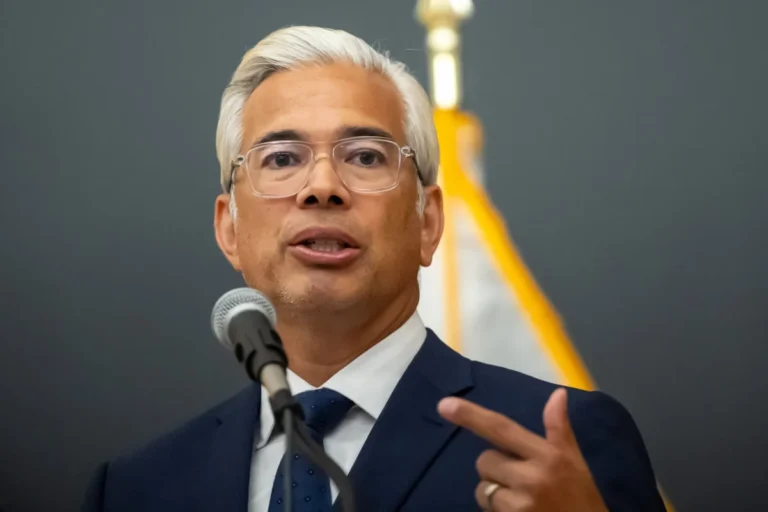
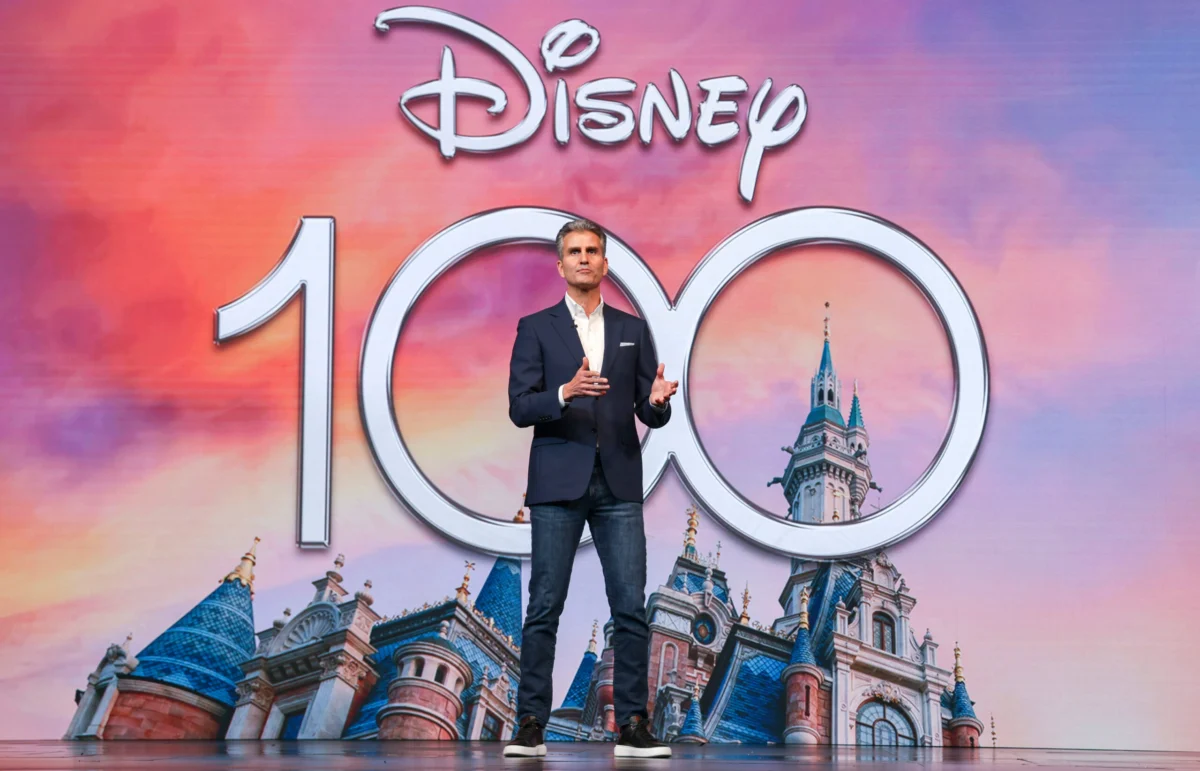
The quarterly report marks the first full financial disclosure since Josh D’Amaro assumed the role of CEO in March 2026. D’Amaro, who previously oversaw Disney’s massive Experiences segment, took the reins from Bob Iger, whose two non-consecutive terms as CEO spanned two decades and defined the modern era of the company. D’Amaro’s tenure has begun during a period of significant internal recalibration; just weeks into his leadership, the company initiated a round of strategic layoffs aimed at streamlining operations and reducing the overhead associated with its legacy television businesses.
In addition to internal restructuring, D’Amaro has had to navigate external pressures, including political scrutiny surrounding the company’s media content and public feuds involving late-night host Jimmy Kimmel. During Wednesday’s earnings call, D’Amaro focused on a forward-looking strategy that prioritizes the monetization of Disney’s core intellectual property (IP) through advanced technology. He emphasized that the company’s future growth would be predicated on "storytelling innovation," specifically by integrating augmented reality and enhanced digital interfaces into both the streaming experience and physical park visits.
Experiences Segment: Resilience Amid Macroeconomic Pressure
Disney’s Experiences segment, a massive portfolio that includes domestic and international theme parks, the Disney Cruise Line, and consumer products, remains the company’s primary engine of cash flow. The unit reported nearly $9.5 billion in revenue for the quarter, representing a 7% year-over-year increase. Global guest attendance grew by 2%, driven largely by strong performance at international sites such as Shanghai Disney Resort and Hong Kong Disneyland.
However, the domestic picture was more nuanced. Visitation at Disney’s U.S.-based parks declined by 1% compared to the previous year. Company officials noted that international visitation to domestic parks remained "soft," a lingering trend from the prior quarter. Despite this, guest spending per capita at domestic locations increased, helping to offset the slight dip in attendance.
The financial community has expressed concern regarding the impact of macroeconomic volatility on consumer discretionary spending. Factors such as the surge in oil prices—following geopolitical tensions in late February involving U.S.-Israel military actions in Iran—have historically led to decreased travel. However, Disney Chief Financial Officer Hugh Johnston told CNBC that the company has yet to see a meaningful pullback. Johnston stated that while the company is "mindful of the macro uncertainty," demand for the second half of the fiscal year remains "quite strong." He noted that the company has various "levers" to pull, such as dynamic pricing and promotional offers, to mitigate any potential future decline in consumer activity.
Entertainment and the Streaming Pivot
Disney’s Entertainment segment, which encompasses traditional television networks, direct-to-consumer (DTC) streaming services, and theatrical film releases, saw revenue climb 10% to $11.72 billion. A significant portion of this growth was attributed to a 14% rise in subscription and affiliate fees, totaling $7.8 billion. This increase reflects the impact of recent price hikes across Disney+, Hulu, and ESPN+, as well as a 5% jump in advertising revenue driven by higher impressions on streaming platforms.
The streaming business, once a significant source of quarterly losses, has moved closer to consistent profitability. While Disney has stopped reporting specific quarterly subscriber counts—a move mirrored by competitors like Netflix—the company highlighted increased engagement metrics. D’Amaro noted that content enhancements and product features, such as the integration of Hulu content into the Disney+ app, have successfully reduced churn and increased the average time spent on the platform.
Theatrical performance also provided a tailwind for the segment. Recent box-office successes, including Avatar: Fire and Ash and Zootopia 2, contributed significantly to the bottom line, reaffirming the value of Disney’s franchise-heavy theatrical strategy. The company also benefited from the closure of the Fubo deal, which added a 4% boost to entertainment revenue during the period.
Sports and the Evolution of ESPN
The Sports segment, dominated by the ESPN brand, reported revenue of $4.61 billion, a 2% increase. This growth was primarily fueled by higher subscription fees and the strategic acquisition of NFL Media assets, including the NFL Network. However, the segment also faced increased operating costs due to the rising price of sports broadcasting rights and contract rate hikes.
A major highlight for the quarter was the performance of ESPN’s direct-to-consumer streaming app, which launched in August 2025. Disney reported that revenue from digital subscribers successfully offset the continuing revenue declines in the traditional linear TV ecosystem. This transition is critical as Disney prepares for a future where ESPN may eventually be offered entirely as a standalone digital service.
CFO Hugh Johnston also addressed the NFL’s recent moves to renegotiate media rights deals ahead of schedule. Reports indicate the NFL is looking to eliminate an opt-out clause for the 2029-30 season in exchange for higher annual payments. Johnston remarked that while Disney has not yet entered formal early renewal talks, the company remains "disciplined" and focused on driving shareholder value. "We expect to be in business with the league for years to come," Johnston said, signaling Disney’s intent to remain the dominant player in sports broadcasting.
Financial Guidance and Shareholder Returns
In a move that further buoyed investor sentiment, Disney provided an optimistic outlook for the remainder of the fiscal year. The company is targeting full-year adjusted earnings growth of approximately 12% for fiscal 2026. Furthermore, Disney announced it would increase its share repurchase program to at least $8 billion for the fiscal year, up from the previously projected $7 billion.
For the upcoming third quarter, Disney expects total segment operating income to reach roughly $5.3 billion. Looking even further ahead, the company issued preliminary guidance for fiscal 2027, anticipating double-digit growth in adjusted earnings as its streaming business matures and its multi-billion-dollar investments in park expansions begin to yield returns.
Analysis: Navigating the "Post-Iger" Landscape
The fiscal second-quarter results suggest that Disney is successfully weathering the transition of its "changing of the guard." By exceeding revenue expectations and raising its buyback targets, the company has sent a clear signal to Wall Street that the D’Amaro era will prioritize financial discipline and the aggressive scaling of digital assets.
However, challenges remain. The decline in domestic park attendance, however slight, suggests that the "revenge travel" surge of the post-pandemic era may be cooling. Furthermore, the reliance on price hikes to drive streaming revenue has a ceiling; eventually, Disney will need to rely more heavily on ad-tier growth and international expansion to maintain its trajectory.
The geopolitical landscape also remains a wildcard. If energy prices continue to fluctuate due to Middle Eastern instability, the cost of operating theme parks and cruise lines will rise, potentially squeezing margins. Nevertheless, with a robust slate of upcoming theatrical releases and a stabilizing streaming division, Disney appears better positioned to handle these pressures than it was two years ago.
Chronology of Key Events Leading to Q2 Results
- August 2025: ESPN launches its comprehensive direct-to-consumer streaming app, marking a shift away from cable exclusivity.
- September 2025: Disney implements significant price increases for Disney+ and Hulu ad-free tiers.
- February 2026: Geopolitical tensions lead to a sharp rise in global oil prices, sparking concerns over consumer travel budgets.
- March 2026: Josh D’Amaro officially succeeds Bob Iger as CEO; Disney reports a 1% decline in domestic park visitation for the quarter ending March 28.
- April 2026: Disney conducts a strategic round of layoffs to optimize the Entertainment and Sports divisions.
- May 2026: Disney reports Q2 revenue of $25.17 billion and increases its share repurchase target to $8 billion.
As Disney moves into the second half of the fiscal year, the focus will remain on D’Amaro’s ability to integrate technology into the guest experience and the continued profitability of the streaming segment. With the backing of a strong balance sheet and a clear mandate for growth, the company appears to have found its footing in a rapidly evolving media environment.