

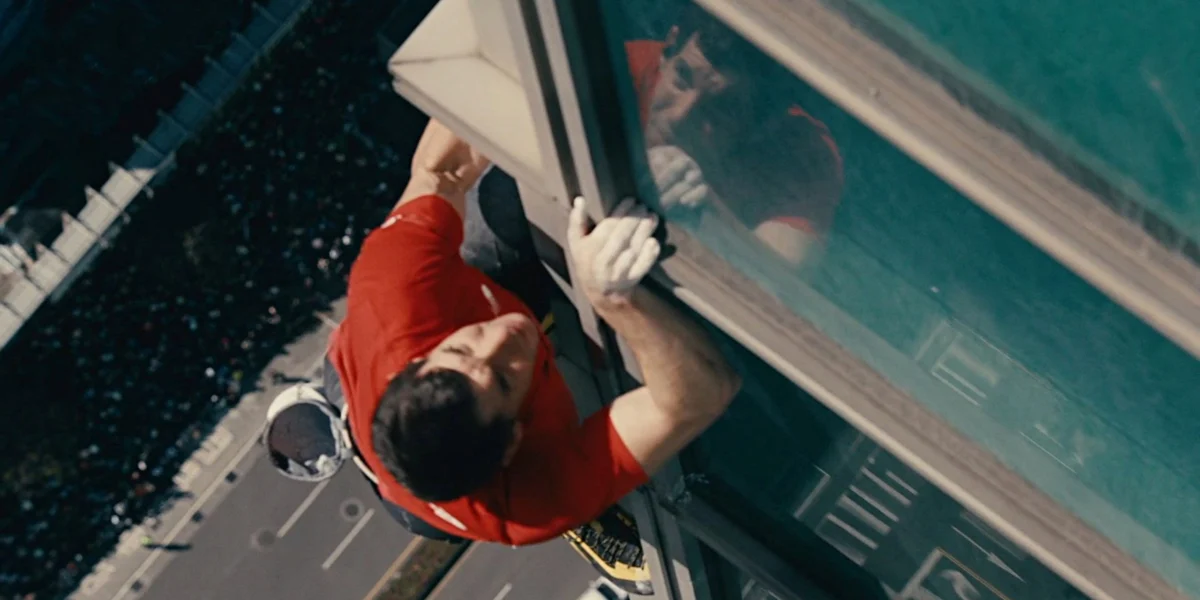
The groundbreaking Netflix special "Skyscraper Live" captured the world’s attention on January 25th, 2026, as renowned American climber Alex Honnold, famous for his audacious free solo of El Capitan in "Free Solo," undertook another monumental feat: scaling the iconic Taipei 101 skyscraper in Taiwan without any ropes or safety equipment. This live broadcast event, hosted by esteemed sports broadcaster Elle Duncan, alongside a distinguished panel including professional wrestler Seth Rollins, fellow climber Emily Harrington, climbing commentator Pete Woods, and popular YouTuber Mark Rober, has been hailed as one of the most significant free solo climbs of an urban structure ever attempted. Honnold graciously shared insights into his preparation and experience for this unparalleled challenge, with an interview available for viewing and listening. The special is currently a strong contender for this year’s Emmy Awards and is accessible for streaming on Netflix.
The Dawn of a New Era in Urban Alpinism
The ascent of Taipei 101 by Alex Honnold was not merely a display of extreme athleticism; it represented a significant milestone in the evolution of free solo climbing, pushing the boundaries of what is considered possible within an urban environment. The sheer scale of Taipei 101, standing at 508 meters (1,667 feet) and comprising 101 floors, presented a unique set of challenges distinct from natural rock formations. Unlike the granite walls of Yosemite, the skyscraper’s facade offered a different texture, an unfamiliar grip, and the ever-present complexities of urban infrastructure. The live broadcast format amplified the inherent risks, placing Honnold’s life and the success of the endeavor under intense global scrutiny in real-time.
Precedent and Preparation: Building on a Legacy of Risk
Honnold’s previous achievement in "Free Solo," where he climbed El Capitan’s Freerider route without ropes, set a precedent for his approach to high-stakes, solo ascents. This experience undoubtedly informed his strategy for "Skyscraper Live." However, the transition from a natural cliff face to a man-made structure necessitated a meticulous and specialized preparation.
Pre-Ascent Reconnaissance and Training:
Months prior to the January 25th event, Honnold and his team would have conducted extensive reconnaissance of Taipei 101. This likely involved detailed architectural surveys, identifying potential handholds and footholds on the building’s exterior, and understanding the structural integrity of different sections. Specialized training sessions would have been crucial, focusing on grip strength, endurance, and mental fortitude specifically adapted to the urban climbing environment. This would have included practicing on simulated skyscraper facades or sections of the actual building under controlled conditions.
Technological Integration:
The live broadcast element introduced a layer of complexity. The integration of cameras, communication systems, and broadcasting equipment, all while maintaining the integrity of the climb, would have required sophisticated logistical planning. Ensuring the safety and operational efficiency of the broadcast crew, who were also positioned on the building and surrounding areas, would have been paramount.
The Chronology of the Ascent: A Tense Broadcast
The live broadcast commenced on January 25th, 2026, with anticipation reaching a fever pitch. The initial moments would have focused on Honnold’s final preparations at the base of the skyscraper, followed by his departure from the ground level.
The Ascent Begins:
As Honnold began his climb, the broadcast would have shifted to real-time footage, offering viewers an intimate perspective of his progress. Expert commentary from climbing professionals like Pete Woods would have provided crucial insights into the techniques being employed, the difficulty of specific sections, and the physiological and psychological demands on the climber.

Mid-Ascent Challenges:
The Taipei 101 features a distinctive spiraling design, with setbacks and varying facade materials. Honnold would have encountered sections requiring precise footwork, dynamic movements, and the ability to adapt to subtle changes in grip and texture. The weather conditions in Taipei, a subtropical city, could also have presented challenges, with potential for wind, humidity, or even unexpected rain, all of which significantly increase the peril of a free solo ascent.
The Final Push and Summit:
The final stages of the climb, as Honnold neared the summit, would have been the most suspenseful. The immense height and the culmination of hours of intense physical and mental exertion would have tested his resolve to its absolute limit. The successful topping out of the skyscraper would have been met with widespread relief and elation, both from the live audience and the broadcast team.
The "Skyscraper Live" Broadcast Team: A Multifaceted Panel
The choice of hosts and commentators for "Skyscraper Live" was strategic, aiming to engage a diverse audience and provide varied perspectives on Honnold’s extraordinary feat.
- Elle Duncan (Sports Broadcaster): As the primary host, Duncan would have provided a steady, professional presence, guiding the narrative of the broadcast and interviewing key figures. Her experience in sports broadcasting would have ensured clear and engaging communication of the event’s progression.
- Seth Rollins (Professional Wrestler): Rollins’ inclusion brings a unique angle, drawing parallels between the physical and mental fortitude required in professional wrestling and extreme sports. His presence would have appealed to a broader entertainment audience, highlighting the spectacle and human drama of the ascent.
- Emily Harrington (Professional Climber): As a accomplished climber herself, Harrington would have offered expert commentary on the technical aspects of Honnold’s climb, providing valuable insights into his technique, the difficulty of the moves, and the psychological pressures involved.
- Pete Woods (Climbing Broadcaster): With deep knowledge of the climbing world, Woods would have served as the technical expert, breaking down the climb’s intricacies for both seasoned climbers and casual viewers.
- Mark Rober (YouTuber): Rober, known for his engineering and science-based content, would have likely provided a perspective on the physics and engineering aspects of the climb, potentially discussing the structural challenges of Taipei 101 or the technology used in the broadcast.
Data and Dimensions: The Scale of the Challenge
Taipei 101 is a structure of immense proportions, making Honnold’s ascent a remarkable feat of human endurance and skill.
- Height: 508 meters (1,667 feet)
- Number of Floors: 101
- Construction: Completed in 2004, it was the world’s tallest building until the Burj Khalifa surpassed it in 2010.
- Architectural Features: The building’s design is inspired by bamboo stalks and pagodas, featuring a unique segmented structure that tapers towards the top. This architectural complexity would have presented unique climbing challenges, with varying surfaces and potential for wind deflection.
- Free Solo Climbing Statistics: While precise statistics for urban free solo climbs are scarce, Honnold’s ascent of Taipei 101 dwarfs many previous urban climbing attempts in terms of height and exposure. Natural free solo climbs of comparable or greater heights typically involve rock faces, not engineered structures with distinct architectural elements.
Reactions and Recognition: Acknowledging the Achievement
The successful completion of "Skyscraper Live" and Alex Honnold’s climb would have undoubtedly garnered significant reactions from various stakeholders.
- Official Statements from Taipei 101 Management: It can be inferred that the management of Taipei 101 would have been involved in the planning and authorization of such an event. Their statements would likely emphasize the safety protocols, the collaboration with Honnold’s team, and the unique opportunity to showcase the iconic landmark. They might also highlight the city’s spirit of innovation and adventure.
- Praise from the Climbing Community: Fellow climbers and organizations within the climbing world would have lauded Honnold’s courage, skill, and pioneering spirit. This event would be seen as a significant advancement for the sport, particularly in urban environments.
- Media and Public Acclaim: The broadcast’s live nature and the inherent drama of a free solo climb would have ensured widespread media coverage and public fascination. The event’s success would be measured not only by viewership numbers but also by the global conversation it generated around extreme sports, human potential, and the intersection of technology and adventure.
- Emmy Award Consideration: The article explicitly mentions the special’s consideration for Emmy Awards, indicating a recognition of its production quality, storytelling, and impact beyond the immediate athletic achievement. This suggests a high level of cinematic and narrative excellence, likely stemming from the meticulous filming and editing of the ascent and the compelling interviews.
Broader Implications and Analysis: The Future of Extreme Urban Endeavors
"Skyscraper Live" and Alex Honnold’s ascent of Taipei 101 carry significant implications for the future of extreme sports and urban exploration.
- Redefining Urban Adventure: The event pushes the boundaries of what is considered an "urban adventure." It demonstrates that the concrete jungle, like natural landscapes, can serve as a stage for incredible feats of athleticism and courage. This could inspire future attempts on other iconic skyscrapers or large urban structures, albeit with stringent safety and authorization protocols.
- The Spectacle of Live Events: The success of a live broadcast of such a high-stakes event underscores the enduring appeal of live, unscripted moments in entertainment. It highlights the power of technology to bring extraordinary experiences directly to a global audience, creating shared moments of suspense and triumph.
- Ethical Considerations and Public Safety: While celebrating the achievement, it is crucial to acknowledge the inherent risks involved and the ethical considerations surrounding such stunts. Future endeavors of this magnitude would necessitate rigorous debate and stringent regulatory frameworks to ensure public safety and responsible promotion of extreme sports.
- The Psychological Frontier: Honnold’s ability to perform under such immense pressure, with the world watching and the stakes being life or death, provides invaluable insights into the human psyche. The interview mentioned in the article is likely to delve into the mental preparation, focus, and emotional regulation required for such an undertaking, offering lessons applicable beyond the realm of climbing.
- The Intersection of Sport, Technology, and Media: "Skyscraper Live" exemplifies the powerful synergy between elite athletic performance, advanced broadcasting technology, and compelling storytelling. It showcases how these elements can combine to create captivating and impactful cultural moments.
In conclusion, Alex Honnold’s free solo ascent of Taipei 101 for Netflix’s "Skyscraper Live" is more than just a daring feat; it is a landmark event that expands the perceived limits of human capability within urban environments, a testament to meticulous preparation, and a compelling example of the power of live broadcast storytelling. The special’s potential Emmy recognition further solidifies its status as a significant contribution to both the sports and entertainment landscape.
The Next Best Picture Podcast, proud to be a part of the Evergreen Podcasts Network, invites listeners to engage further with this topic. You can subscribe to their podcast anywhere you listen to podcasts, or listen via the embedded player. Reviews on Apple Podcasts are welcomed, and financial support through Patreon is encouraged for exclusive content.