

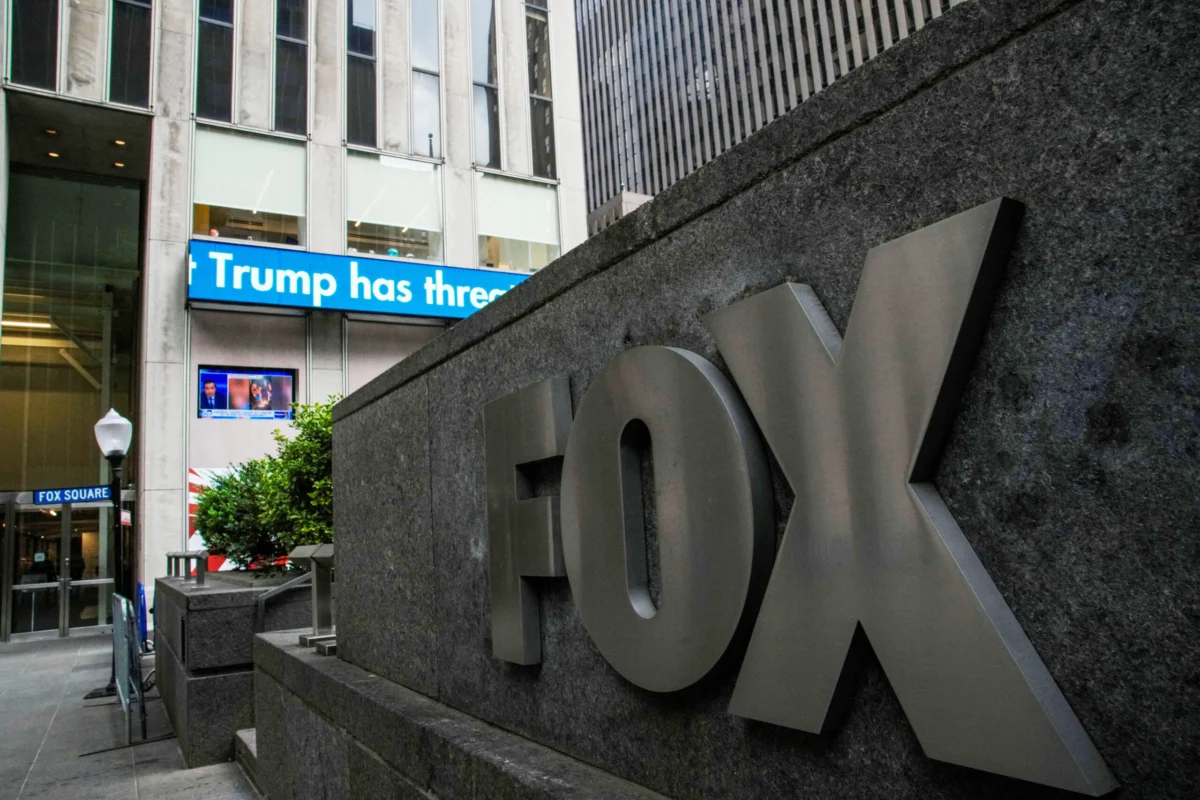
In a move that signals a massive shift in the media and technology sectors, Fox Corporation has entered into a definitive agreement to acquire Roku Inc. for approximately $22 billion. The deal, announced Monday, represents a significant escalation in the ongoing consolidation of the media industry as traditional broadcasters seek to fortify their positions against the dual threats of cord-cutting and the dominance of Big Tech streaming platforms. Under the terms of the agreement, Fox will acquire all outstanding shares of Roku for $160 per share in a transaction consisting of both cash and stock.
To finance the cash portion of the acquisition, Fox has secured a $12 billion loan and plans to utilize existing cash reserves. The announcement immediately reverberated through Wall Street, where Fox’s stock saw a sharp decline of 17% in morning trading on Monday. Investors appeared cautious regarding the high premium and the significant debt load Fox is assuming to complete the transaction. Conversely, Roku’s stock remained relatively stable, dipping only 2% on Monday after a massive 20% surge on the preceding Friday, fueled by leaked reports of the impending sale.
This acquisition marks Fox’s most aggressive expansion since its 2019 decision to divest the majority of its entertainment assets to The Walt Disney Company in a $71 billion deal. While that previous move was seen as a retreat into a "leaner" focus on live news and sports, the purchase of Roku suggests a new strategy: controlling the very gateway through which millions of Americans access digital content.
The Strategic Union of Content and Carriage
The merger brings together two distinct but increasingly overlapping pillars of the modern media ecosystem. Fox Corporation, led by CEO Lachlan Murdoch, currently operates a portfolio centered on the Fox News Channel, the Fox broadcast network—which currently holds the rights to the FIFA World Cup—and the Fox Sports brand. It also owns Tubi, a leading Free Ad-supported Streaming TV (FAST) service acquired in 2020 for $440 million.
Roku, meanwhile, is the preeminent streaming platform in the United States. Beyond its ubiquitous hardware—the streaming sticks and players found in millions of living rooms—Roku operates its own operating system (Roku OS) and The Roku Channel, a FAST service that competes directly with Tubi. By acquiring Roku, Fox is not merely buying a content library; it is buying a massive distribution network and a sophisticated advertising technology stack.
Lachlan Murdoch characterized the acquisition as a "defining moment" for Fox, noting that the company is "driving the business aggressively into the 21st century." He emphasized that the addition of Roku allows Fox to expand its digital footprint and subscription capabilities while diversifying its revenue streams away from traditional cable carriage fees.
Financial Terms and Structural Integration
The deal is structured as a cash-and-stock transaction that values Roku at a significant premium over its recent trading averages. Following the close of the transaction, which is expected in the first half of 2027 pending regulatory approval and shareholder votes, existing Fox shareholders will own approximately 73% of the combined entity, while Roku shareholders will hold the remaining 27%.
The $12 billion loan secured by Fox highlights the company’s willingness to leverage its balance sheet to secure a dominant position in the streaming hardware market. Fox executives have projected approximately $400 million in annual run-rate cost synergies, primarily through the integration of back-end technologies, the consolidation of corporate overhead, and the optimization of advertising sales teams.
During a call with investors, Roku CEO Anthony Wood defended the deal, stating that the companies were entering the agreement from a "position of strength." Wood highlighted Roku’s massive scale, noting that the platform reaches more than 100 million streaming households globally and facilitates 145 billion hours of engagement annually. This level of data and reach is expected to provide Fox with unparalleled insights into viewer behavior, which can be leveraged to sell high-value targeted advertising.
The FAST Ecosystem: Tubi and The Roku Channel
One of the most scrutinized aspects of the deal is the future of Tubi and The Roku Channel. Both services have seen explosive growth as consumers seek free alternatives to increasingly expensive subscription services like Netflix and Disney+. Despite their similarities, Murdoch stated on Monday that Fox intends to keep the two platforms separate for the foreseeable future.
Analysis of the two platforms reveals that their audiences have only about a one-third overlap, suggesting that they serve different demographic niches. Tubi has built a reputation for a deep library of on-demand cult classics, niche genres, and reality TV, while The Roku Channel has leaned more heavily into linear "live" digital channels and original programming.

By maintaining both brands, Fox can capture a wider net of the "cord-needy" and "cord-cutter" populations. "They are incredibly complementary services," Murdoch told investors, noting that Tubi’s viewership is largely on-demand, whereas The Roku Channel effectively mimics the traditional channel-surfing experience of pay TV.
Historical Context: From the Disney Deal to Roku
To understand the magnitude of this acquisition, one must look back to the 2019 "New Fox" era. After selling its film and television studios (20th Century Fox) to Disney, the Murdoch family’s media empire was intentionally narrowed. The goal was to focus on assets that were "un-streamable" in the traditional sense—live events like the NFL, MLB, and political news that required real-time viewing.
However, as the cable bundle continued to erode faster than many analysts predicted, Fox realized that being a "content-only" player in news and sports was risky if they didn’t own the platform where those viewers were migrating. The 2020 acquisition of Tubi was the first step in this digital pivot. The launch of "Fox One," the company’s direct-to-consumer application, followed in 2024.
The Roku acquisition represents the final piece of this puzzle. It moves Fox from being a tenant on other people’s platforms to being the landlord of the platform itself. In the U.S. market, Roku’s operating system is the most popular gateway to streaming, often pre-installed on smart TVs from manufacturers like TCL and Hisense.
Advertising and Data: The Real Engine of the Deal
In the modern media landscape, the value of a company is increasingly tied to its first-party data. By owning Roku, Fox gains access to granular data on what 100 million households are watching, how long they stay engaged, and what ads they interact with—even when those households are watching rival services like Hulu or Max on their Roku devices.
Advertising has taken on a renewed importance as the "streaming wars" shift from a focus on pure subscriber growth to a focus on profitability. Live sports and news remain the most lucrative environments for advertisers, and Fox’s ability to bundle its premium sports inventory (such as the FIFA World Cup and NFL Sunday games) with Roku’s targeted digital ad-insertion technology is a powerful value proposition.
Anthony Wood noted that Roku’s platform business, which consists of advertising and subscriptions, is already a market leader. Integrating this with Fox’s existing ad sales infrastructure could create a dominant force in the "upfront" and "scatter" ad markets, allowing Fox to offer advertisers a seamless bridge between linear television and digital streaming.
Industry Implications and Regulatory Hurdles
The Fox-Roku deal is likely to face intense scrutiny from federal regulators, including the Department of Justice (DOJ) and the Federal Trade Commission (FTC). Regulators are increasingly wary of "vertical integration," where a company owns both the content and the platform used to access that content.
Critics may argue that Fox could give its own channels (like Fox News or Tubi) preferential placement on the Roku home screen or use its control over the Roku OS to disadvantage competitors. However, Fox is expected to argue that the market for streaming gateways is highly competitive, pointing to rivals like Amazon’s Fire TV, Google TV, and Apple TV.
The timeline for the deal’s closure—early 2027—reflects the anticipated length of this regulatory review. If approved, the merger could trigger a new wave of consolidation, as other content giants like NBCUniversal (Comcast) or Warner Bros. Discovery look to acquire their own hardware or platform gateways to remain competitive.
Conclusion: A New Chapter for Fox
The $22 billion acquisition of Roku is a high-stakes gamble that the future of media lies in the control of the interface. For Lachlan Murdoch, it is a move to ensure that Fox remains a central player in the American household, regardless of whether the "cord" is cut or not.
While the 17% drop in Fox’s stock price suggests that the market is skeptical of the price tag and the debt, the long-term vision is clear: Fox is no longer just a news and sports company. It is becoming a technology and distribution powerhouse, aiming to own the screen, the stream, and the data that powers them both. As the industry moves toward 2027, all eyes will be on how these two very different corporate cultures—the traditional broadcast grit of Fox and the Silicon Valley innovation of Roku—integrate to form a new kind of media titan.