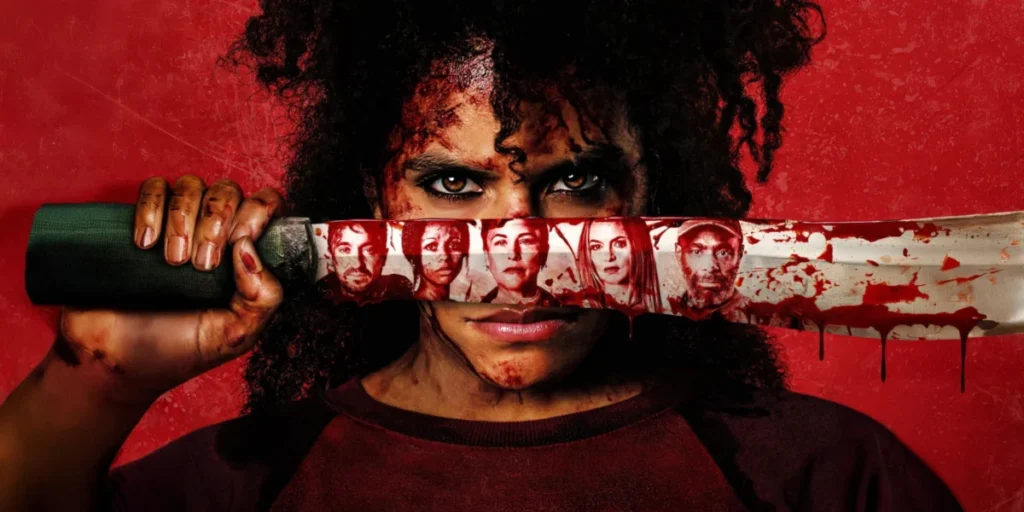
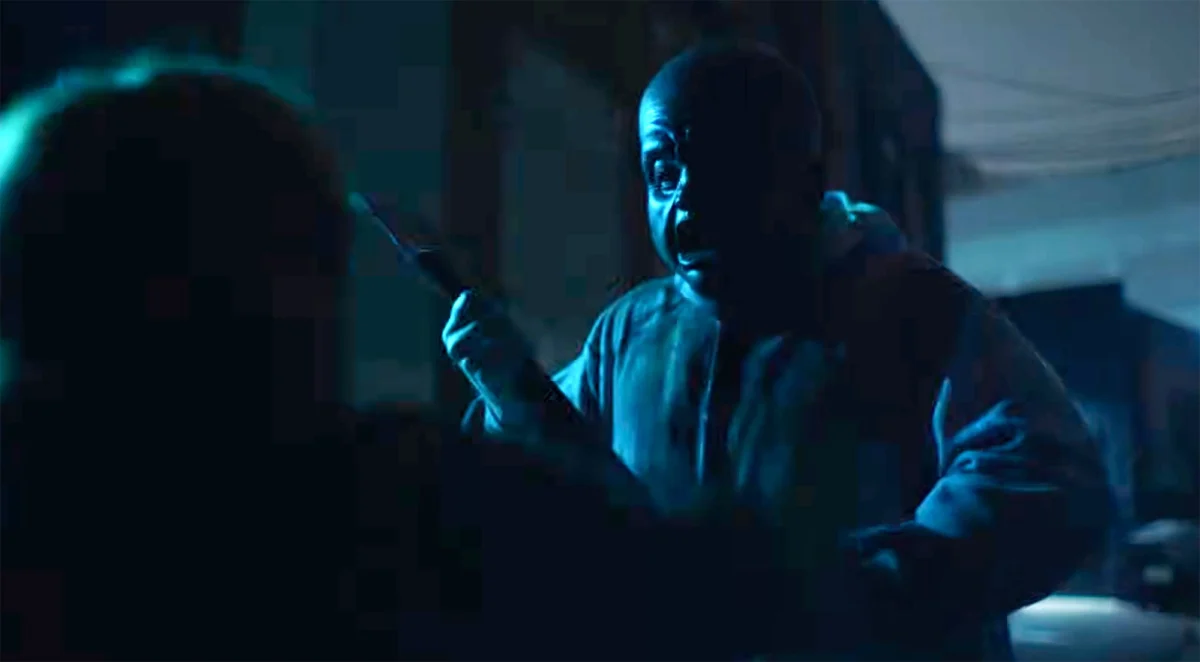
Brainstorm Media has officially launched the unsettling teaser trailer for Big Baby, a new meta horror comedy from the distinctive cinematic voice known as Spider One, director of films such as Little Bites, Allegoria, and Bury the Bride. This highly anticipated feature, which generated considerable buzz during its premiere at the 2025 Screamfest Horror Film Festival, is now slated for a direct-to-VOD release on August 7th, 2026. The film’s premise immediately captivates: it delves into the terrifying concept of a horror screenwriter’s nightmares—specifically, those involving a maniacal killer in a baby mask known as "Big Baby"—transcending the boundaries of fiction to invade his reality. This unique narrative positions Big Baby as a compelling entry into the burgeoning subgenre of meta-horror, blending psychological dread with a darkly comedic sensibility.
The teaser itself, distributed by Brainstorm Media, offers a glimpse into the film’s chaotic and self-aware world, hinting at the profound psychological torment experienced by its protagonist. The line, "Wait — you can write whatever you want, and I can live!" "Sorry…" perfectly encapsulates the film’s meta-textual nature, where the act of creation directly impacts the fabric of reality for its characters. This initial preview has already garnered significant attention within the horror community, setting the stage for its summer digital debut. The film stars Brandon Scott as the tormented writer, alongside Krsy Fox and Adam Marcinowski, bringing to life a narrative that promises to be both chilling and thought-provoking. Spider One not only directed but also penned the screenplay for Big Baby, cementing his vision for this bonkers exploration of the horror genre’s self-referential potential.
The Labyrinth of Meta-Horror: Deconstructing "Big Baby’s" Premise
At its core, Big Baby taps into the rich vein of meta-horror, a subgenre characterized by its self-awareness and often satirical commentary on horror tropes, clichés, and conventions. Unlike traditional horror films that strive to immerse the audience purely in their fictional world, meta-horror breaks the fourth wall, often acknowledging its own existence as a film or exploring the very nature of storytelling within its narrative. Landmark examples include Wes Craven’s Scream (1996), which famously deconstructed slasher film rules, and The Cabin in the Woods (2012), which cleverly inverted countless genre expectations to reveal a larger, more sinister puppet master. More recently, New Nightmare (1994), also by Craven, saw Freddy Krueger invade the real world of the actors and filmmakers who brought him to life, a concept that resonates strongly with Big Baby‘s central conceit.
Big Baby appears to take this self-referential approach to a deeply personal and psychological level. The protagonist, a horror screenwriter named Adam Lewis, finds his creative process turning against him as the monstrous entity from his nightmares—the "Big Baby"—begins to manifest in his waking life. This blurs the lines between imagination, reality, and the very act of writing, suggesting a terrifying consequence for those who conjure frightful tales. The premise allows for a nuanced exploration of a creator’s responsibility, the power of narrative, and the potential for one’s inner demons to externalize. The "maniac killer in a baby mask" provides a disturbing visual motif, combining innocence with malevolence, a classic horror juxtaposition designed to unsettle. This type of psychological horror, where the threat originates from within the mind and externalizes, often proves more disturbing than purely external threats, forcing audiences to confront the fragility of sanity.

From Festival Buzz to Digital Premiere: "Big Baby’s" Journey to Audiences
The journey of Big Baby from conception to its impending digital release highlights the evolving landscape of independent cinema, particularly within the horror genre. The film made its initial splash at the 2025 Screamfest Horror Film Festival, a prestigious event often dubbed "The Sundance of Horror." Held annually in Los Angeles, Screamfest has a long-standing reputation for discovering and showcasing new talent and groundbreaking genre films since its inception in 2001. A premiere at Screamfest provides invaluable exposure, critical feedback, and industry networking opportunities for independent filmmakers. For Big Baby, its inclusion and subsequent positive reception at such a festival undoubtedly contributed to Brainstorm Media’s decision to acquire its distribution rights.
Following its festival run, which may have included a few other select screenings, Big Baby is now set for a direct-to-VOD release on August 7th, 2026. This distribution strategy is increasingly common and often highly effective for independent horror films. In an era dominated by digital platforms, VOD (Video On Demand) allows films to reach a broad, genre-savvy audience without the significant marketing and logistical costs associated with a wide theatrical release. For distributors like Brainstorm Media, a VOD launch means quicker market penetration and direct access to consumers eager for new horror content. This approach capitalizes on the immediate buzz generated by festival premieres and online teasers, transforming initial interest into immediate viewership. The strategic timing in early August also positions Big Baby as a late-summer horror offering, appealing to audiences looking for a fright before the Halloween season officially kicks into gear.
Spider One’s Evolving Filmography: A Musician’s Foray into Fear
The driving force behind Big Baby is Michael David Cummings, better known by his stage name Spider One. Before embarking on his filmmaking career, Spider One achieved prominence as the frontman for the industrial metal band Powerman 5000, known for hits like "When Worlds Collide." This transition from music to film is not entirely unique, particularly within the horror genre, where his elder brother, Rob Zombie, has forged a successful career as a director with films like House of 1000 Corpses and The Devil’s Rejects. While both brothers share a penchant for the macabre and a distinct aesthetic, Spider One has been steadily carving out his own niche, often leaning into more psychological and meta-narrative territory than his sibling’s grindhouse-inspired brutality.
Spider One’s directorial filmography, though relatively recent, showcases a consistent exploration of dread, identity, and the darker corners of the human psyche. His debut feature, Allegoria (2022), which was distributed by Shudder, explored the concept of artists becoming possessed by their creations, a thematic precursor to Big Baby‘s premise. This was followed by Bury the Bride (2023), a more straightforward thriller, and Little Bites (2024), another horror feature that also saw a direct-to-VOD release. Each of these films has allowed Spider One to refine his directorial voice, demonstrating a clear progression in his storytelling and visual style. His work often features a strong emphasis on atmosphere and unsettling concepts over jump scares, aligning with a growing trend in contemporary horror that favors psychological tension. The move from music to film has allowed Spider One to channel his creative energies into a new medium, proving that artistic versatility can lead to compelling and unique cinematic visions within the horror genre. His consistent output and willingness to experiment with different horror subgenres mark him as a director to watch.
The Independent Horror Landscape: Opportunities and Challenges in Digital Distribution
The independent horror film market is a vibrant and competitive space, continually pushing the boundaries of the genre with innovative concepts and limited budgets. Films like Big Baby thrive in this ecosystem, leveraging unique premises and strong directorial visions to stand out. However, the path to audience engagement is fraught with challenges, primarily concerning distribution and marketing. This is where the direct-to-VOD model, embraced by Brainstorm Media for Big Baby, proves to be a double-edged sword.

On one hand, digital distribution offers unparalleled accessibility. Platforms like Amazon Prime Video, Apple TV, Google Play, and various cable VOD services allow films to reach millions of potential viewers globally, circumventing the need for expensive theatrical runs and extensive print and advertising campaigns. This democratizes film consumption, allowing niche genres like meta-horror to find their dedicated audience. For a film like Big Baby, which may not appeal to the broadest mainstream audience but deeply resonates with horror aficionados, VOD is an ideal conduit. It allows for targeted marketing to specific online communities and horror fan bases, maximizing reach without overspending.
On the other hand, the sheer volume of content available on VOD platforms means that independent films can easily get lost in the shuffle. The challenge lies in cutting through the noise to capture audience attention. Success often hinges on effective digital marketing, strong word-of-mouth generated from festival screenings, and compelling promotional materials like the initial teaser trailer and poster. Brainstorm Media’s decision to release the "crazy teaser trailer" well in advance of the August 7th VOD date is a strategic move to build anticipation and ensure Big Baby is on the radar of horror enthusiasts. The evocative poster art, featuring the unsettling "Big Baby" mask, is also crucial for visual recall and brand recognition in a crowded digital marketplace. The ability to generate significant online discussion and critical reviews prior to release is paramount for VOD success, transforming initial festival acclaim into sustained audience interest.
Cast and Crew: The Creative Minds Behind "Big Baby"
The success of any independent film hinges not only on its director’s vision but also on the talent brought together both in front of and behind the camera. Big Baby features a core cast that includes Brandon Scott, Krsy Fox, and Adam Marcinowski, who are tasked with navigating the film’s complex meta-narrative and delivering its blend of horror and dark comedy. Brandon Scott, playing the central role of Adam Lewis, the horror screenwriter whose nightmares come to life, bears the weight of the film’s psychological intensity. His performance will be crucial in making the blurring lines between reality and fiction believable and terrifying for the audience.
Krsy Fox not only stars in Big Baby but also served as a producer on the film. Her involvement is noteworthy, as she is also connected to the highly anticipated Terrifier 3, suggesting her deep roots and growing influence within the contemporary horror scene. Her dual role as actress and producer indicates a significant creative investment in Big Baby, likely contributing to its unique tone and execution. Adam Marcinowski rounds out the primary cast, with his role expected to contribute to the unsettling atmosphere and the unfolding mystery surrounding the "Big Baby" killer.
Behind the scenes, the collaboration between Spider One as writer-director and Krsy Fox as producer underscores a collaborative spirit often found in independent filmmaking, where creative partnerships drive projects forward. The production team is responsible for translating the "bonkers" script into a visually compelling and psychologically impactful film, often with resourcefulness and ingenuity given the constraints of independent budgets. Their collective effort is what brings a concept as audacious as Big Baby to fruition, from initial script to festival screening and ultimately, to digital distribution.

Anticipation and Implications: What "Big Baby" Means for the Genre
The imminent release of Big Baby carries several implications for the horror genre and the trajectory of its creators. For Spider One, this film marks another significant step in establishing his identity as a distinct voice in horror cinema. His consistent output and willingness to experiment with the meta-narrative indicate a director who is not content with rehashing tropes but actively seeks to explore the genre’s intellectual and psychological depths. Should Big Baby resonate strongly with audiences and critics, it will further solidify his position alongside his brother, Rob Zombie, as a significant horror auteur, albeit with a different stylistic approach.
For Brainstorm Media, the VOD release of Big Baby is a calculated move to capitalize on the burgeoning market for independent, genre-bending horror. Their strategy underscores the increasing viability of direct-to-digital distribution for films that excel in originality and niche appeal. A successful run for Big Baby on VOD platforms could further validate this model, encouraging more independent studios to follow suit and invest in unique, festival-proven horror content.
The film also contributes to the ongoing evolution of the meta-horror subgenre. By focusing on the direct, terrifying consequences of a writer’s creative process, Big Baby adds a fresh layer to the self-aware narrative, moving beyond mere deconstruction to explore the very existential dread of creation. This thematic depth, combined with what the teaser promises to be a "haunting, bloody horror film packed with psychological dread," suggests that Big Baby could be more than just a genre exercise; it could be a significant commentary on the power of storytelling itself.
The question posed in the original announcement, "Who wants to watch?", serves as a direct invitation to the horror community. Given the positive reception at Screamfest, the compelling teaser, and Spider One’s growing reputation, anticipation for Big Baby is certainly building. Its August 7th, 2026, VOD debut will be a moment keenly watched by fans eager for original, boundary-pushing horror that dares to ask what happens when the monsters from our minds decide to walk among us.