
The critically acclaimed anime adaptation of Kamome Shirahama’s beloved manga, "Witch Hat Atelier," has captivated audiences worldwide since its premiere on April 6, 2026. Produced by BUG FILMS and helmed by director Ayumu Watanabe, the series has rapidly ascended to become a standout title of the season, lauded for its intricate world-building, compelling character development, and visually stunning animation. This fantastical narrative, which draws a profound connection between the art of drawing and the practice of magic, has not only garnered significant critical praise but has also achieved substantial commercial success, demonstrating the enduring appeal of Shirahama’s unique vision.
The genesis of "Witch Hat Atelier" lies in Kamome Shirahama’s personal artistic philosophy, where the act of drawing itself is perceived as a form of magic. This core concept has been meticulously translated into a richly imagined fantasy world where spells are not conjured through innate power but are meticulously crafted through the precise application of ink to form intricate runes, sigils, and glyphs. Shirahama, who had previously established herself as a respected illustrator, embarked on this manga series, which began its serialization in Kodansha’s "Morning Two" magazine in July 2016. As of April 2026, the manga has reached its 16th tankobon volume, a testament to its consistent popularity and the author’s prolific output.
A World Shaped by Magic and Secrecy
The narrative unfolds in the Zozah Peninsula, a land where magic is an art form, meticulously learned and practiced. Historically, the knowledge of magic was more accessible. However, a series of wars, natural disasters, and arcane catastrophes culminated in an event known as the "Day of the Pact." This pivotal moment led to the establishment of the Great Hall of Witches, an authoritative body that now strictly controls magical knowledge, permitting its practice only to those deemed authorized. The ordinary populace, referred to as the "unknowing," are kept in ignorance of this truth, with severe consequences, including memory erasure, for those who stumble upon forbidden magical lore.
The story centers on Coco, a young girl with an unyielding dream of becoming a witch, despite the societal belief that magical aptitude is solely an inherited trait. Her life takes a dramatic turn after encountering the enigmatic traveling witch, Qifrey. Through a clandestine observation of Qifrey performing a spell, Coco discovers that a mysterious book she acquired from a masked individual contains genuine magical instructions. In her eager attempt to wield this newfound knowledge, she inadvertently casts a spell that crystallizes her mother and their home. Qifrey, recognizing Coco’s potential and the dangerous implications of her uncontrolled magic, takes her on as an apprentice. This mentorship serves a dual purpose: to guide Coco in finding a way to reverse the spell on her mother and to investigate the clandestine activities of the Brimmed Caps, a faction of rogue witches who openly defy the Great Hall’s strictures.
The Atelier: A Crucible of Learning and Discovery
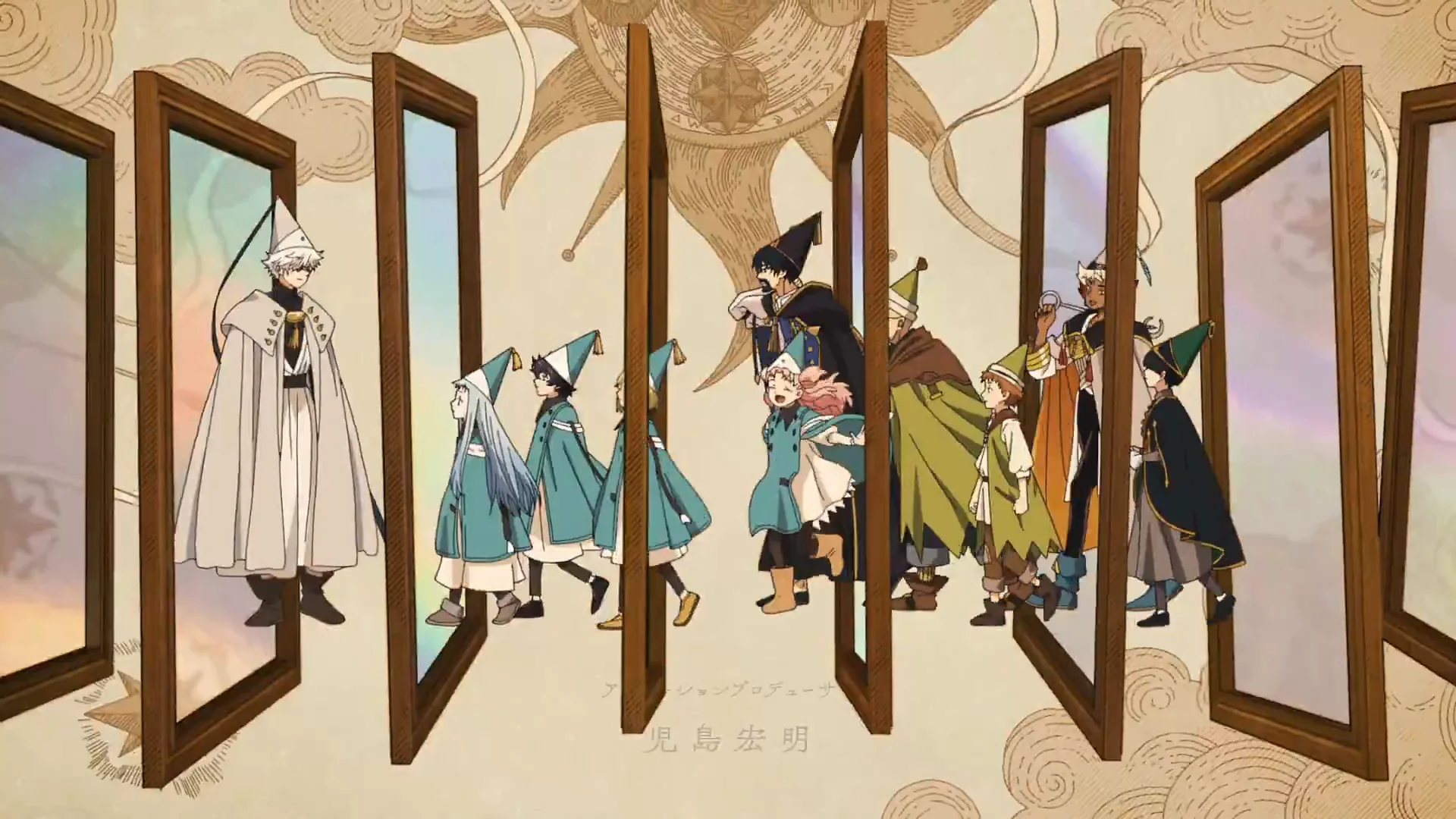
Within Qifrey’s atelier, Coco begins her rigorous training alongside fellow apprentices Agott, Tetia, and Richeh. Their studies are overseen by Olruggio, a trusted friend and associate of Qifrey. As Coco delves deeper into the arcane arts, her burgeoning abilities and connection to forbidden magic attract the attention of the Brimmed Caps, who see in her a potential catalyst for the broader dissemination of magic. This growing interest from the rogue witches adds a layer of escalating tension and intrigue to the unfolding events.
Critical Acclaim and Commercial Success
The "Witch Hat Atelier" franchise has achieved remarkable recognition in the literary and artistic spheres. By March 2026, the manga had surpassed an impressive 7.5 million copies in circulation globally, encompassing both physical and digital editions. Its critical acclaim is further underscored by multiple prestigious awards. The series garnered the highly coveted Harvey Award for Best Manga in both 2020 and 2025, and in 2020, it received the Eisner Award for Best U.S. Edition of International Material, Asia, solidifying its position as a significant international literary achievement.
The anime adaptation, by bringing the franchise to weekly international streaming audiences, has further amplified its reach and popularity. Complementing the main series, a spin-off manga titled "Witch Hat Atelier Kitchen" has also been serialized in "Morning Two" since November 2019, expanding the lore and offering a different facet of this magical world.
A Deeper Dive into Character and Narrative
While the anime features significant action sequences, its true strength lies in its intricate contextualization and character depth. Each character possesses a complex backstory that profoundly shapes their present motivations and actions. The narrative weaves together their varied circumstances in a sophisticated tapestry of storytelling. Coco’s trauma stemming from the accidental encasement of her mother and the broader themes of power abuse—whether exercised responsibly or irresponsibly—serve as a central axis for the plot, yet they are merely the starting point for a much larger exploration.
Agott, in particular, evolves from an initial perceived antagonist to Coco into a nuanced character grappling with her own internal struggles. Haunted by her past, she constantly strives for a greatness she doubts her ability to achieve. This internal conflict makes her one of the most compelling figures in the series, prompting reflection on the pressures of self-expectations and the difficulty of ceasing such relentless pursuit.
Qifrey himself is a captivating persona. He acts as a benevolent mentor to the young apprentices, demonstrating a fierce protectiveness that drives him to extreme measures. However, beneath this facade, he harbors secrets and a less benevolent side that hints at a complex past and hidden agendas. The gradual entanglement of the Brimmed Caps within the personal narratives of the characters injects further layers of intrigue and dramatic tension. The season finale, in particular, masterfully culminates both the narrative arcs and the action sequences, reaching an impressive zenith. The subtle development of romance towards the conclusion of the season, coupled with the constant threat posed by the "Magic Police" and the overarching effort to conceal the fact that magic is universally accessible, amplifies the suspense and cements the overall quality of the storytelling.
Visual Excellence and Artistic Vision
The animation produced by BUG FILMS is nothing short of exceptional, excelling in every aspect. The fluidity of character movements, the tangible impact of their actions on the environment, the dynamism of the battles, and the moments where the manga’s panels are brought to life on screen are all remarkably impressive. Kairi Unabara’s character design is of a remarkably high caliber, with each individual rendered with meticulous detail. The androgynous quality of some characters’ appearances is not merely an aesthetic choice but is thoughtfully integrated into the narrative. While Qifrey’s design may bear a superficial resemblance to Kakashi from "Naruto," he is ultimately a distinct and original creation. The overall artistic direction maintains a PG-13 rating, suggesting a deliberate focus on a younger demographic, at least from a visual and thematic standpoint.
Broader Implications and Future Prospects
With its succession of engaging story arcs and its ability to maintain audience interest throughout its 13-episode run, "Witch Hat Atelier" has firmly established itself as one of the premier anime releases of the season. The series’ sophisticated narrative, rich thematic exploration, and high production values suggest that it has the potential to carry forward and elevate the legacy of beloved fantasy anime franchises like "Naruto." Its success is a testament to the power of original storytelling and the effective translation of beloved source material into a new medium. The anticipation for future seasons and further explorations of its intricately crafted world remains exceptionally high among fans and critics alike. The series’ ability to balance the wonder of magic with grounded emotional truths positions it as a significant cultural touchstone in contemporary animation.