
The digital landscape of the early 21st century remains a challenging frontier for traditional cinema, characterized by a velocity of information that often outpaces the capacity for narrative synthesis. As search engines face increasing obsolescence due to the proliferation of sponsored content, search engine optimization (SEO), and generative artificial intelligence, the ability to reconstruct a singular historical moment from the perspective of the "average" internet user has become a complex archival task. Marcus Batto, a 31-year-old artist, programmer, and archivist, addresses this challenge in his debut feature film, which attempts to document June 25, 2009—the day of Michael Jackson’s death—exclusively through the lens of found digital footage.
Batto’s work functions as both a chronological record and a sociological study of a world on the cusp of a total digital transformation. By utilizing a vast array of YouTube uploads, vlogs, news broadcasts, and security camera footage, the film captures a specific era of internet "innocence" that has since been replaced by algorithmic curation and highly polished personal branding.
The Archival Methodology of Marcus Batto
Marcus Batto’s transition into feature filmmaking is the culmination of a career spent navigating the intersections of art and digital ethnography. Growing up during the formative years of YouTube—he was twelve when the seminal "Charlie Bit My Finger" video was uploaded—Batto developed an early fascination with the platform’s potential as a repository for human experience.
Before the production of his latest feature, Batto established himself through the Certain Moments To Remember series (2020–present). These shorter works, such as RANDOM WEBCAM DANCE @ DA IMAC STORE (2023), utilize found footage to highlight specific subcultures and shared social phenomena. In that piece, Batto compiled footage of individuals dancing in front of Apple Store webcams in 2011, set to a 1978 country ballad. The resulting work creates a "doubled nostalgia," contrasting the techno-optimism of the early iPad era with the eventual obsolescence of the media itself.
Batto’s approach is further refined in his 2024 short documentary, Honeycomb, which examines the 2020–2022 surge in catalytic converter thefts across the United States. By aggregating vlogs and security footage, Batto draws a parallel between the physical looters seeking precious metals like rhodium and the digital archivist seeking "untapped value" in the depths of the internet’s vast, unindexed video libraries. This philosophy of "salvaging" meaning from the discarded or the overlooked is the driving force behind the reconstruction of the events surrounding Michael Jackson’s death.
Chronology of a Global Digital Event: June 25, 2009
To understand the scope of Batto’s film, one must revisit the specific timeline of June 25, 2009, a day that tested the limits of the internet’s infrastructure. The news of Jackson’s cardiac arrest and subsequent passing acted as a "stress test" for a global network that was not yet fully optimized for instantaneous, high-volume traffic.
- 12:21 PM (PDT): A 911 call is placed from Michael Jackson’s rented mansion in Holmby Hills, Los Angeles.
- 1:14 PM (PDT): Jackson is transported to the Ronald Reagan UCLA Medical Center.
- 2:26 PM (PDT): Michael Jackson is officially pronounced dead at the age of 50.
- 2:44 PM (PDT): The celebrity news website TMZ breaks the story, reporting Jackson’s death before official confirmation from the hospital or family.
- 3:15 PM (PDT): Major news outlets, including the Los Angeles Times and CNN, confirm the report, leading to a massive surge in global web traffic.
The film captures the immediate aftermath of this timeline through the eyes of those experiencing it in real-time. Batto utilizes a visual device involving a rotating prism where twenty videos play simultaneously in a grid. This method reflects the "overwhelmed" state of the internet on that day. One side of the grid might show a religious ceremony in Spain, while another displays ultrasound footage or a group of refugees on a lifeboat, illustrating how the news of Jackson’s death permeated every corner of the globe, regardless of the local context.
Supporting Data: The Day the Internet Broke
The events of June 25, 2009, provide significant data regarding the impact of celebrity culture on digital infrastructure. According to contemporary reports from Google, the surge in searches for "Michael Jackson" was so sudden and immense that the company’s automated systems initially flagged the traffic as a distributed denial-of-service (DDoS) attack, assuming a botnet was targeting the search engine.
Twitter reported a doubling of its usual tweet-per-second rate, leading to frequent "Fail Whale" error screens as the platform struggled to handle the volume. Similarly, Wikipedia experienced a surge in edits and traffic that nearly crashed its servers, while AOL Instant Messenger (AIM) collapsed for approximately 40 minutes.
Batto’s film documents this technological strain not through server logs, but through the human reaction to it. The film features vlogs from teenagers and young adults huddled around desktop computers, refreshing browsers and reacting to the conflicting reports from bloggers like Perez Hilton. These clips serve as a primary source for understanding the "affective qualities" of the era—a time when the front-facing camera was a novelty and the "vlog" was a raw, unedited form of expression.
Comparative Analysis and Cultural Implications
In its attempt to synthesize a massive volume of disparate footage into a coherent narrative, Batto’s film has been compared to Ian Bell’s WTO/99 (2025), which chronicled the anti-globalization protests in Seattle. Both filmmakers faced the "curatorial crisis" of narrowing down hundreds of hours of footage—Batto noted that he had playlists containing over 800 videos and found it difficult to stop searching even after work-in-progress screenings.
Furthermore, critics have drawn parallels between Batto’s work and the historical "local films for local people" produced by Mitchell and Kenyon in the late 19th and early 20th centuries. Just as Mitchell and Kenyon captured the curious, soot-stained faces of children encountering a movie camera for the first time, Batto captures the "profound innocence" of the 2009 webcam user.
The film highlights a significant shift in digital behavior. In 2009, users were often indifferent to their appearance or "personal brand" on camera. The experimentation with technology was sincere rather than performative. This stands in stark contrast to the modern digital landscape, which Batto describes as "fleeting" and "impossible to hold." The film suggests that June 25, 2009, was perhaps the last time a single event could harness the world’s diffuse digital energy in one direction.
Official Responses and Legacy
The premiere of There’ll Likely Be Michael Jackson Vigils Throughout the Night was accompanied by an event that reinforced its themes of technological nostalgia. Attendees were given refurbished third-generation iPod Touches preloaded with the film and a curated playlist. The presence of a Michael Jackson impersonator at the screening—who reportedly fell asleep during the film—added a layer of surrealism to the proceedings, reflecting the "double memorial" nature of the project.
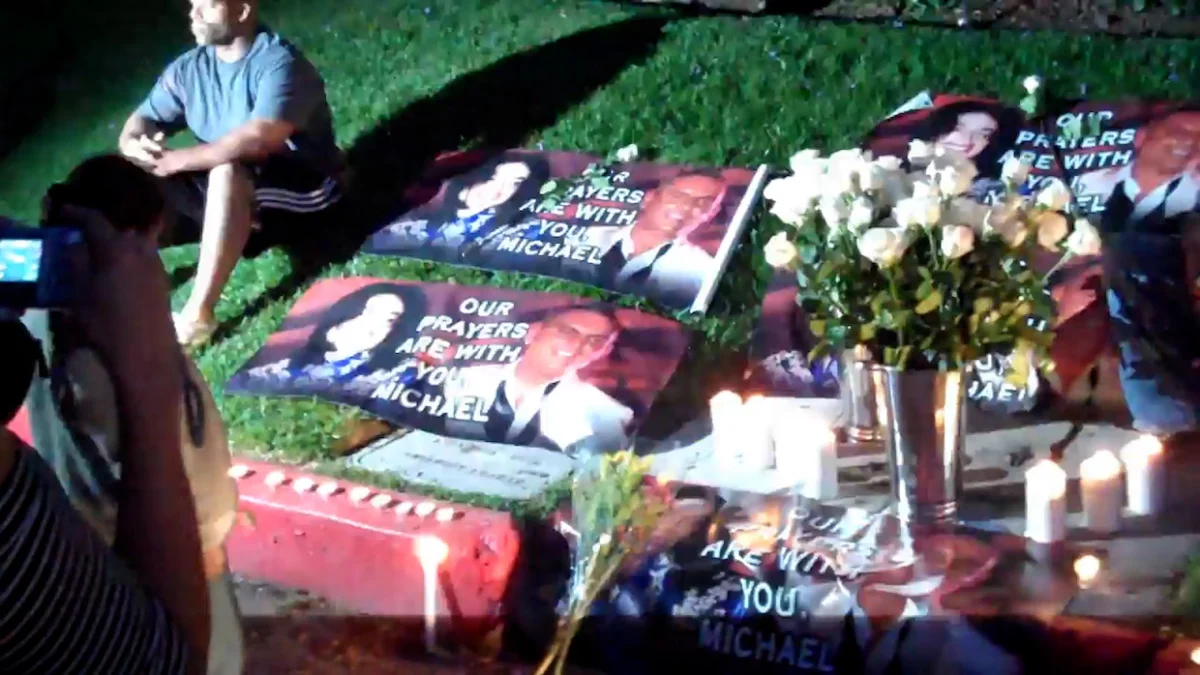
From a journalistic and historical perspective, the film serves as an essential archive of how news was consumed and processed before the total dominance of the smartphone. In 2009, the iPhone was only two years old, and the "app economy" was in its infancy. Most of the mourners captured in Batto’s film gathered at physical locations, such as the Hollywood Walk of Fame, after receiving the news on stationary computers.
The film also captures the "British Michael Jackson" incident, where mourners mistakenly gathered around the star of a British radio DJ also named Michael Jackson because the King of Pop’s star was covered by a red carpet for a movie premiere. This moment serves as a metaphor for the film itself: a search for meaning and a place to grieve within a chaotic, often confusing digital and physical environment.
Conclusion: The Acceleration of Audiovisual History
As Marcus Batto concludes his exploration of the 2009 internet, he posits that such a film would be nearly impossible to make for a contemporary event. The sheer volume of content produced today, combined with the ephemeral nature of "stories" and algorithmically curated feeds, prevents the formation of a singular, "discernible moment" in the same way the death of Michael Jackson did.
Batto’s work is ultimately an act of "digital salvage." By spanning the gap between 2009 and 2026, he highlights the rapid acceleration of audiovisual history. While the film expresses a certain mournfulness for a lost era of digital innocence, it also serves as a reminder of the latent value found in the archives of the internet—value that, like the precious metals in a catalytic converter, requires a dedicated archivist to extract and pan down into a pure, reflective form.