


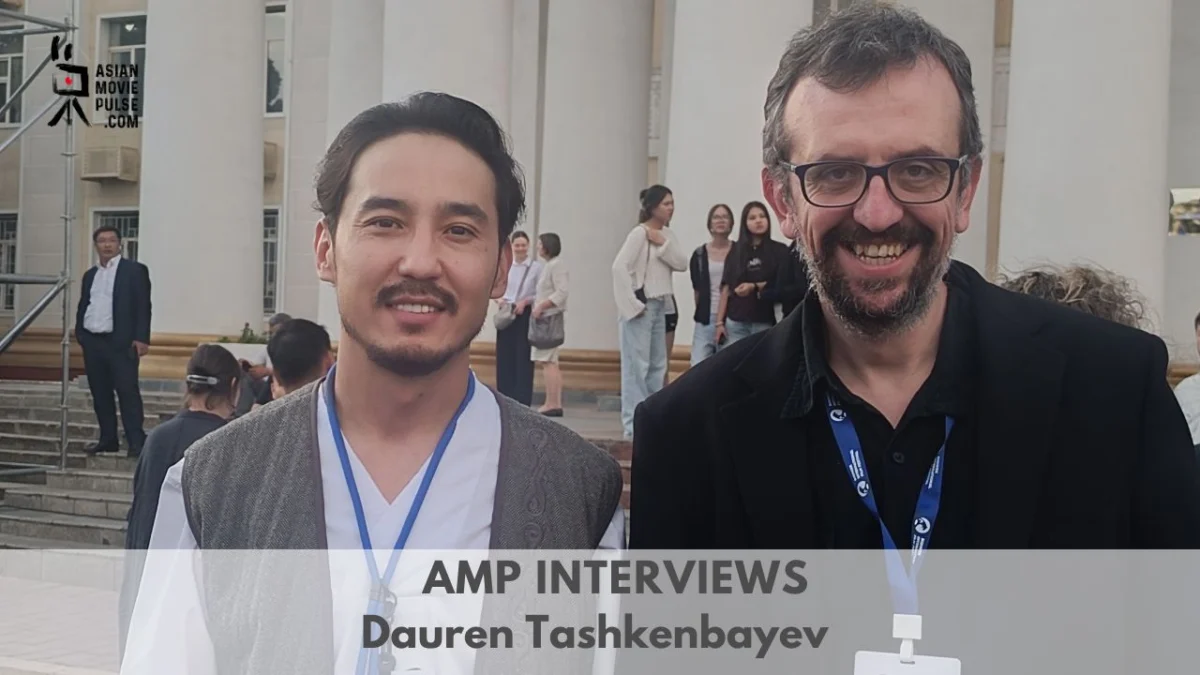
Kazakh actor Dauren Tashkenbaev, whose compelling performance as Eric in Nurzhamal Karamoldoeva’s feature film "Only Heaven Knows" marks his significant debut on the international cinematic stage, recently shared his insights on the film’s production, its thematic depth, and the burgeoning film industry in Kyrgyzstan. The film, which premiered to critical acclaim at the Bishkek Film Festival, delves into the precarious existence of Kyrgyz migrants in Chicago, centering on Eric’s struggle with crippling gambling debts that threaten to unravel his family’s stability. Tashkenbaev’s candid conversation with Asian Movie Pulse offered a unique window into the multifaceted challenges faced by individuals navigating foreign lands, the societal issues plaguing Central Asia, and the collaborative spirit that brought this poignant narrative to life.
A Transnational Production: Filming in the Heart of Chicago
The decision to film "Only Heaven Knows" in Chicago, a bustling metropolis and a significant hub for international communities, presented a unique set of opportunities and challenges for the production. Tashkenbaev described the experience as "incredible," highlighting the distinctive nature of the project: "I am Kazakh, working on a Kyrgyz film, and almost the entire crew was American. All of this made the project truly unique." This transnational approach not only enriched the film’s authenticity by grounding it in a tangible American urban environment but also fostered a cross-cultural dialogue during its creation.
The logistical intricacies of filming in a major international city like Chicago are considerable. Securing permits for street closures, coordinating with local authorities for safety and traffic management, and managing a diverse crew with varied professional backgrounds require meticulous planning. While the original article did not detail specific difficulties, the inherent complexities of such an undertaking suggest that overcoming bureaucratic hurdles, adapting to the rhythm of a foreign city, and ensuring the seamless integration of international cast and crew were likely significant aspects of the production. The presence of an American crew, for instance, might have necessitated adjustments in communication styles, working methodologies, and adherence to different industry standards. However, Tashkenbaev’s assertion that they "immediately found a common language" with the American team, including director Nurzhamal Karamoldoeva and co-star Malika Kanatova, underscores the unifying power of storytelling and a shared artistic vision.
Deconstructing Eric: A Character of Ambiguity and Empathy
At the core of "Only Heaven Knows" lies the character of Eric, a truck driver whose pursuit of a better life for his family is tragically derailed by a gambling addiction. Tashkenbaev eloquently articulated the complexity of his portrayal, stating, "Eric, like many immigrants, came in search of a better life in order to support his family. Although his intentions were good, the irresponsible decisions he makes are ultimately wrong." This nuanced description positions Eric not as a villain, but as a deeply human figure grappling with overwhelming pressures.
Tashkenbaev’s personal connection to the immigrant experience, as he was also an immigrant at the time of filming, allowed for a profound identification with his character. "As an immigrant myself at that time, I understood my character," he explained. This personal resonance is crucial for an actor’s ability to inhabit a role authentically. He further elaborated on the internal conflict he experienced: "As a person, I both sympathized with him and judged him at the same time. That is why he is such a complex and ambiguous character." This duality—the capacity for both understanding and condemnation—is often the hallmark of truly compelling characters, reflecting the often-contradictory nature of human behavior, particularly under duress.
The allure of such a role for an actor lies precisely in this inherent ambiguity. Tashkenbaev admitted, "When I read the script, I was already familiar with some episodes from the film. I was drawn to the character because of his ambiguity. As I mentioned before, I both judged and understood him. As an actor, it was interesting for me to explore a different side of myself." This desire to push artistic boundaries and explore unfamiliar emotional territories is a driving force for many performers.
Gambling Addiction: A Growing Concern in Central Asia
Beyond the personal narrative of Eric, "Only Heaven Knows" tackles the pervasive social issue of gambling addiction, a growing concern across Central Asia. Tashkenbaev recognized the timeliness and significance of this theme: "Also, given the growing social issue of gambling addiction in Central Asia, addressing this topic was important to me." His observation that "Unfortunately, this is a real issue in our countries, and it often leads to the destruction of families" underscores the urgent need for societal awareness and intervention.
The film’s inclusion in the Bishkek Film Festival, alongside other Central Asian titles that appear to critique contemporary male behavior, suggests a broader trend within the region’s cinema. Festivals like Bishkek serve as crucial platforms for filmmakers to address pressing social issues, sparking dialogue and potentially influencing public perception. The festival’s programming implicitly acknowledges that cinema can act as a mirror to society, reflecting its challenges and prompting introspection. Tashkenbaev echoed this sentiment, stating, "Cinema is a powerful tool that can influence people. I hope that by addressing this problem through cinema, it can somehow have an impact on people who are struggling with it."
While specific data on gambling addiction rates in Central Asia might be difficult to aggregate comprehensively due to varying reporting mechanisms across countries, anecdotal evidence and the thematic focus of recent films suggest a significant societal impact. The economic vulnerabilities and societal pressures often experienced in transitional economies can contribute to the appeal of gambling as a perceived escape or quick solution, often with devastating consequences. The film’s narrative thus resonates with a palpable reality for many families in the region.
A Collaborative Artistic Endeavor: Working with Karamoldoeva and Kanatova
The success of any film hinges on the collaborative synergy between its cast and crew. Tashkenbaev spoke highly of his experience working with director Nurzhamal Karamoldoeva and co-star Malika Kanatova. He described an immediate rapport with both, stating, "Even though we met on set, we immediately found a common language, and working together was easy with both Nurzhamal and Malika."
Tashkenbaev’s admiration for Karamoldoeva’s directorial prowess is evident. He recognized the immense effort involved in bringing the film to fruition, particularly given the challenges of post-production and working with actors who may have had limited prior film experience. "Watching Nurzhamal on set, I understood the enormous amount of work she is doing and what still lies ahead in post-production," he noted. He praised her ability to articulate her vision effectively: "Considering that some of the other actors had no prior film experience, she was able to clearly communicate her vision, and I believe she did it excellently." His hope for future collaborations with Karamoldoeva and his happiness at her receiving the "Best Director" award at the Bishkek Film Festival further highlight the positive working relationship.
Similarly, Tashkenbaev commended Malika Kanatova’s professional approach and performance. He emphasized the establishment of a "trusting relationship from the very beginning" and acknowledged the difficulty of her role, which she executed "brilliantly." This mutual respect and professional dedication are vital components in creating a cohesive and impactful cinematic work.
Memorable Moments: The Thrill and the Challenge of the Set
Every film shoot is punctuated by moments of both intense challenge and exhilarating creativity. For Tashkenbaev, the most demanding aspect of filming was the very first day, which, paradoxically, was his character’s final scene. He alluded to its spoiler-sensitive nature, stating, "Unfortunately, I can’t describe it in detail as it would be a spoiler." This suggests a scene of significant emotional or narrative weight, requiring him to immediately tap into the character’s arc and deliver a powerful performance from the outset.
In contrast, the most engaging scene for Tashkenbaev was one involving a police car. He described the atmosphere as charged and dynamic: "The street was closed, we were surrounded by police vehicles, and it was a very dynamic scene." Despite the late hour and his fatigue, the energy of the moment fueled his performance: "I was extremely tired that night, but the atmosphere gave me a lot of energy and enjoyment." Such scenes, often requiring intricate choreography and heightened tension, can be particularly rewarding for actors when executed successfully.
The original article also touched upon Tashkenbaev’s feelings regarding his character’s arc. While he expressed disappointment that Eric’s presence in the narrative concluded at a certain point, he ultimately respected the creative decisions: "Honestly, yes. But this was the script I knew from the beginning, so I respect the creators’ vision." This acceptance of the narrative’s structure, even when it means a reduced on-screen presence, demonstrates a mature understanding of storytelling and the collaborative nature of filmmaking.
The Ascendant Kyrgyz Film Industry and the Role of Festivals
Dauren Tashkenbaev’s perspective on the Kyrgyz film industry is one of optimism and admiration. He identifies Kyrgyzstan as a leader in cinematic development within Central Asia: "Kyrgyzstan is currently one of the fastest-developing countries in Central Asia in terms of the film industry, and there are many incredibly talented professionals here." This assessment is supported by the increasing international recognition of Kyrgyz cinema, with films frequently appearing in prestigious film festivals worldwide.
The Bishkek International Film Festival, as highlighted by Tashkenbaev, plays a pivotal role in this growth. The festival’s organization and the government’s apparent support for the sector are indicative of a burgeoning ecosystem that nurtures talent and facilitates cinematic exchange. "The level at which the festival was organized shows how much the government is supporting this field," he observed. Such festivals not only provide a platform for showcasing domestic productions but also foster international collaboration, introduce new talent to global audiences, and stimulate critical discourse around filmmaking. This governmental and institutional backing is crucial for the sustained development of any national film industry, providing vital infrastructure, funding opportunities, and promotional avenues.
Tashkenbaev’s closing remarks express a genuine sense of solidarity with Kyrgyzstan’s cinematic achievements: "I am happy for our neighboring brother nation and wish them continued growth and prosperity." This sentiment underscores the interconnectedness of artistic communities within the region and the shared aspirations for cultural advancement.
A New Chapter: Tashkenbaev’s Future Endeavors
When questioned about future projects, Tashkenbaev offered a glimpse into his personal and professional trajectory. Having recently returned to Kazakhstan from the United States, he described this transition as "a new chapter in my life." While specific details remain undisclosed, this statement suggests a period of re-evaluation and exploration, potentially leading to new creative ventures. The experiences gained from his international work, both in Chicago and potentially elsewhere in the U.S., are likely to inform his future artistic choices. The film industry, both in Kazakhstan and Central Asia, will undoubtedly be watching with interest to see where this new journey leads the talented actor.