The cinematic landscape of post-Bubble Japan, a period marked by economic upheaval and profound societal shifts, has been incisively explored by director Takashi Ishii through a potent blend of genre conventions and experimental narrative. While earlier works like "A Night in Nude" and "Alone in the Night" delved into the evolving nature of human relationships and the impact of property and ownership on these connections, it is the "Gonin" saga, particularly "Gonin 2," that adds a complex and compelling layer to his filmography. These films confront deeply ingrained gender roles and stereotypes, all while firmly rooted in the visceral world of the yakuza genre. "Gonin" initially illuminated how the nation’s economic downturn had deconstructed traditional notions of masculinity. Its sequel, "Gonin 2," serves not merely as a continuation but as a significant extension and reframing of these themes, offering a potential pathway out of the destructive cycles of ownership and objectification, and hinting at the possibility of genuine union and solidarity.
The Economic Fallout and Its Human Toll
The Japanese economic bubble, which inflated dramatically throughout the late 1980s, burst spectacularly in the early 1990s. This period, often referred to as the "Lost Decade," saw a sharp decline in asset prices, a banking crisis, and widespread corporate bankruptcies. The ripple effects were profound, impacting not only the financial sector but also the fabric of Japanese society, leading to increased unemployment, a sense of disillusionment, and a questioning of traditional societal structures and values. It was within this atmosphere of economic uncertainty and social recalibration that Ishii’s "Gonin" films were conceived and produced, reflecting the anxieties and transformations of the era.
"Gonin 2": A Narrative of Vengeance and Exploitation
"Gonin 2" thrusts viewers into a world where desperation and violence are commonplace. The narrative centers on Masamichi (Ken Ogata), a business owner burdened by significant debts to the yakuza. Despite a slight improvement in his financial standing, the prospect of repaying the gangsters remains bleak. In a brutal display of power and intimidation, the yakuza exact their revenge not through financial seizure, but through extreme violence, culminating in the assault of Masamichi’s wife. The trauma of this violation leads to her tragic suicide, an event that ignites a consuming rage within Masamichi.
Fueled by an unquenchable thirst for vengeance, Masamichi embarks on a grim mission. He crafts a samurai sword and systematically begins to eliminate the yakuza lieutenants responsible for his wife’s suffering. His actions are not solely driven by retribution; he is also on a desperate search for a specific ring, a symbol of his promise to his wife before her untimely death. This ring, intended as a token of love and commitment, becomes an artifact of his profound loss and a tangible goal in his path of destruction.
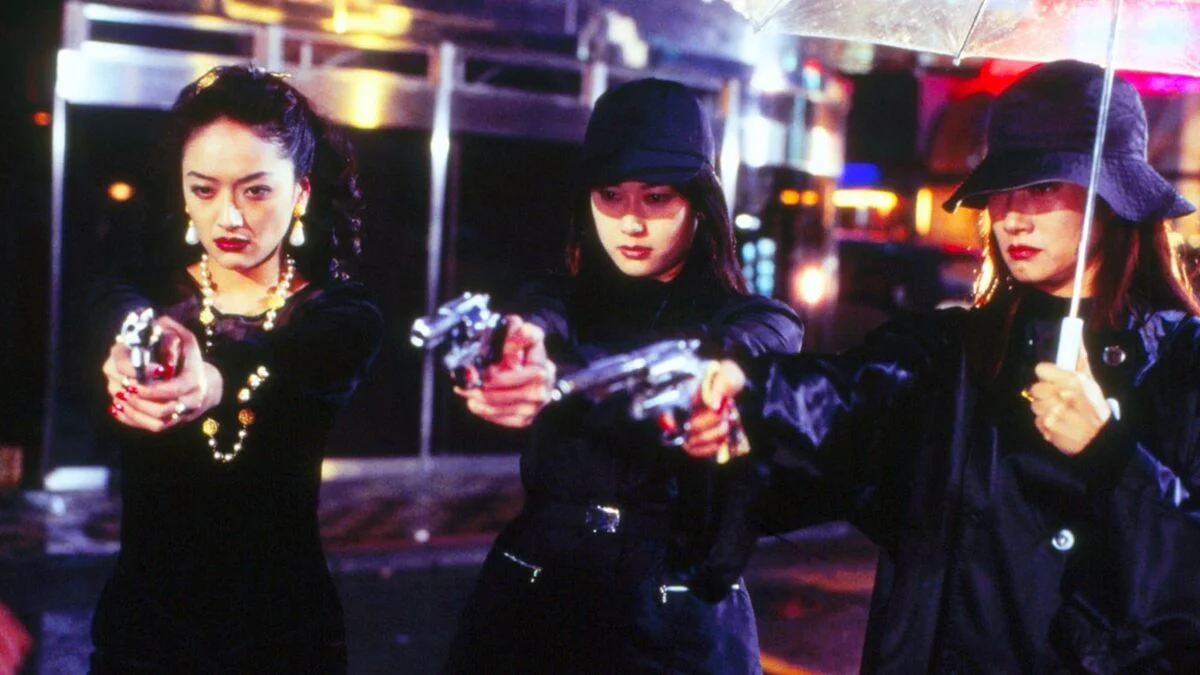
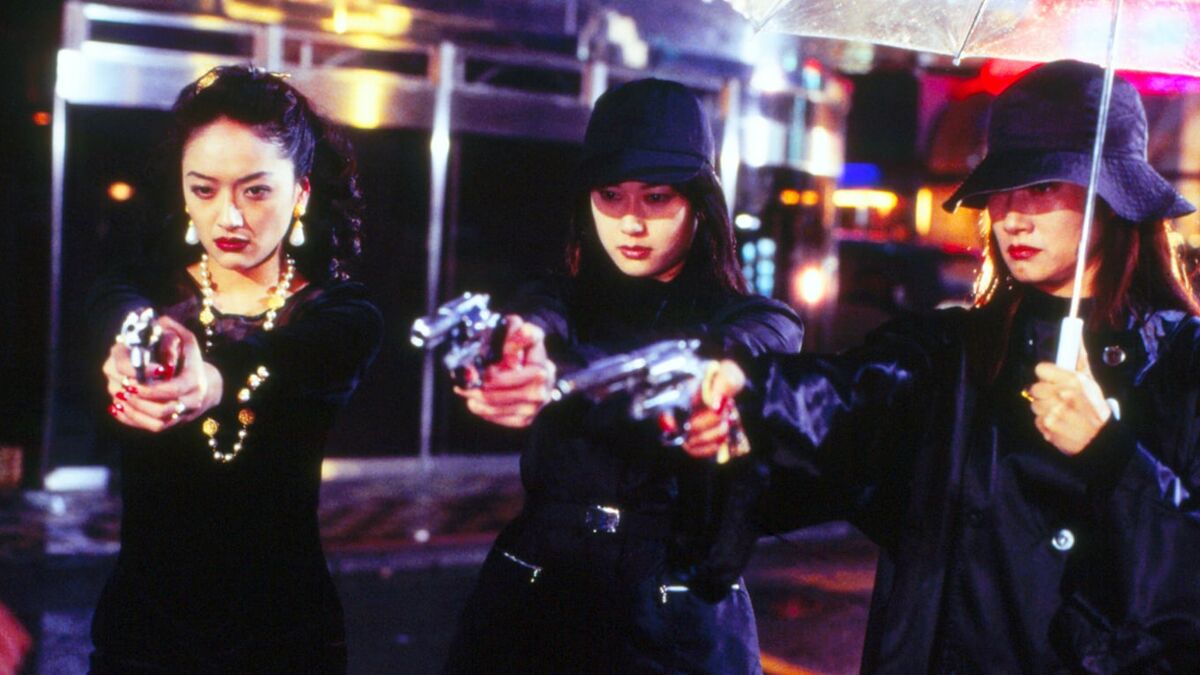
Simultaneously, the film introduces a distinct but interconnected narrative thread involving five women: Ran (Kimiko Yo), Sayuri (Shinobu Otake), Saki (Yui Natsukawa), Shiho (Yumi Nishiyama), and Chihiro (Mai Kitajima). These women become entangled in a botched jewelry heist. Having successfully defended themselves against the initial robbers, they manage to escape with the stolen loot. For a fleeting moment, their individual dreams of a life free from financial constraints and societal pressures seem within reach. They decide to celebrate their improbable success before parting ways, unaware that their newfound fortune has placed them directly in the crosshairs of dangerous forces. Their predicament is compounded by the fact that Masamichi’s coveted ring is among the stolen jewels, making him a relentless pursuer alongside the vengeful yakuza.
Gendered Perspectives in the Post-Bubble Landscape
Where "Gonin" offered a panorama of masculine archetypes struggling to adapt to the realities of post-Bubble Japan, "Gonin 2" artfully mirrors this dynamic with female characters at its core. Ishii masterfully draws parallels between the original and its sequel, demonstrating how similar societal pressures and economic vulnerabilities manifest differently based on gender. Kimiko Yo’s portrayal of Ran, for instance, echoes Koichi Sato’s Bandai from the first film, as both characters are depicted as relying on the patronage, and often the financial assistance, of the yakuza to navigate their precarious existence. Similarly, Yui Natsukawa’s Saki shares thematic resonance with Masahiro Motoki’s Mitsuya, with both characters deeply scarred by the pervasive influence of male violence and trauma.
However, Ishii’s genius lies in his refusal to simply replicate character archetypes. He is acutely aware that the impact of systemic conflicts is profoundly shaped by gender. While the male characters in "Gonin" might have possessed the theoretical agency to act independently, the bond forged between the women in "Gonin 2" emerges as a vital necessity. Their shared experiences of exploitation, violence, and systemic disenfranchisement create a powerful interdependence, a true union born out of shared suffering. This collective strength, Ishii emphasizes, serves as a form of rebellion against a patriarchal status quo that consistently marginalizes and victimizes them. This defiance, predictably, draws the ire of the male-dominated power structures, personified by the yakuza.
Materialism and the Erosion of Solidarity
Beyond the exploration of gender dynamics, "Gonin 2" intensifies Ishii’s critique of materialism and unchecked capitalism, arguably with even greater clarity than its predecessor. The stolen loot from the jewelry store, much like the illicit gains in the first film, becomes a divisive force among the women. The allure of material wealth begins to erode the solidarity forged through their shared trauma. This succumbing to individualistic desires and the pursuit of material gain leads to isolation, escalates violence, and threatens the very bond that could have offered them salvation.
The characters of Ran and Chihiro are particularly emblematic of this struggle. Their aspirations for the future, their very survival, are inextricably linked to capital and the acquisition of property. The act of possessing, or even merely contemplating, money and jewelry is depicted as a product of societal conditioning, a pervasive message that happiness, love, and contentment can be bought. Ishii poses a critical question: can this deep-seated urge for material acquisition truly be overcome? Can it be replaced by something more profound, something intrinsically life-affirming and enduring? The film suggests that the pursuit of wealth, when divorced from genuine human connection, ultimately leads to a spiritual and emotional impoverishment.
Performance and Thematic Resonance
As an ensemble piece, "Gonin 2" presents a challenge in isolating individual performances. However, the collective strength of the cast is undeniable in conveying the inner turmoil of their characters. Ken Ogata, Kimiko Yo, and Yui Natsukawa deliver particularly compelling performances, effectively portraying the profound internal conflicts their characters face. They embody individuals forced into desperate actions, their quests for retribution blurring their perception of the consequences and the damage inflicted.
Yui Natsukawa’s portrayal of Saki warrants special commendation. Her character, steeped in trauma and navigating a treacherous path, could easily have been rendered as a one-dimensional, melodramatic figure. Instead, Natsukawa, guided by Ishii’s subtle direction, imbues Saki with a remarkable depth and nuance. Her performance is a testament to the power of understated acting, allowing the audience to connect with the character’s pain and resilience on a deeply human level. The film’s focus on the collective, while sometimes leaving individual character arcs less fully developed, serves the overarching thematic purpose of highlighting shared experiences and the potential for solidarity.
Broader Implications: A Search for Meaning in a Consumerist World
"Gonin 2" transcends a simple genre exercise. Takashi Ishii utilizes the framework of the yakuza film to offer a potent and timely commentary on the post-Bubble era in Japan, reframing the narrative of disillusionment through a distinctly gendered lens. The film serves as a dual critique: it dissects the corrosive effects of capitalism and consumerism, and it simultaneously probes the fundamental question of whether genuine connection and union can truly exist within a societal system inherently built upon ownership, exploitation, and objectification.
The film’s exploration of these themes holds significant implications beyond its narrative scope. It speaks to the universal struggle for identity and agency in the face of economic precarity and societal pressures. The women’s journey, though fraught with violence and moral compromise, underscores the enduring human need for solidarity and mutual support. Ishii’s work suggests that true liberation may not lie in the acquisition of material wealth, but in the forging of meaningful human bonds that transcend the transactional nature of a capitalist society.
The legacy of "Gonin 2" lies in its unflinching portrayal of the human cost of economic disparity and its insightful examination of how societal structures can both perpetuate and, paradoxically, create opportunities for resistance and collective action. In its complex tapestry of vengeance, survival, and the yearning for something more, the film offers a poignant reflection on the enduring search for meaning and connection in a world increasingly defined by commodification.