

The transition of beloved intellectual properties from the printed page or the silver screen to the expansive canvas of prestige television represents one of the most significant shifts in contemporary media production. As streaming platforms seek to retain subscribers through established narratives, showrunners are increasingly tasked with a delicate balancing act: honoring the foundational source material while expanding the "lore" to sustain multiple seasons of television. This evolution is currently being spearheaded by three major projects—Hulu’s expansion of Margaret Atwood’s world, HBO’s return to Stephen King’s Maine, and FX’s terrestrial reimagining of the Alien franchise—each of which illustrates a different strategy for narrative growth and world-building.
The Atwood-Miller Collaboration: Bridging The Handmaid’s Tale and The Testaments
When Bruce Miller first encountered Margaret Atwood’s 1985 novel The Handmaid’s Tale, he found the ambiguous ending of the protagonist Offred to be a narrative cliffhanger that demanded a resolution. Decades later, as the showrunner of the Hulu adaptation, Miller found himself in the unique position of not only interpreting the original text but influencing its eventual literary sequel. The television series, which premiered in 2017, became a cultural phenomenon, arriving at a moment of intense political polarization in the United States. Its visual motifs—the scarlet cloaks and white winged bonnets—transcended the screen to become symbols of real-world feminist resistance.
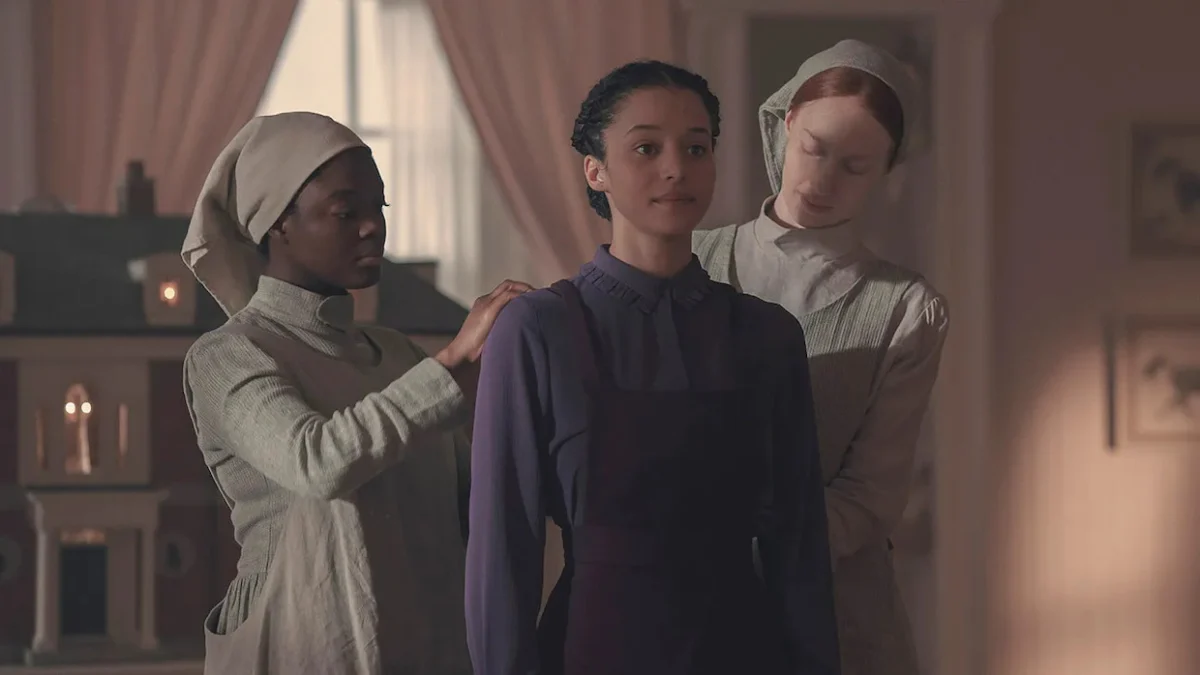
The success of the series, which became the first streaming show to win the Emmy for Outstanding Drama Series, created a feedback loop between the author and the creator. While Miller was developing the second season, Atwood revealed she was writing The Testaments, a sequel set 15 years after the original events. This collaboration led to significant strategic decisions in the television writer’s room. Most notably, Atwood requested that the character of Aunt Lydia, portrayed by Ann Dowd, remain alive, as she was a central figure in the upcoming book.
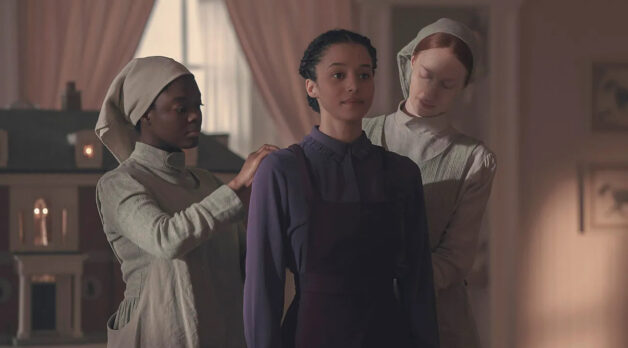
The narrative divergence between the book and the show is a prime example of medium-specific evolution. In Atwood’s original novel, Offred’s fate is left to history, with the "Historical Notes" at the end suggesting she may have perished or disappeared into anonymity. In Miller’s adaptation, Elisabeth Moss’s June Osborne becomes a radicalized insurgent who escapes to Canada. This shift allows the upcoming adaptation of The Testaments to focus on Agnes, played by Chase Infiniti, a young woman in Gilead who is unaware of her heritage as June’s daughter. By keeping June alive, Miller provides a tether for the audience while honoring Atwood’s expanded vision of a crumbling Gilead.
The Chronology of Terror: Welcome to Derry and the Pennywise Origin
While Miller expands a narrative forward in time, director Andy Muschietti and producer Barbara Muschietti are looking backward. Following the massive commercial success of their two-part film adaptation of Stephen King’s It—which grossed over $1.1 billion worldwide—the duo is developing It: Welcome to Derry for HBO. The series serves as a prequel, set 27 years before the events of the first film, exploring the cyclical nature of the malevolent entity that haunts the town of Derry, Maine.
The inspiration for the series emerged from conversations between the Muschiettis and actor Bill Skarsgård regarding the psychological motivations of Pennywise the Dancing Clown. In King’s 1,100-page novel, the origins of the "Deadlights" and the entity’s arrival on Earth are depicted through a cosmic, often abstract lens. The television series seeks to ground this horror in human history. By setting the show in the early 1960s, the creators are weaving the supernatural elements of the story into the social fabric of the era, including the anxieties of the Cold War and the tensions of the Civil Rights Movement.
A key narrative innovation in Welcome to Derry is the introduction of Bob Gray, the human persona Pennywise adopted. The show explores Gray as a Depression-era vaudevillian performer, providing a tragic and eerie backstory to the monster’s preferred aesthetic. This "historical horror" approach allows the franchise to move beyond the jump-scares of the films and into a deeper analysis of how a community’s collective trauma can feed a literal monster. The Muschiettis have indicated a multi-season plan that would see future installments visiting different 27-year cycles of Derry’s dark history.
Alien: Earth and the Corporate Critique of Noah Hawley
In the realm of science fiction, Noah Hawley is attempting a similar feat with Alien: Earth. Hawley, known for his transformative work on the Fargo anthology series, is bringing the Alien franchise to television for the first time. Unlike previous entries in the film series, which were largely confined to deep-space vessels or remote planetary colonies, Hawley’s series takes place on Earth, approximately 30 years before the events of Ridley Scott’s 1979 masterpiece.
The series centers on Wendy, played by Sydney Chandler, a human-cyborg hybrid. This character choice serves as a thematic bridge to the original film’s preoccupation with the blurring lines between organic life and synthetic programming. Hawley’s narrative focuses on the corporate warfare between the established Weyland-Yutani Corporation and a rival tech firm, Prodigy. By placing the action on Earth, Hawley is able to explore the socio-economic implications of the "Xenomorph" discovery, shifting the focus from a "haunted house in space" to a commentary on environmental and technological hubris.
Hawley has been vocal about his desire to expand the biological scope of the franchise. While the Xenomorph remains the primary threat, the series introduces new extraterrestrial life forms, challenging the audience’s expectations of what an "Alien" story entails. This additive approach is designed to prevent the franchise from becoming a repetitive cycle of "survival horror," instead turning it into a sprawling corporate thriller with high-stakes biological consequences.
Supporting Data: The Economic and Critical Value of Established IP
The trend of expanding literary and cinematic universes is driven by clear industrial data. According to industry reports from Parrot Analytics, "established IP" (Intellectual Property) consistently generates 2.5 times more audience demand in its first 30 days of release compared to original concepts. For platforms like Hulu, HBO, and FX (via Hulu/Disney+), these projects serve as "tentpoles" that anchor their seasonal lineups.
- The Handmaid’s Tale: Over its six-season run, the show garnered 76 Emmy nominations and 15 wins. Its success paved the way for Hulu to invest in higher-budget prestige dramas.
- The It Franchise: The 2017 film It remains the highest-grossing horror film of all time (unadjusted for inflation). The decision to move to television allows Warner Bros. Discovery to monetize the "King-verse" without the $100 million+ marketing spend required for a theatrical release.
- The Alien Franchise: With the recent success of Alien: Romulus in theaters, which earned over $350 million, the brand is at its highest point of relevance in two decades. Alien: Earth is positioned to capitalize on this renewed interest.
Analysis of Implications: The Future of Narrative Expansion
The shift toward these expanded universes signals a change in how audiences consume stories. We are moving away from the era of the "closed-ended" adaptation and into an era of "narrative ecosystems." This has several implications for the industry:
- Creator-Author Synergy: As seen with Atwood and Miller, the line between the original creator and the adapter is blurring. Authors are now writing with the "television expansion" in mind, and showrunners are influencing the direction of future books.
- The Prequel as Social Commentary: By moving backward in time (Welcome to Derry, Alien: Earth), showrunners are using the "past" to comment on the "present." Using the 1960s or a near-future Earth allows creators to tackle themes of race, class, and corporate greed through the safe distance of genre fiction.
- Risk of Dilution: The primary challenge for these showrunners is avoiding "lore fatigue." When every mystery is explained—such as Pennywise’s origin or the Xenomorph’s biology—the sense of cosmic dread that made the original works famous can be diminished.
Official Responses and Industry Outlook
Network executives have expressed confidence in this "additive" approach. John Landgraf, Chairman of FX Content and FX Productions, has noted that Hawley’s take on Alien is "not just a reboot, but a fundamental reimagining of the stakes." Similarly, HBO leadership has emphasized that Welcome to Derry is intended to be a "cinematic television event," maintaining the production values of the Muschietti films.
As these series prepare for their respective premieres and awards cycles, the success of The Testaments, Welcome to Derry, and Alien: Earth will likely determine the roadmap for television production for the next decade. The goal is no longer just to tell a story, but to build a world that audiences never have to leave. In the competitive landscape of the "streaming wars," the ability to transform a 300-page novel or a 100-minute film into a multi-year, multi-platform odyssey is the ultimate measure of a showrunner’s success.