The television landscape has historically functioned as a mirror to its own internal anxieties, frequently utilizing satire to process existential threats ranging from the rise of reality programming to the oversaturation of the "prestige" streaming era. In recent years, this self-reflective tradition has found its most potent expression through two critically acclaimed HBO properties: Michael Patrick King and Lisa Kudrow’s The Comeback and the Emmy-winning series Hacks. Both shows have recently converged on a singular, era-defining concern: the encroachment of generative artificial intelligence (AI) on the creative process. As the industry grapples with the fallout of the 2023 labor strikes and a period of significant corporate contraction, these narratives provide a fictionalized but fact-based examination of how legacy stardom survives in an increasingly automated environment.
The Evolution of The Comeback: A Trilogy of Industry Crises
The production history of The Comeback is as unconventional as its protagonist, Valerie Cherish. Created by Lisa Kudrow and Michael Patrick King, the series first premiered in 2005. At that time, it served as a scathing indictment of the burgeoning reality television genre. Valerie Cherish, a former sitcom star, allowed cameras to document her "comeback" on a new show, only to find herself humiliated by producers who prioritized tabloid-style drama over artistic integrity. While the show was canceled after one season, it achieved cult status for its prescient look at the "influencer" mindset before the term existed.
The series returned for a second season in 2014, a decade later, coinciding with the rise of the "streaming wars." During this period, the industry was obsessed with "prestige" branding, often at the expense of traditional multi-camera sitcoms. Valerie’s struggle shifted toward reclaiming her dignity within a landscape that prized dark, gritty realism.
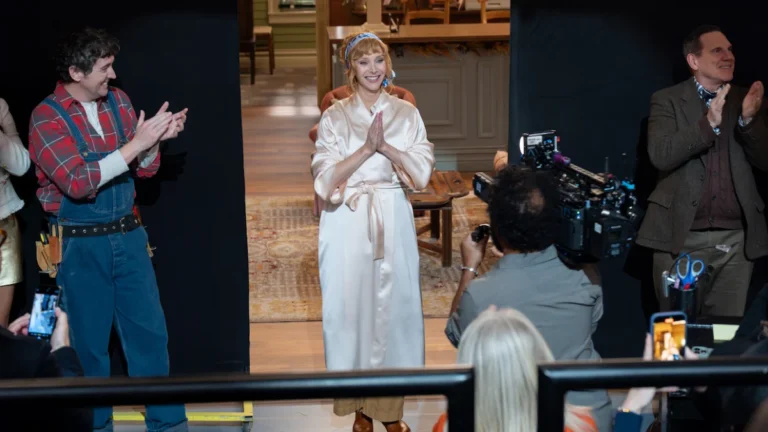
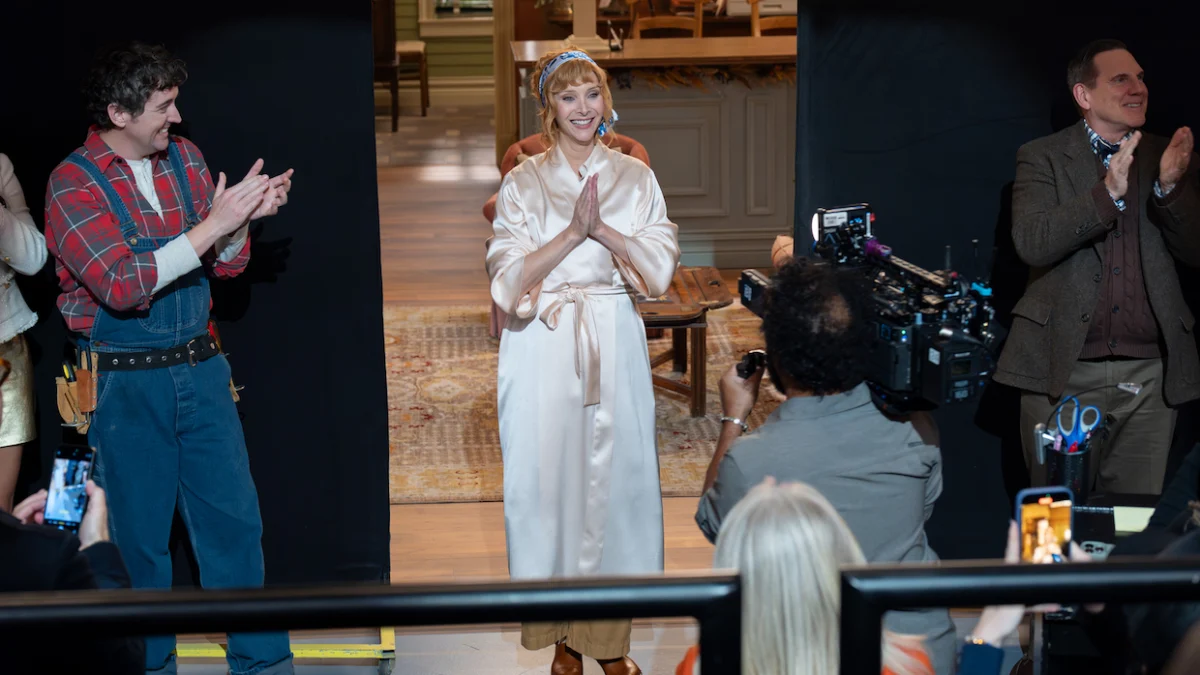
The third and final season, arriving twelve years after the second, finds Valerie Cherish facing the most significant technological disruption in Hollywood history: the use of Large Language Models (LLMs) to replace human screenwriters. In this final installment, Valerie secures the lead role in a sitcom produced by "NuNet," a tech-funded network. The twist is that the show, titled How’s That?!, is written entirely by an AI program named "Allassist." This narrative choice reflects real-world tensions that reached a boiling point during the 148-day Writers Guild of America (WGA) strike in 2023, where AI protections were a primary sticking point in negotiations.
The Technological Bogeyman: AI in Hacks and The Comeback
While The Comeback treats AI as a functional replacement for production staff, Hacks—created by Lucia Aniello, Paul W. Downs, and Jen Statsky—approaches the technology as a predatory tool of venture capitalism. In the fifth season of Hacks, protagonist Deborah Vance (played by Jean Smart) encounters the "tech-bro" culture when she seeks new revenue streams following a professional setback.
The plot introduces a venture capitalist who proposes licensing Deborah’s entire comedic catalog to a platform called "QuikScribbl." The intention is to create a digital avatar of Deborah that can generate new material without her physical presence. This storyline mirrors the real-life concerns of performers regarding "digital twins" and the unauthorized use of their likenesses—concerns that were central to the 2023 SAG-AFTRA strike.
The response from Ava Daniels (Hannah Einbinder), Deborah’s Gen-Z writer, serves as the show’s ethical compass. Ava’s critique centers on the "narrative of inevitability" pushed by tech companies, arguing that AI-generated content is fundamentally derivative. This is echoed in The Comeback, where Valerie’s AI-written scripts are revealed to be collages of plagiarized lines from previous sitcoms. The humor in both shows stems from the machine’s inability to understand the nuance of human timing, irony, and shared experience.
Chronology of Modern Industry Disruption
To understand the context of these storylines, it is necessary to examine the timeline of events that have reshaped Hollywood over the last five years:
- 2020–2022: The COVID-19 pandemic halts traditional production, accelerating the transition to streaming services and creating a "content vacuum" that tech companies sought to fill.
- Early 2023: The rapid public rollout of generative AI tools like ChatGPT and Midjourney prompts fears within creative guilds about job displacement.
- May–September 2023: The WGA goes on strike. Key demands include prohibitions on AI-generated scripts being used as "source material" and the banning of AI from rewriting human-authored work.
- July–November 2023: SAG-AFTRA joins the strike, focusing on protections against the use of AI to replicate an actor’s voice or likeness without consent or compensation.
- 2024–2025: A period of "Peak TV" contraction. Major networks and streamers (HBO/Max, Netflix, Disney+) begin canceling high-budget projects and consolidating departments to increase profitability, leading to a "production drought."
This chronology informs the stakes of The Comeback Season 3. Valerie Cherish is not just fighting for fame; she is fighting for the survival of the multi-camera sitcom format in a world where "efficiency" is the primary metric of success.
Supporting Data: The Economic Reality of the "New Hollywood"
The shift toward AI and automated content is driven largely by the economic pressures of the streaming era. According to industry reports, the number of original scripted series in the U.S. peaked at 599 in 2022 before dropping significantly in 2023 and 2024. This contraction has made legacy stars like Valerie Cherish and Deborah Vance increasingly vulnerable.
Data from the 2023 strike negotiations revealed that writers’ median pay had dropped by 4% over the last decade when adjusted for inflation. The introduction of AI was seen by studios as a way to further reduce costs. In The Comeback, the fictional NuNet uses AI to generate "alts" (alternative jokes) during live tapings. In a traditional setting, this would require a room of five to ten writers working in real-time. By replacing them with Allassist, the network slashes its payroll, though the quality of the "alts" is shown to be vastly inferior.
Furthermore, the "non-compete" clause storyline in Hacks Season 5 highlights the legal hurdles veteran entertainers face. As networks consolidate, performers often find themselves trapped in contracts that prevent them from moving to rival platforms, a practice that the Federal Trade Commission (FTC) has recently sought to ban in the United States.
Analysis of the "Human Element" in Comedy
A central theme in both series is the assertion that comedy is an inherently human endeavor that requires shared suffering and spontaneity. This is epitomized in a cameo by legendary director James Burrows in The Comeback. Burrows, playing himself, observes that AI-generated scripts lack the element of "surprise." He argues that great comedy comes from "a group of writers huddled in a corner, beating themselves up to beat out a better joke."
This analysis suggests that while AI can replicate the structure of a joke, it cannot replicate the subtext. For Valerie Cherish, her entire career has been built on the subtext of her own desperation and resilience. A machine can mimic her catchphrases, but it cannot understand the pathos of an aging woman trying to remain relevant in a sexist and ageist industry.
Similarly, in Hacks, the bond between Deborah and Ava represents the intergenerational transmission of craft. AI can analyze Deborah’s past performances, but it cannot engage in the creative friction that occurs between a mentor and a protégé. Both shows argue that the "inefficiency" of human interaction is actually the source of artistic value.
Broader Impact and the Emmy Landscape
The intersection of these two shows is particularly relevant as they head toward the Emmy Awards. Hacks has established itself as a powerhouse, with 12 wins to date, including multiple Best Actress awards for Jean Smart. Its ability to pivot from broad comedy to serious industry commentary has made it a favorite among Academy voters who are themselves navigating these industry changes.
The Comeback, conversely, has always been an underdog. Despite Lisa Kudrow’s critical acclaim and previous nominations, the show’s niche mockumentary style and biting cynicism initially limited its mainstream appeal. However, the final season’s focus on AI has reframed Valerie Cherish as a tragicomic hero for the modern age.
Industry analysts suggest that the "showbiz satire" subgenre is currently at its peak. Last year’s sweep by The Studio indicated a strong appetite for stories about the internal mechanics of Hollywood. The potential for a "showdown" between Kudrow and Smart in the Best Actress category represents more than just a competition between two performers; it is a celebration of two characters who have survived decades of industry evolution.
Conclusion: Resistance Through Comedy
The Comeback and Hacks ultimately offer a form of "comedy-fueled resistance" against the total automation of the arts. By portraying AI as either a "pathetic joke" or a "corporate monster," these shows empower human creators. They remind the audience that the value of television lies in its ability to reflect the human condition—flaws, desperation, and all.
As Valerie Cherish takes her final bow and Deborah Vance continues her fight for the late-night throne, their stories serve as a factual reminder of the industry’s resilience. While technology will continue to advance, the narrative arc of these two series suggests that as long as there are stories to tell about the struggle for relevance, there will always be a place for the human voice in Hollywood. The final seasons of these shows do not just mark the end of an era; they provide a blueprint for how artists can maintain their integrity in the face of an uncertain digital future.