

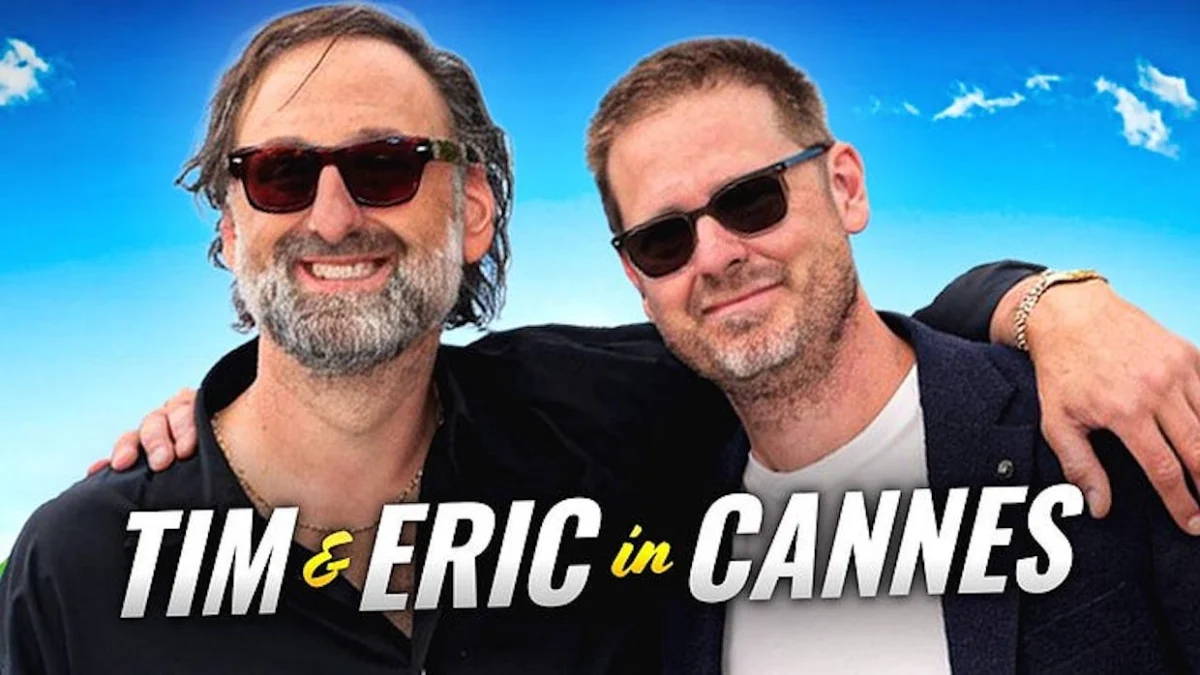
The presence of Tim Heidecker and Eric Wareheim at the Festival de Cannes marks a significant intersection between the world of avant-garde American television and the traditional high-culture bastions of European cinema. Known collectively as the comedy duo Tim & Eric, the pair arrived at the French Riviera for the midnight premiere of Full Phil, the latest feature from prolific French director Quentin Dupieux. The event represents a milestone for a partnership that began decades ago at Temple University and has since reshaped the landscape of digital and absurdist humor. Their appearance at Cannes, coupled with recent high-profile industry shifts, underscores the duo’s transition from niche cable television provocateurs to influential figures within the broader independent film and media ecosystem.
The Convergence of American Anti-Comedy and French Surrealism
The selection of Full Phil for a midnight screening at Cannes highlights a growing affinity between the absurdist traditions of French cinema and the "anti-comedy" movement pioneered by Heidecker and Wareheim. Quentin Dupieux, who also records electronic music under the pseudonym Mr. Oizo, has established a filmography defined by existential meta-comedy and non-linear narratives. His previous collaborations with Wareheim, including Wrong Cops (2013) and Reality (2014), set the stage for this latest project, which sees the duo reunited on screen in a particularly stylized capacity.
Full Phil is described by Dupieux as an "Emily in Paris in hell," a satirical exploration of American tourism, wealth, and familial dysfunction. The narrative centers on a wealthy man, portrayed by Woody Harrelson, attempting to bridge the emotional distance between himself and his daughter, played by Kristen Stewart, during a trip to the French capital. Within this framework, Heidecker and Wareheim appear in a "film-within-a-film," assuming the roles of scientists modeled after the classic Universal Horror archetypes of the 1930s and 40s. Their performance, characterized by "mid-Atlantic" accents and heightened theatricality, serves as a counterpoint to the more naturalistic, albeit grotesque, appetites of Stewart’s character.
Chronology of a Decades-Long Partnership
To understand the significance of Tim & Eric’s presence at Cannes, one must trace their trajectory from public-access-style experimentation to industry-defining production.
- The Formative Years (Late 1990s – 2006): Meeting as film students at Temple University, Heidecker and Wareheim began producing short films and animations that mocked the low-budget aesthetics of local television. Their work eventually caught the attention of Bob Odenkirk, who helped them secure a deal with Adult Swim.
- The Adult Swim Era (2007 – 2010): Tim and Eric Awesome Show, Great Job! became a cultural phenomenon, utilizing rapid-fire editing, grotesque makeup, and intentional technical glitches to satirize the media landscape. This period cemented their "chaotic-good" surrealist reputation.
- Expansion and Production (2007 – 2020): The duo founded Abso Lutely Productions, which became an incubator for other alternative comedy voices, producing hits such as Nathan for You, The Eric Andre Show, and Check It Out! with Dr. Steve Brule.
- The Digital Pivot (2011 – Present): As traditional cable began to decline, the duo shifted toward independent distribution models. Heidecker launched the HEI Network to host his long-running On Cinema at the Cinema franchise, while Wareheim expanded into the culinary and viticulture industries.
- The Cannes Debut (2025/2026): The premiere of Full Phil represents the duo’s formal entry into the world’s most prestigious film festival, coinciding with Heidecker’s appointment to a major role in the reimagined InfoWars.
Supporting Data: The Creator Economy and Production Shifts
During the festival, Heidecker and Wareheim participated in a keynote address at the American Pavilion hosted by IndieWire, titled "The Future of Filmmaking." The discussion focused on their roles as "progenitors of the creator economy." Data presented during the festival’s industry sessions suggests a marked shift in how independent creators maintain autonomy.
According to industry reports, the traditional "middle-class" of television production—where production companies like Abso Lutely operated—has faced significant pressure due to the vertical integration of streaming platforms. This led to the duo’s decision to sell Abso Lutely Productions to Jimmy Miller’s Mosaic Media Group. The sale reflects a broader trend where independent houses are merging with larger management-led firms to navigate a market where networks increasingly prefer in-house development.
However, the duo has countered this trend by leveraging direct-to-consumer platforms. Heidecker’s HEI Network, a subscription-based model, has successfully funded multi-season arcs and live specials without the intervention of traditional network executives. This model provides a blueprint for the "pure" creative control the duo advocated for during their Cannes appearances.
Official Reactions and Industry Implications
The reception of Tim & Eric at Cannes has been a mixture of curiosity and reverence. While the festival is often associated with high-stakes drama and auteur-driven narratives, the midnight screening crowd embraced Dupieux’s surrealist humor.
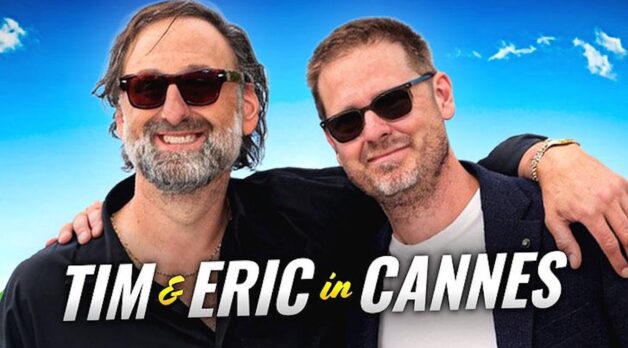
Heidecker’s recent appointment as the creative director of InfoWars—following the acquisition of Alex Jones’s media empire by The Onion—was a frequent topic of discussion. This move is seen by media analysts as a bold experiment in "narrative hijacking." By taking over a platform previously used for disinformation and repurposing it for satirical commentary, Heidecker is expanding the boundaries of performance art.
"We’re not going to parody the InfoWars universe for very long," Heidecker stated during discussions in Cannes. "We have an arc… it’s a proof-of-concept sort of thing." This suggests that the acquisition is being treated not just as a joke, but as a strategic asset for a new kind of media distribution that bypasses traditional gatekeepers.
Wareheim, conversely, has leaned into a "post-food world," focusing on his success as a winemaker and his burgeoning interest in botanical arts, specifically the study of bonsai and rare Australian flora. His shift illustrates a growing trend among veteran creators to diversify their "brand" into lifestyle and physical commodities, providing a buffer against the volatility of the entertainment industry.
The Evolving Definition of Celebrity at Cannes
The duo’s experience at the festival also provided a commentary on the nature of modern celebrity. Despite their massive influence on internet culture and American comedy, Heidecker and Wareheim observed a disconnect between their legacy and the "celebrity-driven" machinery of Cannes.
"Tim and Eric changed the course of American comedy, and nobody is interested [here]," Heidecker remarked, noting the paparazzi’s fixation on traditional film stars. This observation points to a lingering divide between the "creator" class, which commands massive digital engagement, and the "cinema" class, which commands the red carpet.
However, the duo expressed an appreciation for the festival’s formality. Wareheim noted that the requirement of evening wear and the scale of the 2,300-seat Grand Théâtre Lumière provided a necessary gravity to the viewing experience, contrasting with the modern habit of consuming media on mobile devices or in domestic settings.
Broader Impact and Future Outlook
The inclusion of Tim & Eric in a Cannes-selected film signals a maturation of the "Adult Swim generation." The aesthetics they pioneered—lo-fi production, awkward pacing, and the deconstruction of the talk-show format—are now visible in mainstream advertising, music videos, and high-end cinema.
Looking forward, the duo’s trajectory suggests two distinct paths for independent creators:
- The Institutional Integration: Participating in international co-productions like Full Phil and working with established actors like Harrelson and Stewart.
- The Sovereign Media Model: Developing independent networks (HEI Network, the new InfoWars) that allow for immediate, unmediated connection with a dedicated audience.
As the festival concludes, the narrative surrounding Tim & Eric is no longer just about their "cult" status. It is about their ability to navigate—and occasionally manipulate—the mechanisms of the modern media industry. Whether through the lens of a French surrealist or the control room of a satirical propaganda machine, Heidecker and Wareheim continue to challenge the conventions of how comedy is produced, distributed, and perceived on the global stage. Their journey to Cannes is not merely a vacation for two "Beaver Boys," but a formal recognition of their enduring impact on the visual language of the 21st century.